
What is a CNC Plasma Cutting Machine?
CNC plasma cutting has become one of the most widely used processes in modern metal fabrication. Whether it’s structural steel, aluminium sheets, decorative metalwork, or industrial machine components, the ability to cut conductive metals quickly, accurately, and consistently makes it a preferred choice across multiple industries. But what exactly is a CNC plasma cutter? How does it work? And why is it such an efficient cutting technique?
This detailed guide explains everything from the core science behind plasma cutting and its major components to different machine configurations, real-world applications, advantages, limitations, and technical considerations manufacturers need to know.
What Is CNC Plasma Cutting?
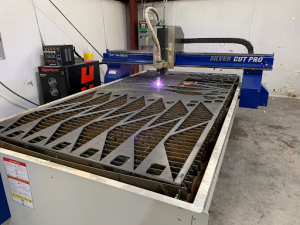
CNC plasma cutting is a thermal-cutting process that uses a high-temperature jet of ionised gas known as plasma to cut electrically conductive metals. CNC stands for computer numerical control, meaning the cutting torch moves automatically according to programmed instructions rather than by hand.
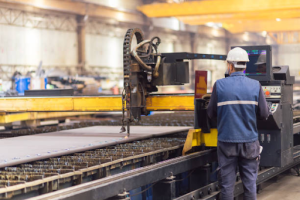
In simple words, a CNC plasma cutter is a machine that uses computer control and a plasma torch to cut metal sheets, plates, tubes, or structural profiles. The plasma, which can reach extremely high temperatures (often exceeding 25,000°C or 45,000°F), melts the metal instantly. The high-velocity gas stream then blows away the molten material, creating a precise cut along the programmed path.
Materials typically cut using CNC plasma systems include:
- Mild steel
- Stainless steel
- Aluminium
- Copper
- Brass
- Titanium
- Other electrically conductive alloys
Because the torch follows a programmed design (often uploaded from CAD files), CNC plasma cutters are highly repeatable, extremely accurate, and suitable for mass production as well as custom fabrication. Read in more detail about the CNC machining software and how CAD and CAM are used in this process.
How Does a CNC Plasma Cutter Work?
The working process combines the science of plasma with the precision of CNC automation. Although machines vary in size and capability, the basic working mechanism remains the same.
1. Ionising Gas to Form Plasma
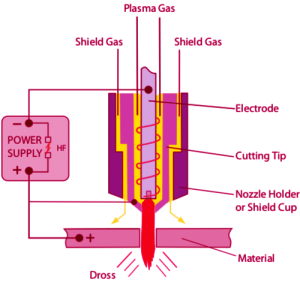
A gas such as oxygen, nitrogen, argon, or compressed air is forced at very high speed through a narrow nozzle. An electrical arc is then introduced into the gas stream. This electrical energy ionises the gas, converting it into plasma the superheated “fourth state of matter.”
Plasma has the unique ability to conduct electricity and reach temperatures far beyond traditional flames. This extreme temperature melts the metal instantly upon contact.
2. Melting and Blowing Away the Metal
Once the metal is liquefied, the high-speed gas stream blows the molten material out of the cut, leaving behind a narrow, clean path. This makes plasma cutting ideal for detailed shapes, curves, or complex cut-outs.
3. CNC System Guides the Torch
The “CNC” component controls the movement of the plasma torch. The operator can upload a digital design, draw a pattern, or program custom shapes directly into the control system. The machine then follows the instructions precisely, ensuring:
- Consistent cuts
- Repeatable results
- Minimal errors
- Faster production compared to manual cutting
The operator simply loads the sheet, positions the torch, chooses cutting parameters, and starts the machine. The CNC system handles height control, speed, direction, and start/stop points automatically. If you’re planning parts specifically for CNC cutting, the guide on how to design parts for CNC machining explains practical design rules that help improve cut quality, accuracy and material efficiency
If you ever need precise metal cutting for any project, feel free to contact Kirmell. Our team uses advanced CNC-controlled equipment to deliver accurate and clean results for all types of metal fabrication work.
Key Components of a CNC Plasma Cutter
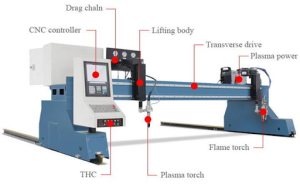
A CNC plasma cutting machine consists of several essential parts, each playing a critical role in performance, cut quality, and speed.
1. Compressed Gas Supply
The gas supply is needed to create plasma and blow molten metal away. Common gases include:
- Nitrogen
- Oxygen
- Argon
- Compressed air
The gas type affects cut quality, speed, and material compatibility.
2. Plasma Torch
The torch is where plasma is created. It contains the electrode, nozzle, and shielding components. Plasma torches generally fall under two ignition systems:
- High-Frequency Spark System (HFSS): Generates plasma through a high-voltage spark. Effective but can interfere with nearby electronics.
- Moving Contact / Pilot Arc System (MCSP): More advanced and suitable for sensitive environments due to reduced electrical noise.
3. Electrode
Inside the torch, the electrode creates the electric arc that ionises the gas. Electrodes are consumables; they wear over time due to extreme heat and electron emission, so regular replacement is necessary.
High-quality electrodes often use copper casings with a hafnium insert to increase lifespan.
4. Nozzle
The nozzle directs and shapes the plasma stream. It helps maintain a narrow, focused arc for precise cutting. Nozzles also wear out and must be replaced to keep cut quality sharp.
5. CNC Control System
The CNC controller interprets digital files and converts them into movement commands. It manages:
- Torch direction
- Speed
- Pierce points
- Kerf compensation
- Height control
This automation is what makes CNC plasma systems more accurate and consistent than handheld cutting.
6. Power Supply
Plasma cutting requires a strong power source, especially for thick or hard metals. Light-duty units may use single-phase power, while industrial cutters often rely on three-phase power supplies capable of running at high amperages.
7. Cutting Table / Machine Frame
The cutting table supports the sheet or plate being cut. It may include:
- Water beds to reduce smoke and heat
- Slat beds for airflow
- Fume extraction systems
Larger fabrication shops often use heavy-duty gantry systems for big sheets or thick plates.
8. Cooling System
Because the torch operates at extremely high temperatures, cooling systems are built into many industrial cutters to manage heat and extend component lifespan.
Common CNC Plasma Cutting Configurations
CNC plasma machines are available in several configurations depending on the application.
1. 2D Plasma Cutting (2-Axis)
This is the most common type. The torch moves along the X and Y axes to cut shapes from flat sheets or plates. Edges are typically cut at 90 degrees.
Uses include:
- Sheet metal fabrication
- Structural cut-outs
- Brackets, flanges, gussets
- Custom parts and prototypes
2. 3D or 3+ Axis Plasma Cutting
In this setup, the torch can tilt and rotate, allowing:
- Bevel cuts
- Weld-prep edges
- Chamfers
- Countersunk holes
- Complex angled edges
3D plasma cutters are widely used in structural steel fabrication for preparing pieces for welding and assembly.
3. Tube and Section Plasma Cutting
These machines are designed for:
- Round pipes
- Square or rectangular tubes
- Structural beams
- Angle iron and channels
Some systems rotate the workpiece while keeping the torch still; others move the torch around the material. This setup is ideal for industries like construction, oil & gas, and industrial equipment manufacturing.
Applications of CNC Plasma Cutting
Because CNC plasma cutting works on various thicknesses and conductive metals, it is used across many manufacturing and fabrication sectors.
1. Industrial and Structural Fabrication
Plasma cutters are commonly used for:
- Cutting structural steel beams
- Fabricating plates and sections
- Producing brackets, supports, and reinforcements
- Heavy machinery components
The ability to cut through thick metal quickly makes plasma cutting ideal for industrial projects.
2. Sheet-Metal Fabrication
In sheet-metal workshops, plasma cutters are used to produce:
- Prototypes
- Small batch parts
- Machine components
- Panels and enclosures
CNC automation ensures accuracy and repeatability even in advanced designs.
3. Manufacturing and Production Lines
Industries such as automotive, aerospace, and heavy equipment rely on plasma cutting for:
- Chassis components
- Body panels
- Mounting plates
- Machine brackets
- Custom structural parts
4. Repairs, Maintenance & Field Work
Portable CNC plasma systems are widely used for:
- Repairing damaged machinery
- Cutting off worn components
- Modifying equipment on-site
The speed and precision of plasma cutting make it ideal for maintenance teams.
5. Artistic and Decorative Metalwork
CNC plasma cutters are also popular in creative industries for making:
- Metal signs
- Decorative panels
- Wall art
- Custom metal shapes
Complex curves and detailed patterns can be cut easily with digital programming.
For businesses looking for dependable fabrication or custom metal parts, you can contact Kirmell. We can handle your project from cutting to complete finishing with professional quality.
Advantages of CNC Plasma Cutting
CNC plasma cutting offers several major benefits that make it stand out among other metal-cutting processes.
Fast Cutting Speed
Plasma cutting is significantly faster than oxy-fuel cutting and, in many cases, even faster than laser cutting when working with thicker materials. This high speed allows fabrication shops to complete projects more quickly, increasing productivity and reducing overall turnaround times.
High Accuracy and Repeatability
Thanks to CNC automation, every cut remains consistent from start to finish. The machine can repeat the same shape multiple times with very little variation, making errors far less likely. This level of precision also allows the system to handle complex designs smoothly, ensuring that each finished part matches the digital drawing with a high degree of accuracy.
Versatility in Material and Thickness
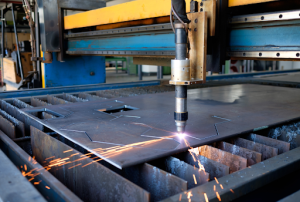
CNC plasma cutters can work with a wide range of electrically conductive metals, including mild steel, stainless steel, aluminium, copper, and brass. Depending on the machine’s power supply and configuration, they can cut everything from thin sheet metal to thick industrial plates, making them suitable for many different fabrication needs.
Cost-Effective Cutting Method
Compared to laser and waterjet systems, CNC plasma cutting offers a more cost-efficient solution for many businesses. The initial investment is lower, operating costs are more manageable, and the overall cutting speed is faster for many types of thick materials. These factors make plasma cutting a practical option for both small workshops and large-scale manufacturing facilities.
Reduced Material Waste
Because designs are uploaded digitally into the CNC system, operators can position parts more efficiently on each sheet of metal. This careful nesting reduces the amount of scrap produced during cutting. The precision of the plasma jet further helps minimise mistakes, ensuring that material waste stays as low as possible.
For a broader view of how CNC technology supports today’s production demands, check out why CNC machining remains a core tool in modern manufacturing, due to its efficiency, repeatability and quality.
Technical Considerations and Limitations
While CNC plasma cutting is efficient, users should be aware of certain limitations and factors affecting cut quality.
1. Consumable Wear
Nozzles and electrodes wear out due to extreme heat. Worn consumables lead to poor cut quality, wider kerf, and inconsistent edges. Regular maintenance ensures better performance.
2. Kerf Geometry
Plasma cuts can be slightly wider at the top than the bottom, and left/right edges may show minor angularity, especially at high speeds or on thick materials.
3. Heat-Affected Zones (HAZ)
Although smaller than oxy-fuel cutting, plasma still introduces heat into the metal. Sensitive applications may require post-processing.
4. Power Requirements
Cutting very thick steel requires high-amperage power supplies, often three-phase, which may not be available in small workshops.
5. Safety Considerations
Plasma cutting produces:
- Bright light
- High heat
- Smoke and fumes
- Hot sparks
Adequate safety equipment and ventilation are essential.
Kirmell’s Professional Metal Fabrication and Cutting Services
Kirmell provides complete metal fabrication solutions designed to support businesses across different industries. Our team works with advanced CNC machinery, including plasma cutting, laser cutting, and CNC machining systems, to produce accurate and high-quality metal parts for any project.
Whether you need simple sheet-metal components, detailed custom profiles, or heavy-duty industrial pieces, we focus on delivering clean results, reliable precision, and fast turnaround times. Contact us now for more details and quotes.
Conclusion
CNC plasma technology provides speed, affordability, and flexibility that many metal fabrication shops rely on every day. It combines the best of digital automation with high-temperature cutting capability, making it ideal for both high-volume production and custom design work.
Whether it’s structural steel fabrication, automotive manufacturing, artistic creation, or industrial repair, CNC plasma cutters continue to be a reliable and cost-effective solution for cutting conductive metals of all types and thicknesses.
FAQs
[saswp_tiny_multiple_faq headline-0=”h4″ question-0=”What materials can be cut using a CNC plasma cutter?” answer-0=”CNC plasma cutters can cut any electrically conductive metal, including mild steel, stainless steel, aluminium, copper, brass, and titanium. Thickness capacity depends on the machine’s power supply and torch type. ” image-0=”” fontsize-0=”18″ fontunit-0=”px” count=”1″ html=”true”]
[saswp_tiny_multiple_faq headline-0=”h4″ question-0=”How accurate is CNC plasma cutting?” answer-0=”Accuracy typically ranges between ±0.2 mm to ±1 mm, depending on machine quality, consumable condition, height control, and the thickness of the metal. For most fabrication jobs, plasma cutting provides very reliable precision. ” image-0=”” fontsize-0=”18″ fontunit-0=”px” count=”1″ html=”true”]
[saswp_tiny_multiple_faq headline-0=”h4″ question-0=”What is the difference between plasma cutting and laser cutting?” answer-0=”Laser cutting uses a focused laser beam and is ideal for thin metals and extremely fine details. Plasma cutting uses ionised gas and is better for thick metals, faster production, and cost efficiency. Plasma machines are also typically less expensive to operate. ” image-0=”” fontsize-0=”18″ fontunit-0=”px” count=”1″ html=”true”]
[saswp_tiny_multiple_faq headline-0=”h2″ question-0=”Can CNC plasma cutting be used for small-batch or prototype work?” answer-0=”Yes. Because CNC programming is quick and cutting speeds are fast, plasma machines are widely used for prototypes, low-volume production, and custom one-off designs. ” image-0=”” fontsize-0=”18″ fontunit-0=”px” count=”1″ html=”true”]
[saswp_tiny_multiple_faq headline-0=”h2″ question-0=”Where can I get CNC cutting or metal fabrication services?” answer-0=”You can get these services directly from Kirmell, which offers high-quality metal fabrication, cutting, finishing, and manufacturing solutions for all project sizes. Our services are suitable for industrial, commercial, and custom metalwork applications. Contact us today for more details. ” image-0=”” fontsize-0=”18″ fontunit-0=”px” count=”1″ html=”true”]