
Fibre Laser vs CO₂ Laser Cutting: The Key Differences
Laser cutting has become one of the most important manufacturing technologies in modern fabrication, offering exceptional accuracy, speed, and repeatability across a wide range of materials. From automotive components and architectural panels to signage and precision-engineered parts, laser cutting enables manufacturers to meet tight tolerances while maintaining consistent quality at scale.
However, not all laser cutting systems are the same. The two most widely used technologies today are fibre laser cutting and CO₂ systems, each with its own strengths, limitations, and ideal applications. Understanding the differences between these technologies is essential when choosing the right cutting method for your production needs.
In this guide, we explore fibre laser vs. CO₂ laser cutting, breaking down how each system works, how they compare in terms of performance, cost, efficiency, and materials, and which option may be best suited to your business.
Understanding Laser Cutting Technology
At its core, laser cutting uses a highly focused beam of light to melt, burn, or vaporise material, producing clean and precise cuts. The laser beam is directed using CNC (computer numerical control) systems, allowing for complex geometries and repeatable accuracy that traditional cutting methods struggle to achieve.
The key difference between laser cutting systems lies in how the laser beam is generated and delivered, which directly affects cutting speed, efficiency, material compatibility, and maintenance requirements. Read more about laser cutting basics in a separate guide.
What Is CO₂ Laser Cutting?
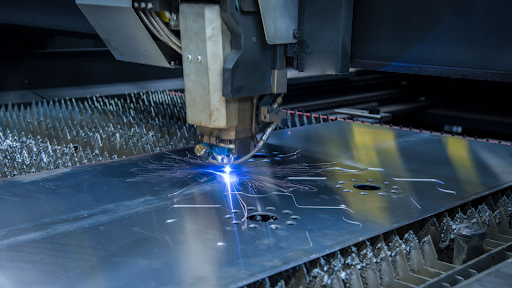
CO₂ laser cutting is one of the oldest and most established laser technologies still in use today. It generates a laser beam using a gas mixture primarily carbon dioxide, nitrogen, and helium, contained within a sealed tube. When electrical energy is applied, the gas mixture becomes excited and produces a laser beam with a wavelength of approximately 10.6 micrometres.
This beam is guided to the cutting head using a series of mirrors before being focused onto the workpiece.
Key Characteristics of CO₂ Systems:
- Long-established and well-understood technology
- Excellent performance on non-metallic materials
- Smooth cut edges, especially on thicker materials
- Larger mechanical systems with multiple optical components
CO₂ lasers have been widely used for decades and remain a reliable choice for many applications.
What Is Fibre Laser Cutting?
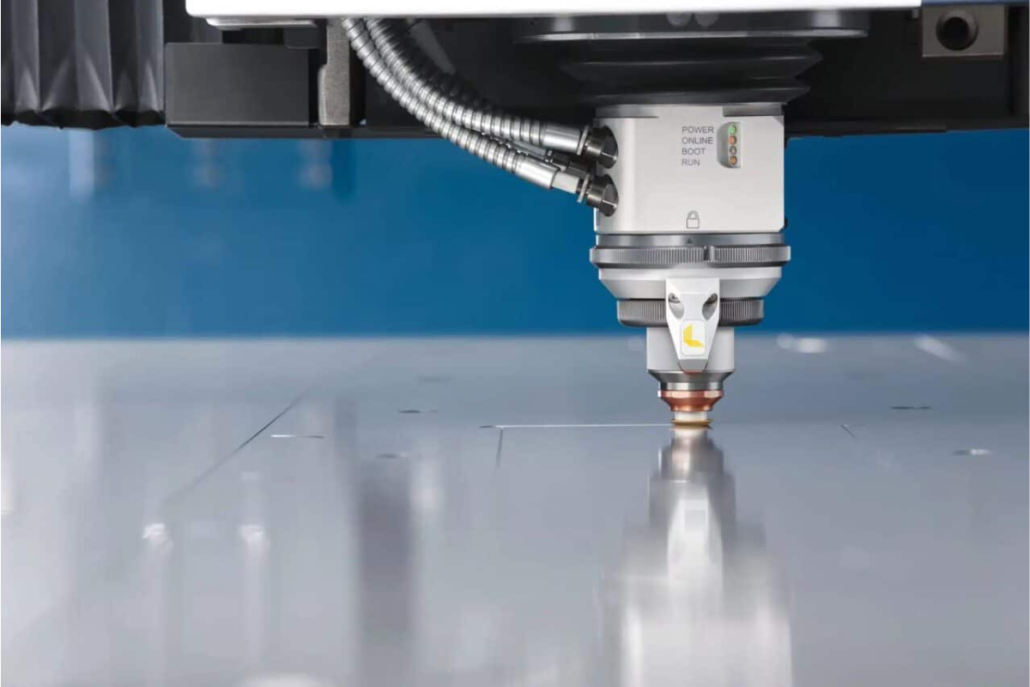
Fibre laser cutting is a newer, solid-state laser technology that uses a laser generated through optical fibres doped with rare-earth elements such as ytterbium. Instead of mirrors, the laser beam is transmitted directly through fibre-optic cables to the cutting head.
The wavelength of a fibre laser is much shorter, around 1.06 micrometres, allowing it to be absorbed more efficiently by metallic materials.
Key Characteristics of Fibre Systems:
- Compact, solid-state laser source
- High energy efficiency
- Extremely fast cutting speeds on thin and medium metals
- Minimal optical alignment and lower maintenance requirements
The rise of fibre laser technology has transformed metal fabrication, particularly in high-volume and precision-driven industries.

Key Differences Between Fibre Laser and CO₂ Laser Cutting
While both fibre and CO₂ laser cutting systems deliver high levels of accuracy and reliability, they differ significantly in how they perform across materials, speed, efficiency, and long-term operating costs. Understanding these differences helps manufacturers and fabricators select the most appropriate technology for their specific production requirements.
1. Laser Wavelength and Material Absorption
One of the most significant technical differences between fibre and CO₂ lasers is wavelength, which directly affects how efficiently laser energy is absorbed by different materials.
- CO₂ lasers operate at a wavelength of approximately 10.6 micrometres, which is well absorbed by organic and non-metallic materials such as wood, acrylic, rubber, textiles, and certain plastics. This makes CO₂ lasers highly effective for cutting and engraving non-metal materials with smooth, clean edges.
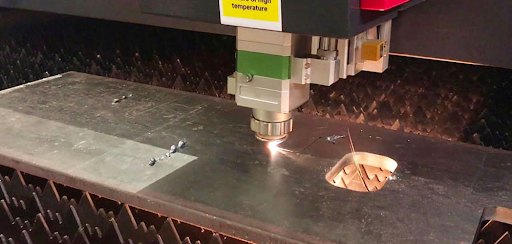
- Fibre lasers, on the other hand, operate at a much shorter wavelength of around 1.06 micrometres. This wavelength is far better absorbed by metals, including mild steel, stainless steel, aluminium, brass, and copper. As a result, fibre lasers deliver faster cutting speeds and higher efficiency when processing metallic materials.
This fundamental difference in wavelength explains why fibre lasers dominate metal cutting applications, while CO₂ lasers continue to play an important role in mixed-material and non-metal processing.
2. Cutting Speed and Productivity
When comparing cutting speeds, fibre lasers generally outperform CO₂ lasers, sometimes by a significant margin, particularly when cutting thin to medium gauge metals.
- Fibre lasers can cut thin sheet metal several times faster than CO₂ systems, enabling higher throughput, shorter lead times, and increased production efficiency. This makes fibre laser cutting especially attractive for industries where speed, volume, and turnaround time are critical.
- CO₂ lasers, while slower on metals, still provide stable and consistent cutting performance on thicker materials and non-metals. In applications where cutting speed is less critical than cut quality or material versatility, CO₂ lasers remain a practical solution.
3. Precision and Cut Quality
Both fibre and CO₂ laser cutting systems are capable of producing highly precise cuts with excellent repeatability. However, the nature of the laser beam influences edge quality depending on the material being processed.
- Fibre lasers generate an extremely fine, concentrated beam that results in narrow kerf widths and sharp, detailed cuts on metal parts. This level of precision is particularly beneficial for intricate metal components and tight-tolerance applications.
- CO₂ lasers, by contrast, can produce exceptionally smooth edges on thicker non-metallic materials such as acrylics and plastics. In many cases, this reduces or eliminates the need for secondary finishing operations, which can save time and cost.
For metal-focused precision work, fibre lasers typically have the advantage, while CO₂ lasers excel in applications where surface finish on non-metals is a priority. Read more about the precision of laser cutting technology here.
4. Energy Efficiency and Operating Costs
Energy efficiency is one of the strongest advantages of fibre laser systems.
- Fibre lasers convert a significantly higher percentage of electrical energy into usable laser power, resulting in lower overall electricity consumption.
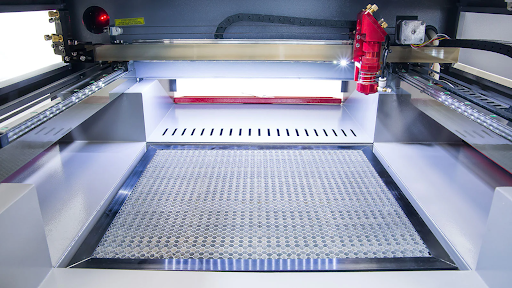
- CO₂ laser systems require more energy not only to generate the laser beam but also to operate supporting systems such as gas circulation, cooling units, and optical components.
Over time, these differences can lead to substantially higher operating costs for CO₂ lasers, particularly in high-volume production environments. Fibre lasers, with their superior efficiency, often deliver lower long-term running costs.
5. Maintenance and Reliability
Maintenance requirements are another key area where fibre lasers offer clear benefits.
CO₂ laser systems rely on:
- Multiple mirrors that require regular alignment
- Periodic gas replenishment
- Larger and more complex cooling systems
- A greater number of mechanical components
Fibre laser systems eliminate many of these elements by delivering the laser beam directly through fibre optics. This results in:
- Fewer consumable parts
- Reduced downtime
- Lower long-term maintenance costs
For businesses seeking maximum machine uptime and minimal servicing interruptions, fibre lasers are often considered the more reliable option.
6. Material Versatility
When it comes to material compatibility, neither technology is universally superior the best choice depends entirely on the intended application.
Fibre Laser Cutting Is Best For:
- Mild steel
- Stainless steel
- Aluminium
- Brass and copper
- Thin to medium metal sheets
CO₂ Laser Cutting Is Best For:
- Acrylic and plastics
- Wood and MDF
- Textiles and leather
- Rubber and foams
- Mixed-material jobs
This distinction is central to any informed equipment selection process and should be a primary consideration when comparing laser cutting technologies. Also, read in more detail about What Materials Can Be Laser Cut?
Kirmell’s laser cutting services support both fibre and CO₂ technologies, allowing us to process a wide range of metal and non-metal materials to suit different project requirements.
7. Initial Investment and Long-Term Value
CO₂ laser machines often come with a lower initial purchase cost, making them an attractive option for smaller workshops or businesses that primarily work with non-metal materials.
Fibre laser machines typically require a higher upfront investment. However, this cost is frequently offset over time by:
- Lower energy consumption
- Reduced maintenance requirements
- Faster production speeds
- Longer operational service life
For metal-focused operations, the return on investment for fibre laser systems is often achieved more quickly, especially in high-throughput environments.
8. Safety Considerations
Both fibre and CO₂ laser cutting systems require robust safety measures, including machine enclosures, fume extraction, and operator training.
Fibre lasers operate at wavelengths that are invisible to the human eye, which can increase potential risk if safety protocols are not followed correctly. Modern fibre laser machines address this through fully enclosed designs, interlock systems, and automated safety features.
When properly installed and operated, both technologies can be used safely and effectively in industrial environments.
Industry Applications
Fibre Laser Applications
- Automotive and aerospace components
- Sheet metal fabrication
- Electrical enclosures and panels
- Precision engineering
- High-volume metal production
CO₂ Laser Applications
- Signage and display manufacturing
- Woodworking and interior design
- Textile cutting
- Plastic fabrication
- Prototyping and mixed-material work
Fibre Laser vs. CO₂ Laser Cutting: Choosing the Right Technology
When deciding between fibre and CO₂ laser cutting, it’s important to evaluate how each technology aligns with your specific operational needs rather than looking for a one-size-fits-all solution. Both systems offer distinct advantages, and the right choice depends on how the equipment will be used in day-to-day production.
Key factors to consider include:
- Primary materials being processed
If your work focuses mainly on metals such as steel, aluminium, or copper, fibre laser cutting is typically the more efficient and cost-effective option. For applications involving non-metal materials like acrylic, wood, textiles, or mixed materials, CO₂ laser cutting may be better suited. - Required cutting speed and production volume
High-volume operations and fast turnaround environments benefit from the superior cutting speeds of fibre lasers, especially on thin to medium gauge metals. CO₂ lasers are often sufficient for lower-volume production or jobs where cutting speed is less critical than edge quality. - Energy consumption and maintenance costs
Fibre laser systems generally offer lower ongoing operating costs due to higher energy efficiency and reduced maintenance requirements. CO₂ lasers tend to consume more power and require additional servicing, which can increase long-term costs. - Budget and long-term production goals
While CO₂ lasers may involve a lower initial investment, fibre lasers often deliver better long-term value through reduced running costs, higher productivity, and longer service life. Businesses planning for future growth or increased metal processing often find fibre laser systems more scalable.
Ultimately, the best laser cutting technology is the one that supports your production priorities, material requirements, and long-term business objectives. By carefully assessing these factors, manufacturers can invest in a solution that delivers consistent performance, efficiency, and return on investment over time.
At Kirmell, we help customers select the most suitable laser cutting approach based on material, volume, and performance requirements, ensuring efficient and reliable results.
Laser Cutting Services at Kirmell
At Kirmell, we provide precision laser cutting solutions using both fibre and CO₂ technologies to meet a wide range of material and production requirements. Our team works closely with customers to deliver accurate, efficient results tailored to each project.
Looking for expert guidance or a reliable laser cutting partner? Contact Kirmell today to discuss your requirements and find the right laser cutting solution for your application.
Conclusion
Understanding the co2 laser vs fiber laser differences is essential for making an informed decision about laser cutting technology. While fibre lasers dominate metal cutting due to their speed, efficiency, and reliability, CO₂ lasers continue to offer unmatched versatility for non-metal applications.
Ultimately, the best choice depends on your materials, production volume, and long-term goals. By carefully evaluating these factors, manufacturers can invest in a laser cutting solution that delivers maximum performance, efficiency, and return on investment.
FAQs
[saswp_tiny_multiple_faq headline-0=”h4″ question-0=”What is the main difference between fibre laser and CO₂ laser cutting?” answer-0=”The main difference lies in laser wavelength and material absorption. This affects cutting speed, efficiency, and the types of materials each system can process, which is why understanding fibre laser vs co2 laser cutting is important when selecting the right technology. ” image-0=”” fontsize-0=”18″ fontunit-0=”px” count=”1″ html=”true”]
[saswp_tiny_multiple_faq headline-0=”h4″ question-0=”Which materials are best suited to fibre laser cutting?” answer-0=”Fibre laser cutting is best suited for metals such as mild steel, stainless steel, aluminium, brass, and copper. The shorter wavelength allows for faster cutting speeds and higher efficiency on metal materials. ” image-0=”” fontsize-0=”18″ fontunit-0=”px” count=”1″ html=”true”]
[saswp_tiny_multiple_faq headline-0=”h4″ question-0=”When is CO₂ laser cutting the better option?” answer-0=”CO₂ laser cutting is ideal for non-metal materials such as acrylic, wood, plastics, textiles, and rubber. These materials absorb the longer wavelength effectively, making CO₂ systems a strong choice for mixed-material applications. ” image-0=”” fontsize-0=”18″ fontunit-0=”px” count=”1″ html=”true”]
[saswp_tiny_multiple_faq headline-0=”h4″ question-0=”How do cutting speeds compare between fibre and CO₂ lasers?” answer-0=”In most cases, fibre lasers cut metal significantly faster than CO₂ systems, especially on thin to medium gauge sheet. This is one of the most notable co2 laser vs fiber laser differences in production environments, focused on speed and volume. ” image-0=”” fontsize-0=”18″ fontunit-0=”px” count=”1″ html=”true”]
[saswp_tiny_multiple_faq headline-0=”h4″ question-0=”Which laser cutting technology is more energy efficient?” answer-0=”Fibre lasers are generally far more energy efficient, converting a higher percentage of electrical power into usable laser output. This results in lower running costs compared to traditional CO₂ laser systems. ” image-0=”” fontsize-0=”18″ fontunit-0=”px” count=”1″ html=”true”]
[saswp_tiny_multiple_faq headline-0=”h4″ question-0=”How does maintenance differ between fibre and CO₂ laser machines?” answer-0=”CO₂ laser systems require more regular maintenance due to mirrors, gas replenishment, and alignment. Fibre lasers have fewer moving and consumable parts, offering improved reliability and reduced downtime. ” image-0=”” fontsize-0=”18″ fontunit-0=”px” count=”1″ html=”true”]
[saswp_tiny_multiple_faq headline-0=”h4″ question-0=”Is fibre laser cutting more accurate than CO₂ laser cutting?” answer-0=”Both systems deliver high precision, but fibre lasers typically provide finer detail and narrower kerf widths on metal parts. This makes them well suited for applications requiring tight tolerances and consistent repeatability. ” image-0=”” fontsize-0=”18″ fontunit-0=”px” count=”1″ html=”true”]


