
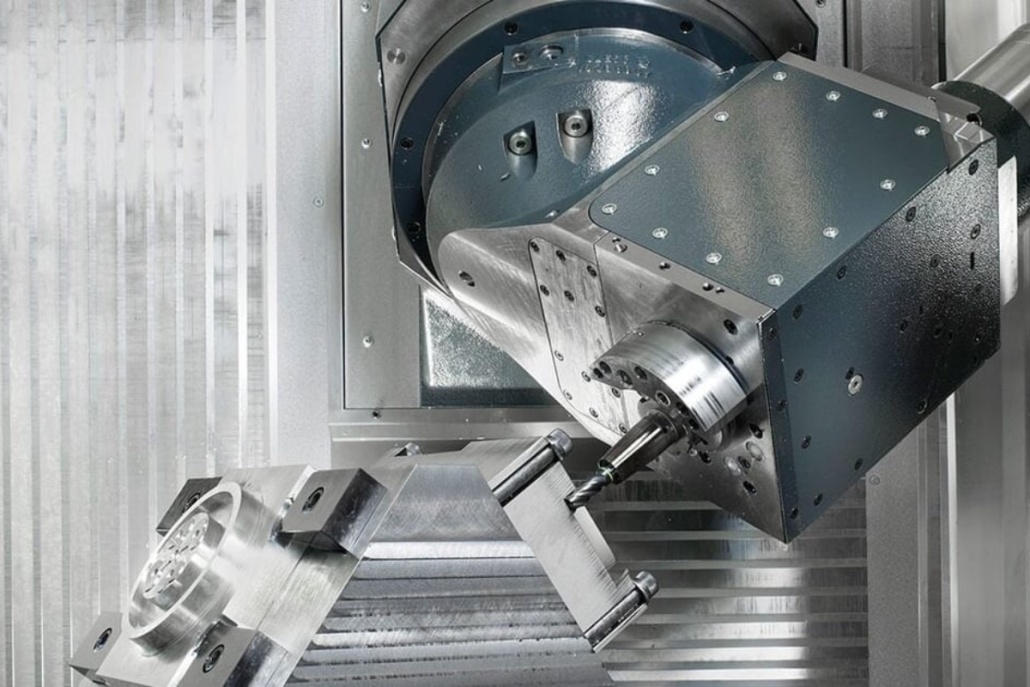
Which Is Better: 3-Axis or 5-Axis CNC Machining?
When it comes to CNC machining, one of the most common questions engineers, designers, and buyers ask is whether 3-axis or 5-axis machining is better. The honest answer is that neither is automatically superior. The right choice depends on the geometry of the part, the tolerances required, the finish expectations, and the production goals.
That said, the differences between the two are significant. Understanding them properly can help you avoid overspending on unnecessary complexity—or worse, underestimating what your part truly requires.
This guide breaks down the comparison in a clear, practical way so you can confidently decide which option makes sense for your project.
What Does “Axis” Mean in CNC Machining?
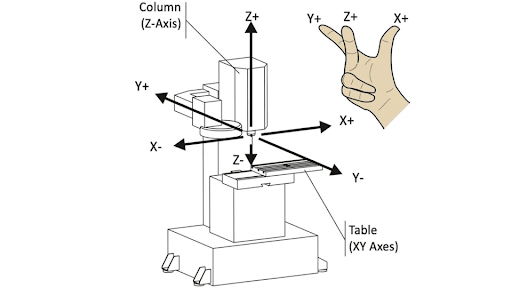
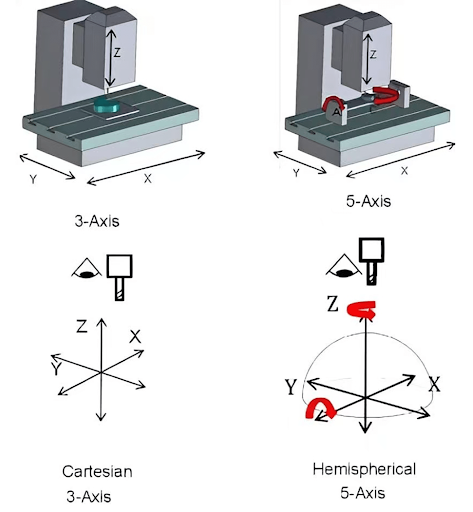
In CNC milling, an “axis” refers to a direction of motion. A standard 3-axis machine moves the cutting tool along three linear directions:
- X (left to right)
- Y (front to back)
- Z (up and down)
This allows the tool to cut material from above and move across the surface in controlled paths.
A 5-axis machine includes these same three linear movements but adds two rotational axes. These additional movements allow the part or the cutting head to tilt and rotate automatically. Instead of manually repositioning the component to reach different sides, the machine handles it within the same setup.
This added flexibility dramatically expands what can be machined efficiently.
How 3-Axis CNC Machining Works
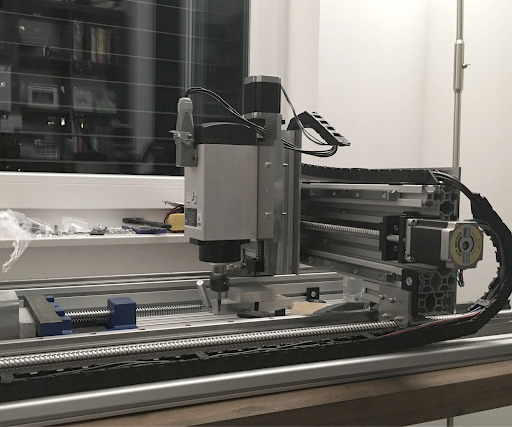
3-axis machining is the most common form of CNC milling and remains the backbone of modern manufacturing. The cutting tool approaches the part from a fixed orientation. If another face needs machining, the operator must stop the machine, remove the part, reposition it, and clamp it again.
For many components, this approach works perfectly. Parts such as brackets, mounting plates, housings, and structural components are often designed in ways that allow them to be machined from one or two orientations. In these cases, 3-axis machining is efficient, accurate, and cost-effective.
Programming is relatively straightforward, setup is simple, and most machine shops are highly experienced with this method. For prismatic parts with mostly flat surfaces and standard features, 3-axis machining is often the logical choice.
How 5-Axis CNC Machining Works
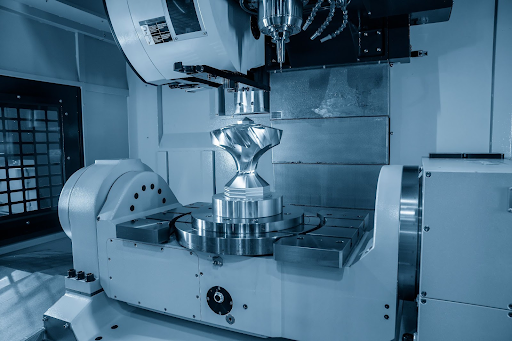
5-axis machining builds on the same basic milling process by adding rotational motion. This allows the machine to tilt the part or spindle during cutting, enabling access to multiple faces without manual repositioning.
There are two main approaches within 5-axis machining. In positional 5-axis (often called 3+2 machining), the part rotates to a specific angle and then machining continues as if it were a 3-axis operation. In simultaneous 5-axis machining, all five axes move together continuously, enabling complex contours and highly refined surface finishes.
This flexibility allows intricate geometries to be produced in a single setup something that would require multiple re-clampings on a 3-axis machine.
The Importance of Setups
One of the biggest practical differences between 3-axis and 5-axis machining is the number of setups required.
A setup is simply how many times a part must be repositioned and re-clamped during machining. Every time this happens, there is a possibility of slight misalignment. Even with precise fixtures and careful inspection, tolerance stacking can occur.
With 3-axis machining, a part that has features on multiple faces may require several setups. For example, machining the top, side, and bottom of a part could mean three separate operations.
With 5-axis machining, many of these features can often be completed in one clamping. The machine rotates the part instead of the operator physically handling it.
Fewer setups usually lead to:
- Improved feature-to-feature alignment
- Reduced risk of handling damage
- Shorter overall production time
For complex components, this can significantly improve both quality and efficiency.
Accuracy and Dimensional Control
It is important to clarify that 5-axis machines are not inherently more precise than 3-axis machines. Both can hold tight tolerances when properly calibrated and maintained.
However, 5-axis machining can improve practical accuracy in complex parts because it eliminates the need to re-establish datums multiple times. When a part remains in a single setup, the relationship between features is preserved more consistently.
In simpler components where most machining happens from one direction, 3-axis machines perform exceptionally well. But when features exist on several faces that must align perfectly, 5-axis machining often provides a measurable advantage.
Surface Finish Considerations
Surface finish is not just about appearance. It can affect sealing performance, wear resistance, and structural integrity. On flat surfaces, 3-axis machining produces excellent finishes. For many industrial components, it meets or exceeds required specifications.
Where 5-axis machining stands out is on complex, curved, or sculpted surfaces. Because the tool can remain properly angled relative to the surface, cutting engagement stays consistent. This reduces visible tool marks and allows smoother transitions across curved geometry.
Another benefit is the ability to use shorter cutting tools. Shorter tools are more rigid, which reduces vibration and chatter, leading to a finer surface finish. For parts with organic shapes or aerodynamic profiles, this can make a noticeable difference.
Read more about metal finishing in metal fabrication here.
Handling Complex Geometry
As part geometry becomes more complicated, the strengths of 5-axis machining become clearer.
Features such as angled holes, deep pockets, compound curves, and multi-face components can be produced with fewer operations. On a 3-axis machine, achieving the same result might require custom fixtures, additional setups, or extended tool lengths that reduce stability.
While 3-axis machining is capable of producing many complex features with the right planning, the process becomes more time-consuming. Each additional setup adds inspection steps and increases the chance of dimensional variation.
5-axis machining simplifies this workflow by allowing the machine to reposition automatically, maintaining consistent geometry throughout the operation.
Production Speed and Lead Time
When comparing production speed, it is important to look beyond just cutting time. Total production time includes setup, programming, inspection, and potential rework.
For straightforward parts, 3-axis machining may actually be faster overall. Programming is simpler, and setup procedures are well established. If only one or two orientations are required, the process is efficient and economical.
As complexity increases, however, 5-axis machining can reduce overall lead time. Completing multiple faces in one setup eliminates the need for repeated clamping and verification. This streamlined workflow can shorten delivery schedules, particularly for high-value or time-sensitive components.
Cost Comparison
Cost is often a deciding factor. 5-axis machines are more expensive to purchase and maintain. They require advanced software, precise calibration, and highly skilled operators. These factors lead to higher hourly machining rates.
For simple parts, this added capability may not provide meaningful benefits. In those cases, 3-axis machining offers a more economical solution.
However, when a part would require multiple setups on a 3-axis machine, the higher cost of 5-axis machining can be offset by reduced labor, improved consistency, and lower scrap risk. The true comparison is not just hourly rate, but total production cost.
Differences Between 3 Axis CNC and 5 Axis CNC Machine
| Parameters | 3-Axis CNC | 5-Axis CNC |
| Movement Capability | Moves along three linear axes: X, Y, and Z. | Moves along three linear axes (X, Y, Z) plus two rotational axes (A and B). |
| Complexity of Parts | Suitable for simple geometries and straightforward designs. | Ideal for highly complex, contoured, and intricate parts. |
| Surface Finish | May produce rougher finishes that require secondary processing. | Produces smoother finishes due to better tool positioning and continuous cutting. |
| Setup & Cycle Time | Requires multiple setups and generally has longer cycle times. | Requires fewer setups and offers faster overall machining time. |
| Accuracy & Precision | Provides good accuracy for standard components. | Delivers superior accuracy with high repeatability. |
| Cost | More affordable in terms of machine cost, tooling, and operation. | Higher initial investment, maintenance, and programming costs. |
| Programming | Uses simpler programming and standard CAM software. | Requires advanced programming and specialized CAM software. |
| Tool Breakage Risk | Higher risk due to longer tool reach and perpendicular cutting forces. | Lower risk due to shorter tools, improved rigidity, and reduced vibration. |
| Error Accumulation | Higher chance of cumulative errors due to multiple setups. | Reduced error accumulation with single-setup machining. |
| Applications | Best for simple parts such as brackets, plates, fittings, and flat components. | Commonly used in aerospace, automotive, medical, and mold manufacturing industries. |
3 Axis CNC vs 5 Axis CNC: Which One is Better?
Selecting between 3-axis and 5-axis CNC machining depends largely on part geometry, tolerance requirements, budget, and production efficiency. Choosing the right method ensures better cost control, improved quality, and optimized manufacturing time.
When 3-Axis CNC Is the Better Choice
3-axis machining is typically the most practical and cost-effective option when:
- The part is primarily flat or prismatic
Components with simple geometries—such as plates, brackets, housings, and basic fittings—are easily machined using linear X, Y, and Z movements.
- Features are accessible from one or two sides
If most cutting operations can be completed without repositioning the part multiple times, 3-axis machining works efficiently.
- Budget sensitivity is a priority
3-axis machines have lower upfront investment, simpler tooling requirements, and reduced programming costs, making them ideal for small businesses or cost-driven projects.
- Tolerances are moderate and straightforward
For parts that do not require extremely tight positional relationships between multiple faces, 3-axis machining delivers sufficient accuracy.
- Production volumes are moderate or low
For prototypes or smaller production runs, the simplicity of 3-axis machining keeps setup and programming time manageable.
When 5-Axis CNC Becomes the Advantage
5-axis machining is the preferred solution when part complexity and precision demand greater capability:
- The part has features on multiple faces requiring precise alignment
5-axis machines can complete complex geometries in a single setup, ensuring consistent dimensional relationships between surfaces.
- Angled, curved, or contoured geometry is critical
Aerospace components, turbine blades, molds, and medical implants often require simultaneous multi-axis movement to achieve complex shapes.
- High-quality surface finish on complex shapes is essential
Continuous tool engagement and optimized cutting angles reduce visible tool marks and minimize secondary finishing.
- Reducing setups improves accuracy and consistency
Fewer repositioning steps mean fewer opportunities for human error, improving repeatability and overall part quality.
- Tight tolerances and high precision are required
Industries such as aerospace and medical manufacturing often rely on 5-axis machining for superior accuracy and repeatability.
Advanced CNC Machining Services by Kirmell
At Kirmell, we provide CNC machining services tailored to your project needs. Whether it’s a simple bracket or a detailed multi-surface component, we assess the design, material, tolerances, and quantity to choose the right approach. Our 3-axis CNC machining is a cost-effective and reliable solution for straightforward parts like plates, fittings, and structural components.
For more complex parts, our 5-axis CNC machining delivers high precision and smooth surface finishes. By machining multiple angles in a single setup, we reduce errors, improve consistency, and speed up production. Contact Kirmell today to discuss your project and get a competitive quote.
Conclusion
3-axis machining is ideal for simplicity, cost control, and high-efficiency production of standard components. It remains the most widely used and practical solution for many industries.
5-axis machining excels when geometry becomes complex, when precision relationships between features are critical, and when reducing setups improves quality and lead time.
The best approach is not to ask which is universally better, but which is better for your specific part. By evaluating geometry, tolerance requirements, surface finish expectations, and production volume, you can determine which method delivers the best balance of performance and cost.
FAQs
[saswp_tiny_multiple_faq headline-0=”h4″ question-0=”Can 3-axis CNC machining produce complex parts?” answer-0=”Yes, 3-axis CNC machining can handle many complex parts, but it may require multiple setups or custom fixtures. This can increase production time compared to 5-axis CNC machining. ” image-0=”” fontsize-0=”18″ fontunit-0=”px” count=”1″ html=”true”]
[saswp_tiny_multiple_faq headline-0=”h4″ question-0=”Does 5-axis CNC machining improve part quality?” answer-0=”It can. By reducing setups, 5-axis CNC machining helps maintain better alignment between features and lowers the risk of repositioning errors on complex components. ” image-0=”” fontsize-0=”18″ fontunit-0=”px” count=”1″ html=”true”]
[saswp_tiny_multiple_faq headline-0=”h4″ question-0=”Is 3-axis CNC machining more affordable than 5-axis?” answer-0=”In most cases, yes. 3-axis CNC machining typically has lower machine and programming costs, making it more economical for simple or moderately complex parts. ” image-0=”” fontsize-0=”18″ fontunit-0=”px” count=”1″ html=”true”]
[saswp_tiny_multiple_faq headline-0=”h4″ question-0=”Is 5-axis CNC machining faster than 3-axis?” answer-0=”For simple parts, not necessarily. But for complex, multi-face components, 5-axis CNC machining can reduce total production time by completing the part in fewer setups. ” image-0=”” fontsize-0=”18″ fontunit-0=”px” count=”1″ html=”true”]
[saswp_tiny_multiple_faq headline-0=”h4″ question-0=”How do I choose between 3-axis and 5-axis CNC machining?” answer-0=”It depends on your part’s geometry, tolerance requirements, and budget. Simple, prismatic parts suit 3-axis CNC machining, while complex angled or sculpted designs often require 5-axis CNC machining. ” image-0=”” fontsize-0=”18″ fontunit-0=”px” count=”1″ html=”true”]