
A Beginner’s Guide to Sheet Metal Prototyping
Sheet metal prototyping is one of the most reliable and widely adopted methods for transforming product ideas into functional physical parts. From simple mounting brackets to complex industrial enclosures, sheet metal prototypes allow designers and engineers to test designs under real-world conditions before committing to full-scale production.
For beginners, the process can appear complex. Questions about materials, fabrication methods, costs, tolerances, and design limitations often arise early in development. This guide explains the fundamentals of sheet metal prototyping in a clear, structured way, helping newcomers understand the process, avoid common mistakes, and move confidently from concept to physical prototype.
What Is Sheet Metal Prototyping?
Sheet metal prototyping involves creating early-stage parts or assemblies from flat metal sheets that are cut, bent, and formed into a finished shape. These prototypes are used to validate designs before mass production begins.
Unlike visual mock-ups or concept models, sheet metal prototypes are usually functional. They are produced using real manufacturing materials and techniques, making them an accurate representation of the final product. This approach allows teams to test fit, strength, assembly, and usability under realistic conditions.
Sheet metal prototyping plays a vital role in manufacturing and prototyping because it bridges the gap between digital design and production-ready components.
Why Sheet Metal Prototyping Matters
Prototyping is not just a preliminary step it is a critical phase of product development. Sheet metal prototyping offers several key benefits:
- Design validation: Physical parts reveal issues that CAD models may not show.
- Reduced development risk: Problems are identified before expensive tooling or production begins.
- Faster iteration: Designs can be modified and re-tested quickly.
- Production readiness: Prototypes made using real processes transition smoothly to manufacturing.
For beginners, sheet metal prototyping provides invaluable insight into how design decisions affect manufacturability, cost, and performance.
At Kirmell Ltd, we see firsthand how effective sheet metal prototyping reduces development risk and improves final product quality. By producing functional prototypes using production-grade materials and processes, we help our customers validate designs before committing to full manufacture.
Common Uses of Sheet Metal Prototypes
Sheet metal prototypes are used across a wide range of industries, including automotive, construction, electronics, medical equipment, and industrial machinery. Typical parts include:
- Brackets and mounting plates
- Panels and access covers
- Electrical and electronic enclosures
- Frames and chassis components
- Guards, shields, and supports
Because these components often require strength, accuracy, and repeatability, sheet metal is a practical and efficient solution.
The Sheet Metal Prototyping Process
While workflows may vary depending on part complexity and available equipment, most sheet metal prototypes follow a structured, step-by-step process. Understanding each stage helps beginners make better design decisions and reduce errors.
1. Design and CAD Development
The process begins with a digital design created using 2D or 3D CAD software. Designers define dimensions, bend lines, hole locations, and material thickness.
Applying design-for-manufacturing principles early ensures the part can be produced efficiently. Designers must also develop accurate flat patterns, accounting for bend allowances and material stretching to achieve correct final dimensions.
2. Material Selection
Choosing the correct material is essential for achieving the desired strength, durability, and cost of the prototype. Factors such as weight, corrosion resistance, appearance, and budget all influence material selection.
Material choice also affects how easily the sheet can be cut and formed. Thickness selection is equally important, as thicker materials provide strength while thinner sheets are easier to bend.
3. Cutting the Sheet
Once the material is selected, flat sheets are cut into the required shapes, defining the overall outline of the part along with holes and internal features.
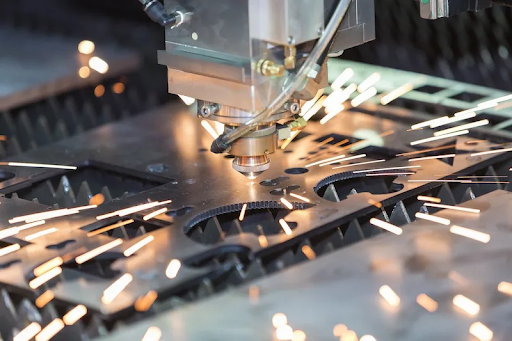
Laser cutting is commonly used due to its precision and speed, while waterjet cutting is suitable for heat-sensitive materials. Accuracy at this stage is critical to ensure proper bending and assembly later in the process.
At Kirmell Ltd, we use modern laser cutting and press brake equipment to maintain accuracy and consistency throughout the prototyping process. This allows us to support fast design iterations while ensuring each prototype closely reflects the final production intent.
4. Bending and Forming
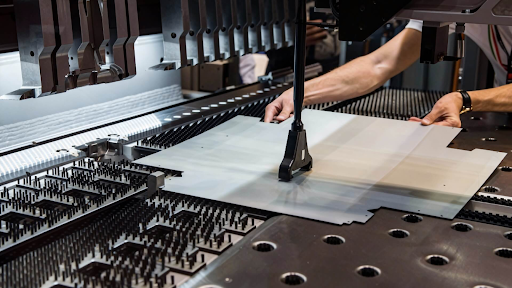
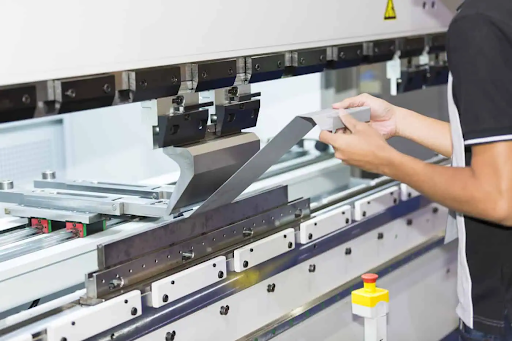
After cutting, the flat sheet is bent into its final shape using press brakes or forming tools. These operations create flanges, channels, and structural features.
Factors such as bend radius, bend angle, and material springback must be considered to achieve accurate results. Simple bend geometries are recommended for early prototypes to reduce risk and complexity.
5. Assembly and Joining
If the prototype includes multiple components, they are assembled using welding, fasteners, rivets, or self-clinching hardware.
Welding creates permanent joints, while mechanical fasteners allow for easier disassembly and modification. Proper alignment during assembly ensures the prototype accurately represents the final product.
6. Surface Finishing
Surface finishing improves appearance, durability, and corrosion resistance. It also helps make prototypes safer to handle by removing sharp edges.
Common finishes include powder coating, anodizing, plating, painting, or simple deburring. Finishing may also be used to replicate the appearance of the final production part. Read more about metal finishing in detail in our separate guide.
Key Sheet Metal Prototyping Techniques
Understanding the most common sheet metal fabrication techniques helps beginners communicate more effectively with manufacturers and make better design decisions during the prototyping stage.
Laser Cutting
Laser cutting uses a high-powered, focused beam to cut sheet metal with a high level of precision. It is ideal for producing complex shapes, tight tolerances, and clean edges, making it one of the most widely used methods for sheet metal prototyping. Laser cutting also offers fast turnaround times, which is especially useful during early design iterations.
Waterjet Cutting
Waterjet cutting uses high-pressure water mixed with abrasive material to cut through metal sheets. Because the process generates no heat, it avoids heat-affected zones and material distortion. This makes waterjet cutting suitable for heat-sensitive materials or parts where thermal changes could affect performance.
Punching
Punch presses use tooling to create holes, slots, and basic shapes in sheet metal. The metal punching method is highly efficient for repetitive features and simpler designs. However, punching may limit flexibility for complex geometries and is generally best suited for prototypes with standard hole patterns or cut-outs.
Bending and Forming
Bending and forming operations are used to transform flat sheets into three-dimensional shapes. Press brakes bend the metal along predefined lines to create flanges, channels, and structural features. Correct bend radius selection and spacing between bends are essential to prevent cracking, distortion, or dimensional inaccuracies.
Welding and Mechanical Joining
Welding is used to permanently join multiple sheet metal components into a single assembly, providing strength and rigidity. Mechanical joining methods, such as bolts, rivets, or self-clinching fasteners, allow parts to be assembled and disassembled easily, making them ideal for prototypes that may require design changes.
Selecting the Right Material
Material choice plays a major role in prototype performance and cost. Common sheet metal materials include:
Aluminium
Lightweight, corrosion-resistant, and easy to form. Frequently used in enclosures and lightweight structures.
Mild Steel
Strong, affordable, and easy to weld. Often used for structural components and industrial parts.
Stainless Steel
Highly corrosion-resistant and durable. Suitable for harsh environments but more difficult to form.
Copper and Brass
Excellent electrical and thermal conductivity. Common in electrical and decorative applications. For beginners, aluminium and mild steel are often the most forgiving materials to work with.
Understanding Tolerances in Sheet Metal
Tolerances define how much variation is allowed in part dimensions. In sheet metal prototyping, tolerances are affected by cutting methods, material thickness, and bending accuracy.
Compared to CNC machining, sheet metal typically has looser tolerances, especially around bends. Over-specifying tight tolerances can increase cost and complexity without adding functional value.
A practical approach is to apply tight tolerances only where they are functionally necessary.
Design Guidelines for Beginners
Good design practices make prototyping smoother and more cost-effective:
- Use realistic bend radii to prevent cracking
- Keep holes away from edges and bends to avoid deformation
- Choose standard material thicknesses for faster sourcing
- Avoid unnecessary complexity in early prototypes
- Account for bend allowance when creating flat patterns
Simple, well-thought-out designs are easier to manufacture and modify.
Sheet Metal Prototyping vs. Other Methods
Understanding alternative prototyping options helps beginners choose the right approach:
Sheet Metal vs. 3D Printing
3D printing is ideal for quick visual models but lacks the strength and material realism of sheet metal.
Sheet Metal vs. CNC Machining
CNC machining offers tight tolerances but is often more expensive for thin-walled parts. Sheet metal is more efficient for enclosures and flat-based components.
Cost Factors in Sheet Metal Prototyping
Several factors influence prototype cost:
- Material type and thickness
- Part size and complexity
- Number of bends and features
- Finishing requirements
- Quantity ordered
Costs can be reduced by simplifying designs, limiting secondary processes, and avoiding unnecessary tight tolerances.
Lead Times and Turnaround
One of the biggest advantages of sheet metal prototyping is speed. Modern cutting and bending equipment allows us to produce prototypes in just a few days, making the process ideal for rapid development cycles.
For businesses seeking prototype manufacturing UK services, fast turnaround times combined with local support can significantly reduce project delays.
Common Beginner Mistakes to Avoid in Sheet Metal Prototyping
- Ignoring design-for-manufacturing principles
- Designing bends too close together
- Choosing materials without considering formability
- Overcomplicating early prototypes
- Assuming prototype costs match production costs
Avoiding these mistakes helps ensure a smoother development process.
From Concept to Production
A successful prototype validates design intent and provides confidence before production begins. Many sheet metal prototypes can transition directly into low- or medium-volume manufacturing with minimal changes.
Understanding how to manufacture a prototype using production-ready processes ensures that the final design is both functional and economical.
For more complex assemblies, a sheet metal prototype fabrication approach can evolve into a fully optimized custom metal fabrication prototype as the design matures.
How We Support Sheet Metal Prototyping at Kirmell Ltd
At Kirmell Ltd, we support customers through every stage of sheet metal prototyping, from initial design review to the manufacture of fully functional prototypes. We use production-grade materials and proven fabrication processes to ensure each prototype accurately reflects the final part, allowing designs to be tested and refined with confidence.
By combining modern laser cutting, bending, and fabrication capabilities with practical design-for-manufacturing knowledge, we help streamline development and reduce risk before production begins. If you’re planning a sheet metal prototype or need technical guidance on your design, call our team to discuss your requirements and how we can support your project.
Conclusion
Sheet metal prototyping is a powerful and accessible method for bringing ideas to life. For beginners, learning the basics of materials, processes, tolerances, and design principles lays the groundwork for successful product development.
By starting with simple designs, selecting appropriate materials, and collaborating closely with fabricators, new designers and engineers can produce effective prototypes that accurately reflect final products.
Whether you are developing a bracket, enclosure, or structural component, sheet metal prototyping offers a practical, reliable, and cost-effective path from concept to production.
FAQs
What materials are commonly used for sheet metal prototypes?
How accurate are sheet metal prototypes?
How long does sheet metal prototyping take?
Can prototypes be made using production materials?
What design files are required for sheet metal prototyping?
Where can I get sheet metal prototyping services?