
A Complete Guide to Cubicle Hardware for Washrooms and Offices
Cubicle hardware plays a major role in how washrooms, toilets and office spaces function daily. Even though these fittings are small, they are responsible for stability, privacy, safety and long-lasting performance. Whether it’s a school washroom, office cubicles, shopping-centre facilities, gyms or commercial toilets, choosing strong and reliable cubicle hardware is essential for smooth operation.
High-quality hardware ensures that cubicle doors open properly, panels stay secure, locks work smoothly and the entire space remains safe for users. Poor hardware often leads to loose doors, broken locks, misaligned panels, noise and repeated maintenance problems. Good hardware, however, improves the life of the cubicle system and creates a better experience for everyone.
In this complete guide, we will explain the types of cubicle hardware used in washrooms and office environments, how these fittings work, what materials are best, and what to consider when selecting the hardware <span style=”font-weight: 400;”>for different applications.
What Is Cubicle Hardware?</b>
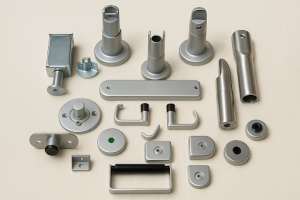
Cubicle hardware refers to the metal fittings and accessories that support and hold together toilet cubicles, shower cubicles, changing rooms and office partitions. These fittings attach to the cubicle panels, doors and walls to create a secure and functional cubicle system.
The main types of cubicle hardware fittings include:
- Hinges
- Indicator locks
- Latches
- Handles
- U-brackets
- Wall brackets
- Support legs
- Coat hooks
- Headrails
- Screws and fixings
Without these parts, the cubicle would not be stable, safe or private. They are essential elements for any modern washroom or office partition setup.
Why Cubicle Hardware Is Important
Cubicle hardware must be strong, durable and easy to use. Here are the main reasons why these fittings matter:
1. Stability
Cubicle hinges, brackets and legs hold the structure together. Strong hardware prevents wobbling, shifting and misalignment, especially in busy washrooms.
2. Safety
Poor fittings can cause loose panels or doors, which create safety risks. Good toilet cubicle hardware ensures safety for users in high-traffic environments.
3. User Privacy
Locks and indicator bolts ensure that the person inside feels secure. This is especially important in public washrooms.
4. Long-Term Durability
Cubicles are used many times throughout the day. Durable hardware prevents early failure, rusting and repeated repairs.
5. A Clean and Professional Look
Polished and well-designed cubicle hardware fittings help maintain a clean, neat and modern appearance.
Types of Cubicle Hardware and How They Work
Below is a simple breakdown of the most commonly used hardware in toilet cubicles, office cubicles, and shower rooms.
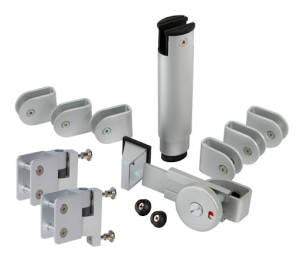
1. Cubicle Hinges
Hinges allow cubicle doors to open and close smoothly. They must support the weight of the door and stay aligned through constant use.
Common hinge types:
- Spring hinges – help the door return automatically to a set position.
- Gravity hinges – use weight for smooth movement.
- Pivot hinges – a simple hinge for low-use areas.
Strong hinges prevent sagging, misalignment and noisy door movement.
2. Indicator Bolts and Locks
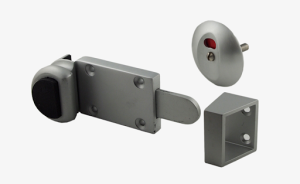
These locks show “vacant” and “engaged” from the outside. They are an important part of toilet cubicle hardware<span style=”font-weight: 400;”>.
Key features you want:
- Easy to turn
- Clear indicator window
- Smooth operation
- Emergency unlocking option
- Rust resistance
They should work well for children, adults and elderly users.
3. U-Brackets/ L-Brackets and Partition Wall Brackets
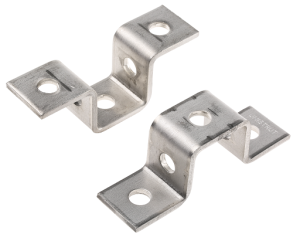
These brackets hold the cubicle panels firmly in place. They are the backbone of toilet cubicle partition hardware.</span>
Types include:
- U-brackets to join two panels
- Angle brackets for corner fixing
- Flat brackets for stability
Strong brackets keep the cubicle panels securely fixed, even in high-traffic washrooms.
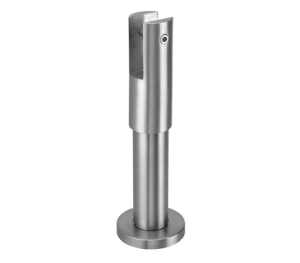
4. Cubicle Support Legs
Support legs hold up the front of the cubicle panel and help level it. They must be strong enough to hold the weight of heavy panels.
Good cubicle legs should be:
- Adjustable
- High load-bearing
- Corrosion-resistant
- Suitable for wet environments
They also help with cleaning under the cubicle.
5. Coat Hooks and Door Accessories
Used for hanging bags, clothes or personal belongings. These are especially useful in:
- Changing rooms
- Gym washrooms
- Office toilets
- School washrooms
Small accessories improve the overall convenience of the space.
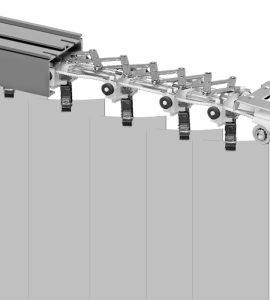
6. Headrails and Connecting Rails
Headrails help stabilise the cubicle and reduce movement. They are installed above the cubicle panels.
Headrails are usually made of:
- Stainless steel
- Aluminium
They give added strength to the cubicle structure.
7. Screws, Fixings and Fasteners
Every cubicle requires high-quality screws that can resist corrosion. Even the best parts fail without proper fixings.
Cubicle Hardware for Different Spaces
Different areas require different types of cubicle hardware. Here’s what you need to know:
Toilet Cubicle Hardware
This is the most common application. In public toilets, the hardware must be:
- Rust-resistant
- Strong and durable
- Easy to use
- Safe and hygienic
Stainless steel is the best choice for busy toilets, offices, malls and schools.
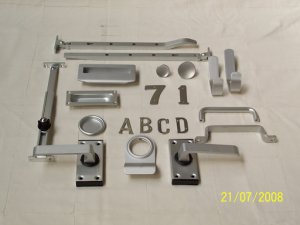
Office Cubicle Hardware
Office cubicles are less demanding than washrooms. They require:
- Lightweight brackets
- Smooth hinges
- Simple fixings
- Clean and professional appearance
Office cubicles often use aluminium or coated steel fittings because they offer a sleek look and are easy to maintain.
Shower Cubicle Hardware
Used in gyms, sports clubs, leisure centres and swimming pools.
Important features:
- High moisture resistance
- Anti-rust coatings
- Strong structural support
Stainless steel and nylon fittings are common in these environments.
Materials Used in Cubicle Hardware
The material used for cubicle hardware plays a big role in how strong, durable and long-lasting the fittings will be. Each material has different advantages depending on where the cubicle is installed and how often it will be used. Below is a clearer explanation of the most common materials used in cubicle hardware.</span>
1. Stainless Steel
Stainless steel is the most popular and premium material for toilet cubicle hardware because of its excellent strength and resistance to rust. It performs extremely well in busy environments where the hardware is used repeatedly throughout the day.
Stainless-steel hinges, locks and brackets are ideal for public toilets, schools, hospitals and commercial buildings. These spaces often deal with high traffic and high moisture levels, so stainless steel helps ensure long-term reliability. It also gives the cubicle a clean, professional and modern appearance, which is why many architects prefer it for high-end washroom designs.
2. Aluminium
Aluminium is a lightweight and cost-effective material commonly used for office cubicle hardware<span style=”font-weight: 400;”> and light-use washrooms. It does not rust easily and is easier to handle during installation because it weighs less than steel.
Although aluminium is not as strong as stainless steel, it provides good durability for everyday use in office buildings, workplaces and small commercial settings. Its smooth, clean finish also makes it a popular choice for modern office interiors where aesthetics matter.
3. Zinc Alloy
Zinc alloy is widely used for many types of cubicle hardware fittings, including locks, hinges, handles and brackets. It offers a good balance between durability and affordability, making it suitable for large projects where cost needs to be managed without sacrificing quality.
Zinc alloy resists corrosion well and can be moulded into different shapes, which is why many cubicle accessories are made using this material. It works well in most indoor environments, although stainless steel is still preferred for extremely wet or high-traffic areas.
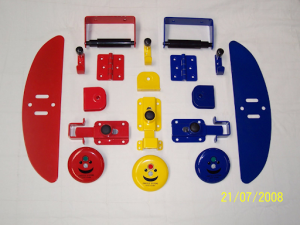
4. Nylon or Polymer
Nylon and polymer fittings are often selected for washrooms that need strong moisture resistance or for spaces used by children, such as schools or swimming-pool changing areas. This material is tough, flexible and unaffected by humidity, making it suitable for wet areas and environments where metal may corrode over time.
Nylon hardware is commonly used in budget-friendly projects because it provides long-lasting performance at a lower cost. It is also safer for younger users because it does not have sharp edges and is less likely to cause injuries. These qualities make nylon fittings ideal for shower cubicles, leisure centres, gyms and public facilities with heavy water exposure.
Factors to Consider When Choosing Cubicle Hardware
1. Traffic Level
High-traffic washrooms need strong, durable hardware that can handle constant opening, closing and movement without wearing out. Stainless steel fittings and reinforced brackets are the best choice for long-term reliability.
2. Moisture Conditions
Washrooms and shower areas exposed to high moisture require rust-resistant materials to prevent corrosion over time. Stainless steel and nylon hardware perform best in wet environments and ensure a longer lifespan.
Just like pallet feet provide stable support for heavy pallets, high-quality cubicle hardware must offer strong load-bearing performance to keep panels secure in busy environments.
3. Door and Panel Thickness
Hardware must be compatible with the thickness of the cubicle panels to ensure proper alignment and secure fixing. Choosing the right hinge and bracket size prevents sagging and structural imbalance.
4. Privacy Requirements
Different spaces require different levels of privacy, so the type of lock or indicator bolt matters. Public toilets often need stronger, clearer indicators, while office toilets may need softer, minimal designs.
5. Aesthetic Look
The hardware should match the overall design and finish of the cubicles to create a clean and professional appearance. Modern stainless steel or aluminium fittings help maintain a neat and uniform look.
6. Safety Standards
Toilet cubicle locks must include an emergency release option so users can be assisted if necessary. Safety-compliant fittings ensure the cubicle meets building requirements and reduces risk for both staff and visitors.
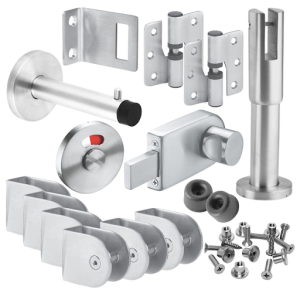
Cubicle Hardware Fittings Offered by Kirmell
Kirmell provides a full range of strong, durable cubicle hardware fittings for washrooms, offices, schools, and commercial buildings. Our product line includes hinges, indicator locks, U-brackets, support legs, coat hooks and complete fixing sets, each made with high-quality materials for long-lasting performance. Every fitting is built to handle daily use while maintaining smooth operation and a clean, professional finish.
Ordering from Kirmell is simple. Customers can explore our available cubicle hardware online, send us their requirements or request guidance for choosing the right fittings for their project. Whether you need small quantities or bulk supplies, our team can provide quotes, availability details, and fast delivery to ensure your washroom or office installation runs smoothly. Contact us for more details and place a custom order.
Conclusion
Cubicle hardware may be small, but it plays a vital role in washrooms, offices, schools, and commercial buildings. Choosing the right fittings ensures stability, privacy, safety and long-term durability. By using strong hinges, reliable locks, rust-proof brackets and high-quality support legs, you can build cubicle systems that last for years.
Whether you need toilet cubicle hardware, office cubicle hardware, or complete toilet cubicle partition hardware, selecting dependable components will always make a difference. Contact Kirmell today for all your needs.
FAQs
What is cubicle hardware used for?
What types of cubicle hardware are needed for a washroom?
Which material is best for toilet cubicle hardware?
Can I use the same hardware for office cubicles and toilet cubicles?
Does cubicle hardware come in different sizes?
Where can I buy cubicle hardware in the UK?