
Ultimate Guide to Designing and Manufacturing Sheet Metal Brackets
Sheet metal brackets play a crucial role in modern engineering and manufacturing. Found everywhere from automotive frames to HVAC systems and electronic assemblies, they form the structural backbone of countless products. Their ability to support loads, connect components, and enhance stability makes them indispensable in industrial and commercial settings. This guide provides a complete understanding of sheet metal bracket design, material selection, manufacturing methods, testing, cost considerations, and modern best practices, making it an essential reference for engineers, product designers, and fabricators.
What Are Sheet Metal Brackets
Sheet metal brackets are formed components designed to support, connect, or reinforce parts within a system. Their geometry can range from simple angles to complex multi-bend shapes, depending on the function. While they may appear straightforward, designing an effective bracket requires careful consideration of loads, manufacturing constraints, and material behaviour.
These components are used extensively across industries because they combine strength, lightweight construction, and cost efficiency. Their versatility makes them ideal for applications where precision, repeatability, and structural integrity are essential. Whether designing a simple support fixture or a high-load mounting assembly, a thoughtful approach to bracket design ensures reliable performance and manufacturability.
Types of Sheet Metal Brackets & Their Applications
Sheet metal brackets come in a wide range of forms, each engineered for specific functional purposes. Understanding bracket types helps designers select the right geometry for a given load or operational condition.
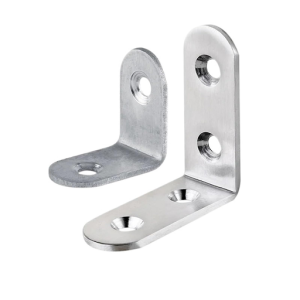
L-Shaped Brackets
An L-shaped metal bracket is one of the most widely used designs. It features a clean 90-degree bend and is ideal for supporting perpendicular surfaces, mounting panels, or stabilizing frames. Its simplicity makes it easy to manufacture, strong, and highly dependable.
U-Shaped Brackets
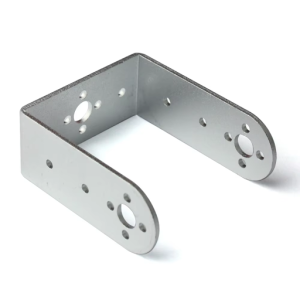
A U-shaped metal bracket forms a channel-like structure that provides increased rigidity and resistance to bending. It is commonly used in automotive, electrical housing, and equipment mounting applications where enclosure-style support or reinforcement is needed.
Z-Shaped Brackets
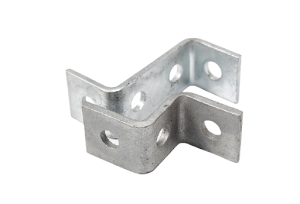
A Z-shaped metal bracket includes offset bends, allowing it to bridge different surface levels. This makes it ideal for mounting components that require standoff spacing or alignment adjustments. It is frequently used in HVAC, shelving systems, and machinery.
C-Shape and Hat Channel Brackets
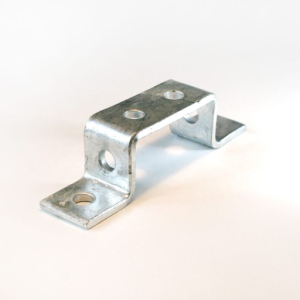
A C-shaped metal bracket or hat channel provides exceptional strength and load distribution. These brackets are well-suited for structural framing, enclosures, and applications requiring torsional rigidity.
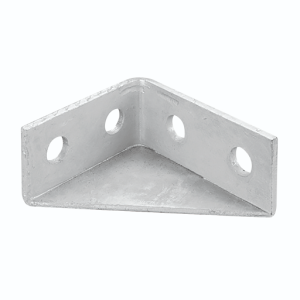
Gusset Brackets
Used for reinforcement, gusset brackets include angled support sections that increase stability and load-carrying capacity. They are popular in high-strength applications such as racking systems and industrial machinery.
Industry-Specific Brackets
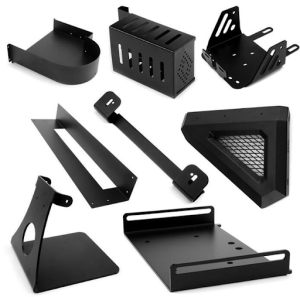
Different industries use custom bracket geometries tailored to their needs. Examples include:
- Automotive battery brackets
- HVAC duct supports
- Electrical control panel brackets
- Aerospace mounting components
Designs vary widely, but all serve the essential purpose of providing stable, reliable support in demanding environments.
Materials & Thickness Selection for Sheet Metal Brackets
Choosing the right material is one of the most important decisions in sheet metal bracket design. Material properties influence strength, corrosion resistance, weight, cost, and manufacturability.
Common Metals Used for Brackets
Several metals are routinely used for sheet metal brackets, each offering distinct advantages:
- Mild Steel: Strong, economical, and easy to weld. Ideal for general-purpose brackets.
- Stainless Steel: Offers excellent corrosion resistance, making it suitable for outdoor or hygienic environments.
- Aluminum: Lightweight, corrosion-resistant, and ideal for applications where weight reduction matters.
- Galvanized Steel: Steel coated with zinc for enhanced corrosion protection.
When selecting materials, designers must balance strength requirements, environmental conditions, and budget constraints.
Thickness and Strength Considerations
Material thickness or gauge has a direct impact on bracket performance. Thicker materials offer increased strength but require greater force for bending and may increase cost. Conversely, thinner material reduces weight and price but may sacrifice rigidity.
Typical bracket thicknesses range from 1 mm to 5 mm, depending on load requirements.
Corrosion Resistance
Environmental factors dictate coating or material choices. Stainless steel or coated finishes are essential in damp, chemical, or outdoor environments to prevent premature degradation.
Key Design Principles for Sheet Metal Brackets
Good design is fundamental to manufacturing accuracy, structural strength, and cost control. Understanding how sheet metal behaves during bending and forming ensures that the final product performs as intended.
Bend Radii and K-Factor
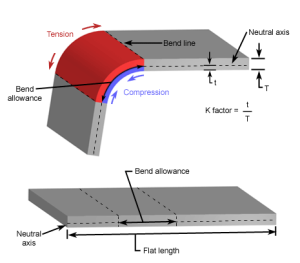
Each bend must incorporate a minimum bend radius to prevent cracking and material fatigue. The K-factor, representing how sheet metal stretches during bending, helps generate accurate flat patterns in CAD. Correctly defined bend radii ensure consistency from prototype to final production.
Bend Reliefs and Springback
Bend reliefs prevent tearing near bend lines, while springback (the slight material rebound after bending) must be compensated for by adjusting bend angles. Proper planning avoids misaligned angles and reduces rework.
Hole Placement and Cutout Rules
Holes close to a bend may deform unless adequate spacing is maintained. General guidelines include:
- Keep holes at least one material thickness away from a bend.
- Avoid placing holes near edges unless supported with additional material.
- Ensure adequate space for fasteners, washers, and assembly tools.
Whether designing brackets for metal, wood, or composite fixtures, hole positioning plays a major role in structural reliability.
Flange Dimensions and Strength
Flange length affects stiffness. Short flanges may warp or distort, while overly long flanges add unnecessary cost. Engineers typically use flange lengths of at least 3–4 times material thickness.
Standard Tolerances
Sheet metal fabrication tolerances differ from machined components. Typical tolerances include:
- Bend angle: ±1°
- Bend length: ±0.3 mm to ±0.5 mm
- Hole size: ±0.1 mm to ±0.2 mm
Understanding realistic tolerances ensures manufacturability and avoids costly redesigns.
Common Design Mistakes to Avoid
Some frequent errors include:
- Over-tight tolerances that increase cost
- Insufficient bend radii causing cracking
- Poor hole alignment
- Selecting a material inappropriate for the environment
CAD Considerations
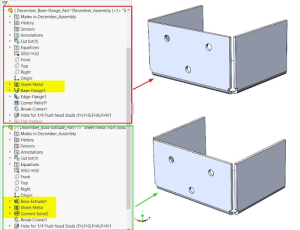
Modern CAD and CNC software like SolidWorks and Fusion 360 offer sheet metal modules that automate flat pattern creation, unfolding, bend development, and manufacturability checks. Using these tools ensures accuracy from concept to production.
How Sheet Metal Brackets Are Manufactured
Manufacturing a sheet metal bracket involves several precise steps that convert flat sheet stock into a functional, load-bearing component. Each stage affects accuracy, strength, and final cost, so understanding the workflow helps ensure efficient and reliable production.
Cutting
Production begins by cutting the flat pattern from the metal sheet stock. Accurate cutting is essential because it defines the bracket’s base geometry.
Common cutting methods include:
- Laser Cutting: Laser cutting offers high precision and excellent edge quality for detailed parts.
- CNC Punching: Fast and cost-effective for repetitive shapes in larger batches.
- Waterjet Cutting: No heat distortion, ideal for sensitive materials.
- Plasma Cutting: Efficient for thicker steel where speed and economy matter.
Forming and Bending
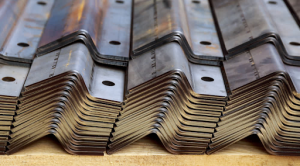
After cutting, the bracket is shaped using press brakes, which create accurate bends and angles. Air bending and bottom bending are common methods, with tooling selected based on precision needs. Consistency is crucial, especially for multi-bend designs like channels or C-shaped brackets.
Secondary Operations
Brackets often require additional features depending on their purpose. These may include:
- Tapping or drilling holes
- Countersinking for flush fasteners
- Inserting PEM nuts or standoffs
- Light CNC machining for tighter tolerances
These steps add functionality and prepare the bracket for final assembly.
Assembly and Joining
The final stage involves attaching components or reinforcing elements. Joining methods vary by strength and appearance requirements:
- MIG/TIG welding for permanent, high-strength joints
- Spot welding for overlapping sheets
- Riveting for clean, mechanical fastening
- Bolting or screwing for removable assemblies
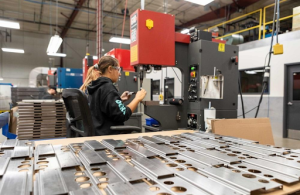
These operations complete the transformation from a flat sheet to a fully functional, ready-to-use bracket.
Strength, Testing & Quality Requirements
Load-bearing capacity is one of the most critical aspects of bracket design. Designers must account for forces acting on all directions, including vibration, impact loads, and fatigue over time.
Load Calculations and Structural Reinforcement
Engineers analyze stress points using finite element analysis (FEA) or traditional calculations. Reinforcements such as gussets, ribs, or increased flange lengths help distribute loads more evenly.
A U-shaped metal bracket or other channel-type shapes often handle loads better because of their inherent rigidity.
Prototype Testing
Before full production begins, prototypes undergo:
- Dimensional inspection
- Fit testing with mating components
- Load tests under expected conditions
This step verifies design accuracy and functional performance.
Quality Control Methods
To ensure reliability, manufacturers perform:
- Angle and dimension inspections
- Welding integrity checks
- Surface finish assessments
- Corrosion resistance tests
High-quality brackets ensure long product life and reduced maintenance issues.
Finishing Options & Cost Factors for Sheet Metal Brackets
Finishes not only protect brackets from corrosion but also enhance appearance. The most common finishing methods include:
Powder Coating
Powder coating creates a durable, uniform protective layer that resists scratches and wear. It’s ideal for indoor and outdoor brackets needing long-lasting color and corrosion protection.
Anodizing
Anodizing strengthens aluminum brackets by forming a protective oxide layer. It improves corrosion resistance, scratch durability, and allows for decorative color options.
Electroplating
Electroplating deposits a thin metal layer to improve conductivity, corrosion resistance, and appearance. It’s often used when a smooth, polished or reflective finish is needed.
Galvanizing
Galvanizing coats steel with zinc for strong rust protection in harsh environments. It’s widely used for brackets exposed to weather, moisture, or industrial conditions.
Cost Factors in Bracket Manufacturing
Several variables influence the total cost of producing a metal bracket:
- Material type and grade
- Thickness and size
- Bend complexity
- Tight tolerances
- Surface finishing requirements
- Production volume
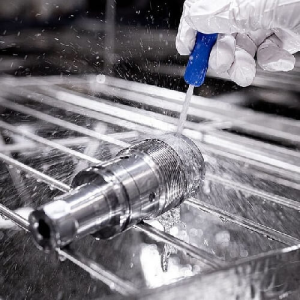
Designers can minimize costs by reducing unnecessary bends, simplifying geometry, and selecting appropriate tolerances. Read more about metal finishing and how it works.
Modern Trends & Best Practices for Sheet Metal Brackets Production
As fabrication technology evolves, bracket design must keep pace. Incorporating modern practices ensures efficient production and reliable performance.
Automation & Industry 4.0
Advanced press brakes, robotic welding, and automated measuring systems improve accuracy and repeatability while reducing labor costs.
Sustainable Manufacturing
Companies increasingly seek eco-friendly materials, recyclable metals, and energy-efficient processes.
Choosing Sheet Metal Over Alternatives
Compared to cast or machined components, sheet metal offers:
- Faster production times
- Lower material waste
- Lightweight yet strong designs
- High scalability
A C-shape metal bracket or similar formed part can often replace a machined block, dramatically reducing weight and cost.
Working With a Manufacturer
To obtain accurate quotes and successful production outcomes, designers should provide:
- 3D and 2D CAD files
- Clear tolerances and material specifications
- Finish requirements
- Expected load conditions
- Order quantities
Good communication between the designer and the fabricator is essential for smooth production.
Kirmell’s Sheet Metal Brackets Solutions and Manufacturing Expertise
At Kirmell, we support businesses with precision-engineered metal brackets designed to meet demanding structural and functional requirements. Using advanced cutting, forming, and fabrication technologies, we manufacture high-quality brackets tailored to each project’s load, fitment, and environmental needs. Our team works closely with engineers and designers to ensure every bracket, whether simple or complex, is produced with accuracy, repeatability, and dependable performance.
From custom L-, U-, Z-, and C-shaped forms to fully bespoke bracket assemblies, we provide flexible manufacturing options for prototypes through large-scale production. With a focus on quality, durability, and efficient turnaround, Kirmell delivers metal bracket solutions that integrate seamlessly into a wide range of industrial and commercial applications. Contact us today to place a custom order.
Conclusion
Sheet metal brackets are fundamental components across engineering and manufacturing, providing strength, stability, and efficient load distribution. By understanding bracket types, material properties, design principles, and manufacturing processes, professionals can create durable, cost-effective solutions for a wide range of applications. Modern innovations continue to improve bracket fabrication, allowing for greater precision, sustainability, and structural efficiency.
Whether designing a Z-shaped metal bracket, a lightweight support, or a complex multi-bend structural component, the principles outlined in this guide offer a strong foundation for achieving reliable, high-quality results.