
Understanding Warehouse Load Stability: A Beginner’s Guide
In modern logistics and supply chain operations, warehouses are the backbone that keep goods moving efficiently from manufacturers to end users. Yet behind the scenes of forklifts, racking, and pallets lies a critical factor that often goes unnoticed by newcomers: load stability. Without stable loads, even the most advanced warehouse can face serious safety risks, damaged goods, inefficiencies, and costly downtime.
This beginner’s guide explains what warehouse load stability is, why it matters, and how it is achieved in real-world environments. Whether you are new to warehouse operations, responsible for safety, or involved in packaging and distribution decisions, understanding these fundamentals will help you make better choices and avoid common pitfalls.
What Is Warehouse Load Stability?
Warehouse load stability refers to the ability of stored goods to remain secure, upright, and intact during handling, storage, and movement within a warehouse. A stable load maintains its shape and balance when lifted by forklifts, stacked in racking, or transported across warehouse floors.
Instability can occur when loads are uneven, poorly supported, or incorrectly stacked. Even small shifts in weight distribution can cause pallets to tilt, boxes to collapse, or entire stacks to fall, leading to damaged inventory and potential injuries.
For beginners, it’s important to understand that load stability is not just about the weight of a load, but about how that weight is supported and distributed.
Why Load Stability Matters in Warehouses
Load stability affects nearly every aspect of warehouse operations. When loads are unstable, the consequences can be serious:
- Worker safety risks: Falling products are a leading cause of warehouse injuries.
- Product damage: Collapsed or crushed goods result in financial losses and customer dissatisfaction.
- Operational inefficiency: Unstable loads slow down handling and increase the need for rework.
- Equipment strain: Forklifts and racking systems experience more wear when handling unstable pallets.
- Regulatory compliance issues: Many health and safety standards require secure storage and stacking.
Stable loads, on the other hand, improve confidence in handling, speed up operations, and reduce the likelihood of accidents.
Key Factors That Influence Load Stability
Several interconnected factors determine whether a warehouse load remains stable throughout its lifecycle from initial palletising to long-term storage and repeated handling. Understanding how these elements interact is essential for preventing load movement, product damage, and safety incidents.
1. Load Distribution
Load distribution is one of the most critical contributors to overall stability. Weight should be spread evenly across the pallet or load base to prevent pressure points and imbalance. When heavier items are placed on one side or positioned too high, the centre of gravity shifts, making the load more likely to tip during lifting or stacking.
Best practice involves placing the heaviest items at the bottom of the load and centring them on the pallet wherever possible. Lighter items should be layered above in a way that maintains a uniform shape. Overhanging cartons or irregular stacking patterns can create unstable edges that increase the risk of collapse, particularly when loads are moved at height or placed into racking systems.
Consistent load distribution also reduces stress on pallets and handling equipment, extending their usable life.
2. Packaging Quality
Packaging acts as the first line of defence in maintaining load stability. Strong, well-designed packaging helps loads retain their shape under compression and during movement. Cartons should be made from materials that are appropriate for the weight they carry and resistant to crushing, tearing, or deformation.
Inconsistent box sizes, weak corrugated board, or damaged packaging can compromise the integrity of the entire load. When boxes collapse or shift, they create gaps that allow movement, causing loads to lean or become uneven. This is especially problematic in stacked storage, where the failure of one layer can affect everything above it.
Standardising packaging dimensions and ensuring packaging is suitable for warehouse conditions greatly improves stability and stacking reliability.
3. Pallet Condition
The condition of the pallet itself plays a fundamental role in load stability. Pallets with broken boards, warped decks, protruding nails, or weakened supports cannot provide a stable base, even if the load is well arranged. Small defects can lead to uneven weight distribution and increase the likelihood of pallet failure under load.
Using consistent, high-quality pallets ensures uniform support across all stored goods. Pallets should be regularly inspected and removed from circulation if they show signs of damage. Mixing different pallet types or sizes within the same storage area can also create instability, particularly when stacking loads or using automated handling systems.
A strong, reliable pallet base is essential for maintaining safe and predictable load behaviour.
4. Handling Methods
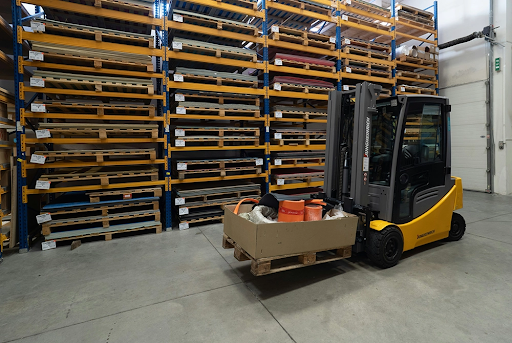
Even a perfectly built load can become unstable if it is handled incorrectly. Forklift operation, pallet jacks, and manual handling all influence how loads behave during movement. Sudden stops, sharp turns, excessive speed, or incorrect fork placement can cause loads to shift or topple.
Forks should be fully inserted beneath the pallet and positioned evenly to support the load. Tilting loads too far forward or backward, especially at height, significantly increases the risk of collapse. In busy warehouse environments, rushed handling is a common cause of instability and accidents.
Proper training, adherence to handling procedures, and maintaining clear travel paths all contribute to safer load movement and reduced risk.
5. Storage Environment
The warehouse storage environment itself can gradually affect load stability over time. Uneven or damaged floors can cause pallets to sit at an angle, placing uneven stress on the load. Vibrations from nearby machinery, conveyor systems, or frequent forklift traffic can slowly shift loads, particularly if they are stacked for long periods.
Racking systems must be well maintained and correctly aligned to support pallets evenly. Bent beams, missing safety pins, or overloaded racking can introduce instability even when loads are correctly assembled.
Pallet Feet and Nesting Plugs: How They Improve Load Stability
Pallet feet and nesting plugs are often small components, but they play a major role in improving load stability, safety, and efficiency in warehouse storage. When used together, they help create a secure, repeatable stacking system that reduces movement, damage, and handling risks.
How Pallet Feet Improve Warehouse Load Stability
Pallet feet are structural components fitted to pallets, stillages, or reusable storage units to raise them off the ground and provide a stable load-bearing base. By lifting pallets, feet allow weight to be distributed more evenly across the floor or racking system, reducing pressure points that can lead to imbalance or pallet failure.
In busy warehouses, pallet feet also improve forklift and pallet truck access, helping operators lift loads cleanly and evenly. This reduces twisting or uneven lifting, which is a common cause of load shift during handling. For heavier applications, heavy-duty pallet feet are designed to support high load capacities without bending or deforming, ensuring consistent performance over time.
Well-designed pallet feet also support safe stacking, keeping loads aligned vertically and preventing pallets from sliding or drifting out of position when stacked.
The Role of Nesting Plugs in Safe Stacking
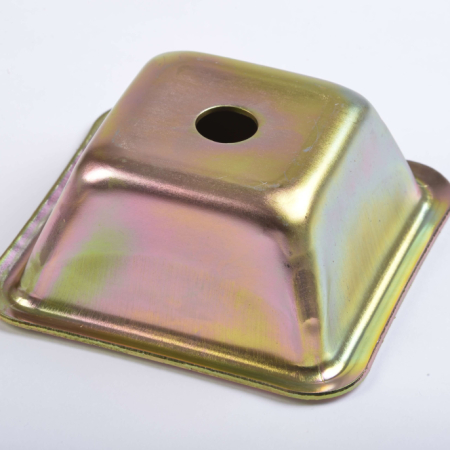
While pallet feet provide the foundation, nesting plugs ensure stability between stacked units. Nesting plugs are recessed fittings installed on the top surface of pallets or stillages. When another pallet is placed on top, its feet drop directly into the plugs, creating a secure interlocking connection.
This connection prevents lateral movement, twisting, and slippage issues that often arise in vertical stacks, especially in high-density storage areas. Nesting plugs are particularly valuable in warehouses that rely on reusable packaging, returnable transit systems, or multi-level stacking, where loads may be stacked and unstacked repeatedly.
By keeping each layer locked in place, nesting plugs significantly reduce the risk of leaning stacks and load collapse.
Solving Common Storage Problems with Pallet Feet and Nesting Plugs
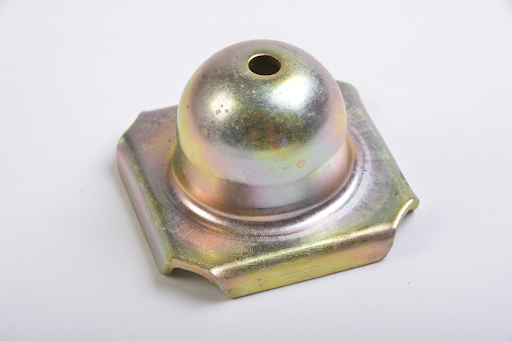
Many common warehouse storage issues such as unstable stacks, damaged goods, and inefficient floor use can be traced back to poor load support and misalignment. Using pallet feet and nesting plugs together addresses these challenges by creating a controlled, repeatable stacking system.
Read in more detail how common storage problems are solved by pallet feet and nesting plugs.
Improve Load Stability with the Right Components
Choosing the right pallet feet and nesting plugs is a simple but effective way to enhance warehouse safety and efficiency. Whether you’re upgrading existing pallets or designing a new storage system, these components provide a reliable foundation for stable stacking and handling.
Looking to improve load stability in your warehouse? Explore the full Kirmell pallet feetand nesting plugs range and find the right solution for your storage needs.
How Load Stability Supports Workplace Safety
From a safety perspective, load stability is non-negotiable. Stable loads reduce the risk of falling items, which are among the most dangerous hazards in warehouses.
Clear sightlines for forklift operators, predictable load behaviour, and reduced need for manual intervention all contribute to a safer working environment. When loads are stable, workers are less likely to attempt unsafe adjustments or re-stack items by hand.
Safety audits often identify unstable loads as a root cause of near-misses and incidents. Addressing stability issues proactively helps build a culture of safety and compliance.
Conclusion
Warehouse load stability may seem like a technical detail, but it has far-reaching implications for safety, efficiency, and profitability. By understanding how loads behave, how storage systems interact with pallets, and how components like pallet feet and nesting plugs contribute to stability, beginners can quickly grasp why this topic is so critical.
Investing in proper load support solutions, following best practices, and working with experienced suppliers sets the foundation for safer, more efficient, and more resilient warehouse operations. In a fast-moving logistics world, stable loads are not just a benefit they are a necessity.
FAQs
How can I tell if a load is unstable before moving it?
What determines a safe stacking height in a warehouse storage?
Why do loads explain stable at first but fail later?
Do uneven floors really affect pallet stability?
How does load instability impact forklift safety?
What problems arise from inconsistent pallet stacking?