
What Is Lift TIG Welding and When Should You Use It?
TIG welding is widely known for producing clean, precise, and high-quality welds. It is commonly used in industries where appearance, strength, and control matter, such as fabrication, engineering, automotive, and stainless steel work. However, traditional TIG welding often requires high-frequency (HF) arc starting, which isn’t always suitable for every environment or job.
This is where lift TIG welding is used. It offers a simpler and more controlled way to start a TIG arc without using high-frequency ignition. It is especially useful in environments where sensitive electronics are present or where a more robust, straightforward welding setup is preferred.
In this article, we’ll explain what lift TIG welding is, how it works, its advantages and limitations, and when it is the right choice for your welding applications.
What Is Lift TIG Welding?
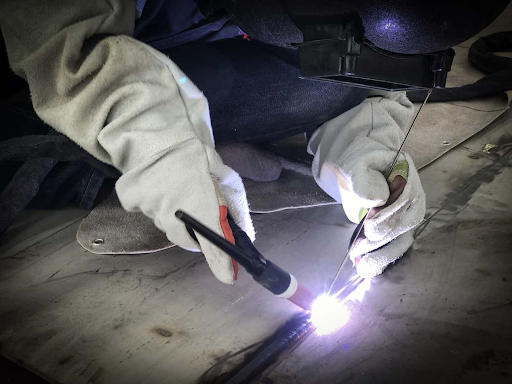
Lift TIG welding is a method of starting a TIG welding arc by briefly touching the tungsten electrode to the workpiece and then lifting it away to initiate the arc. Unlike high-frequency TIG welding, no HF signal is used to start the arc.
Instead, the welding machine senses the contact between the tungsten and the material and delivers a low current. When the welder lifts the torch slightly, the machine increases the current and establishes a stable arc.
This approach reduces electrical interference and offers a more controlled arc start compared to scratch-start TIG welding.
Read more about welding and its types in this detailed guide.
How Lift TIG Welding Works?
The lift TIG welding process is simple and controlled:
- The tungsten electrode lightly touches the workpiece
- The machine supplies a low, safe current
- The welder lifts the torch a few millimetres
- The arc is established automatically
- Welding continues as normal
Because the current is initially low, there is less risk of damaging the tungsten or contaminating the weld pool during arc ignition.
Lift TIG Welding Setup Explained
A lift TIG welding setup is relatively straightforward and does not require highly specialised equipment, which is one of the reasons it is popular in workshops and site-based applications. The core components work together to provide a controlled arc start and consistent welding performance.
A typical setup includes:
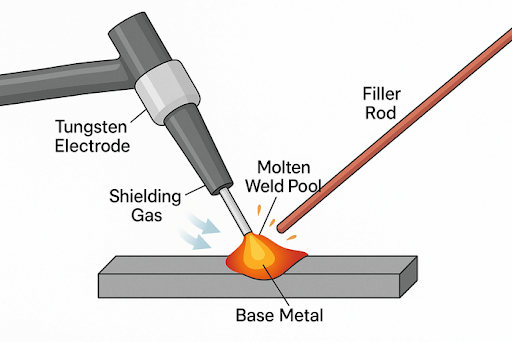
- A TIG-capable power source with lift-arc functionality
The welding machine must support lift-arc TIG mode, which allows the arc to be started by touching and lifting the tungsten from the workpiece. Many modern inverter welders include this feature, making them suitable for both TIG and MMA (stick) welding applications. - A TIG torch with a tungsten electrode
The torch holds a non-consumable tungsten electrode, which creates the arc. The tungsten should be correctly sharpened and sized for the material and current range to ensure a stable arc and clean weld start. - Argon shielding gas
Argon gas is used to shield the weld pool and tungsten electrode from atmospheric contamination. Proper gas flow is essential to prevent oxidation and achieve a clean, high-quality weld. - Optional foot pedal or torch-mounted control
Depending on the machine, current control may be managed via a foot pedal or controls built into the torch. These allow the welder to adjust heat input during welding, improving control over penetration and bead appearance. - Suitable filler rods for the base material
Filler rods must match the type of metal being welded, such as mild steel or stainless steel. Using the correct filler ensures proper weld strength and compatibility.
Key Advantages of Lift TIG Welding
Lift TIG welding offers several practical benefits, particularly in industrial, fabrication, and site-based environments where reliability and control are essential.
1. Reduced Electrical Interference
Because lift TIG welding does not use a high-frequency (HF) signal to start the arc, it significantly reduces the risk of electrical interference. This makes it especially suitable for environments where sensitive electronic equipment is present.
It is ideal for:
- Workshops operating CNC machines and automated systems
- Facilities with sensitive control panels or monitoring equipment
- On-site maintenance and repair work near electrical installations
By avoiding HF signals, this welding method helps protect nearby equipment and ensures a safer working environment.
2. Cleaner Arc Start Than Scratch TIG
Compared to scratch-start TIG welding, lift TIG provides a much cleaner and more controlled arc start. The welding machine initially supplies a low current when the tungsten touches the workpiece, reducing the chance of damaging or contaminating the electrode.
This results in:
- Less tungsten contamination in the weld pool
- Improved arc stability at ignition
- Better overall weld appearance
For welders who want improved quality without the complexity of HF TIG, lift TIG offers a reliable alternative.
3. Simpler Equipment Requirements
It can often be carried out using multi-process welding machines that also support MMA (stick) welding. This means workshops do not always need to invest in dedicated TIG-only equipment to achieve high-quality TIG welds.
Benefits include:
- Lower equipment costs
- Greater flexibility across different welding tasks
- Easier setup for mobile or site-based work
This simplicity makes lift TIG welding a practical choice for smaller workshops and maintenance teams.
4. Improved Control for Skilled Welders
Once the technique is mastered, lift TIG welding allows for consistent and controlled arc starts, giving experienced welders excellent control over heat input and weld pool behaviour.
This level of control helps:
- Reduce the risk of burn-through on thinner materials
- Maintain consistent weld penetration
- Achieve clean, uniform weld beads
For skilled welders, lift TIG welding provides a balance between precision and practicality, making it suitable for a wide range of fabrication and repair applications.

Limitations of Lift TIG Welding
While lift TIG welding is highly practical, it does have some limitations.
1. Tungsten Contact Still Occurs
Although cleaner than scratch TIG, the tungsten still briefly touches the workpiece, which means:
- Some wear on the electrode is unavoidable
- Care is needed to avoid contamination
2. Less Refined Than HF TIG
High-frequency TIG offers completely non-contact arc starts, which can be beneficial for ultra-thin materials or cosmetic welds where perfection is critical.
3. Requires Good Technique
It heavily relies on consistent torch control. Poor lifting technique can result in unstable arc starts.
Materials Suitable for Lift TIG Welding
Lift TIG welding is well-suited for many commonly welded metals, including:
- Mild steel
- Stainless steel
- Carbon steel
It is especially effective for stainless steel fabrication, pipe welding, and repair work where control and cleanliness are important, but HF start is impractical.
Lift TIG vs High-Frequency TIG
Lift TIG and high-frequency TIG are both TIG welding methods, but they are used in different situations.
High-frequency TIG is mainly used in workshop environments where conditions are controlled. It is often chosen for work that requires a very clean finish and a high level of precision. This method suits detailed fabrication, thin materials, and applications where appearance is important.
Lift TIG welding is more commonly used in general fabrication and site work. It is valued for its reliability and flexibility, especially in environments where conditions may vary. This method is particularly effective when equipment needs to be portable or when welding must be performed near other machinery.
In simple terms, high-frequency TIG is best suited for controlled settings that focus on fine detail, while lift TIG welding is better suited for practical, everyday welding tasks where versatility is more important than appearance.
Also, read a comparison between MIG and TIG welding as well.
Professional Welding Services Backed by Experience
Kirmell provides reliable welding solutions for a wide range of fabrication and industrial applications. Our experienced team works with precision welding techniques to deliver strong, clean, and consistent results across different materials and project requirements. Whether you need support with structural fabrication, custom components, or ongoing production work, Kirmell offers practical expertise and dependable service tailored to your needs.
If you’d like to discuss your welding requirements or need advice on the right welding approach for your project, contact Kirmell today to speak with our team.
Conclusion
Lift TIG welding is a practical, reliable, and versatile TIG arc-start method that bridges the gap between scratch-start and high-frequency TIG welding. It offers clean arc starts, reduced interference, and compatibility with a wide range of welding equipment.
For workshops and site-based applications where simplicity, control, and reliability are essential, lift TIG welding is often the preferred solution. By understanding when and how to use it, welders can achieve high-quality results without unnecessary complexity.
FAQs
What is lift TIG welding used for?
Is lift TIG welding suitable for stainless steel?
How is lift TIG different from scratch-start TIG?
Can lift TIG welding be used on thin materials?
Do you need special equipment for lift TIG welding?
What shielding gas is used for lift TIG welding?