
Why Quality Control Matters in Metal Fabrication
Quality control is one of the most essential pillars of modern metal fabrication. As industries adopt advanced machinery, tighter tolerances, and increasingly complex manufacturing requirements, the demand for consistency and accuracy continues to grow. Today, metal fabrication is not just about shaping, cutting or welding metal it is about ensuring that every component performs reliably, meets exact specifications and can withstand real-world operational stress.
In this competitive environment, high-quality metal fabrication doesn’t happen by chance. It is the direct result of structured processes, skilled workmanship and rigorous inspection systems. Quality control ensures that fabricated components meet engineering requirements, comply with industry standards and deliver long-term performance in industrial settings.
This article explores the importance of quality control, the risks of neglecting it, the key benefits it offers, and the methods that ensure consistency across every stage of metal fabrication.
Why Quality Control is Important in Metal Fabrication?
Ensuring Dimensional Accuracy Across Large and Small Components
Dimensional precision is fundamental in metal fabrication. Components that fail to meet specified tolerances may not align during assembly, causing mechanical issues, performance loss or complete rejection of a batch. It is especially critical in:
- Sheet metal enclosures
- Structural components
- Precision brackets and mounts
- Automotive and aerospace parts
- Machinery assemblies
To maintain precision, dimensional checks, calibration routines, and in-process measurements are integrated at multiple stages of production. This is especially crucial in sheet metal fabrication, where bending angles, hole placements, and cut lengths must remain consistent across every piece.
To understand how these precision-driven processes fit into a complete fabrication workflow, you can review the guide on modern metalworking methods, which covers cutting, forming, and shaping in detail.
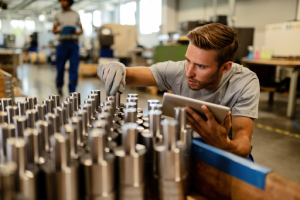
Maintaining Material Integrity During Critical Applications
Industrial environments often require metal components that can withstand high pressures, fluctuating temperatures, constant vibration or corrosive exposure. When material integrity is compromised, failures can occur unexpectedly, causing operational downtime and significant repair costs.
Material verification processes such as chemical composition checks, tensile strength tests and certificate validation ensure that only the correct grade and quality of raw material enters production. Using reliable materials directly supports high-quality industrial metal fabrication, especially for load-bearing structures, pressure components and precision mechanical parts.
Reducing Manufacturing Waste and Avoiding Expensive Rework
One of the most significant advantages of strong quality practices is the reduction of scrap and rework. Errors discovered late in production often require entire parts to be remanufactured, increasing labour cost, material consumption and machine hours.
When inspection checkpoints are applied early and consistently, issues such as incorrect cut dimensions, tool wear, faulty welding parameters or improper material thickness are identified before becoming major failures. This early detection reduces waste, enhances profitability and maintains a streamlined production flow.
Improving Workflow Efficiency Across the Production Floor
Efficient manufacturing depends on stable, predictable processes. If machinery is frequently adjusted because parts fail to meet tolerances, the entire production line slows down. Quality frameworks establish standard procedures, define production sequences, and control operational variables to maintain manufacturing consistency.
Good process stability helps operators maintain output speed, reduces unplanned downtime and allows fabrication teams to deliver jobs on schedule. In fast-demand industries where deadlines are tight, efficiency reinforced by quality systems becomes a key competitive advantage.

Enhancing Welding Strength and Assembly Reliability
Welding is one of the most critical operations in metal fabrication, and its quality determines how well a structure performs under load. Without proper parameter control, welds can weaken due to poor penetration, porosity, incorrect filler materials or surface contamination.
Inspection methods such as visual checks, destructive testing and non-destructive testing (NDT) help ensure the strength and uniformity of the welding joints. This focus on weld integrity is vital for heavy equipment, industrial frames, construction components and pressure vessels, where structural reliability is essential for operational safety.
Kirmell Metal Fabrication Services follows certified welding procedures and utilises experienced welders to ensure strong, reliable joints across all fabrication projects. Our quality-driven approach supports demanding industrial applications where weld integrity cannot be compromised.
Supporting Safety in Industrial Environments
Failures in metal components can lead to accidents, equipment breakdowns and costly downtime. When safety-critical parts such as brackets, supports, enclosures, guards or structural beams are fabricated without a quality plan, the risk of mechanical failure increases significantly.
Quality systems verify that safety requirements are met by inspecting stress points, verifying load-bearing capabilities and confirming that welding, forming and cutting practices follow established standards. Strong safety assurance not only protects workers but also allows businesses to operate confidently without unexpected failures.
Ensuring Compliance With Industry Regulations and Standards
Industrial sectors require strict compliance with standards such as ISO 9001, AWS welding codes, CE regulations, AS/NZS requirements, and specialised automotive and aerospace guidelines. These standards ensure that products can be used safely and consistently across different environments.
Compliance is achieved through documentation, traceability, inspection routines and operator qualification. Companies that invest in strong quality systems can work across more demanding industries and attract clients who require precision and regulatory alignment. It is also an indicator of professional competence in high-quality metal fabrication.
Strengthening the Lifespan and Performance of Finished Products
Fabricated components often operate in challenging conditions high heat, extreme pressure, continuous motion or corrosive exposure. Quality-controlled fabrication ensures that products maintain strength, structural integrity and performance throughout their service life.
Processes such as surface preparation, finishing, coating thickness checks and weld inspections improve long-term resistance to wear, corrosion and fatigue. When products last longer, end-users experience fewer breakdowns, lower maintenance costs and improved operational efficiency.
Building Customer Trust Through Reliable Output
Industrial customers rely on fabricators to deliver parts that match drawings, fit seamlessly into assemblies and perform without failure. Consistent quality builds strong relationships and positions a fabrication company as a dependable partner rather than just a supplier.
When businesses can rely on consistent output, they can plan their operations more effectively. This level of confidence comes from proven quality systems, accurate inspections and dependable manufacturing practices. Over time, consistent quality contributes to a positive reputation and higher customer retention.
Enabling Repeatability for Large-Scale and Long-Term Projects
Industries such as construction, automotive production, and machinery manufacturing often require large batches of identical components. Repeatability, producing the same part with identical accuracy across hundreds or thousands of units depends entirely on controlled processes.
By maintaining machine calibration, operator consistency and precise programming, fabrication teams can deliver repeatable results. This capability is vital in sheet metal fabrication quality control, where even minor inconsistencies can cause major issues during mass assembly.
If you’re evaluating which fabrication approach offers better efficiency and cost control, check out the guide on custom vs standard metal fabrication, which explains how different production models influence quality and budget.
Minimising Production Delays and Protecting Delivery Timelines
Defective parts not only increase costs but also disrupt delivery schedules. If components must be reworked or replaced, production timelines extend, affecting both the fabricator and the client. When quality checkpoints are integrated throughout the workflow, issues are resolved quickly, preventing delays.
Reliable timelines are essential for businesses dependent on strict project schedules. Construction companies, machinery manufacturers, and OEMs all rely heavily on timely deliveries. Effective quality control protects these deadlines and prevents supply chain disruptions.
Supporting Data-Driven Decision Making Through Structured Inspection
Modern fabrication facilities often rely on real-time data to improve processes. Inspection measurements, defect reports, material tracking and machine performance records provide valuable insights into where improvements are needed.
Statistical process control (SPC), trend monitoring and digital documentation allow manufacturers to refine workflows, increase output speed and reduce variability. Data-driven quality systems turn fabrication into a predictable and optimised industrial process.
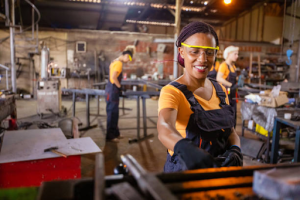
Key Quality Control Methods Used in Metal Fabrication
Quality control involves several inspection and testing techniques carried out throughout the production cycle. The most common include:
1. Visual Inspection
The first and simplest form of quality checking. It helps detect:
- Surface defects
- Welding inconsistencies
- Incorrect finishing
- Visible warping or bending
Visual inspection is used at almost every stage of fabrication.
2. Dimensional Measurement
Tools such as callipers, micrometres, gauges and CMM machines verify:
- Part dimensions
- Tolerances
- Hole placements
- Bend angles
This is central to sheet metal fabrication quality control, where accuracy is critical.
3. Non-Destructive Testing (NDT)
Methods include:
- Ultrasound
- Magnetic particle testing
- Radiography
- Dye penetrant inspection
NDT ensures the structural integrity of welds and materials without damaging the part.
4. Material Testing
Fabricators may perform or request:
- Tensile strength tests
- Hardness testing
- Chemical composition analysis
- Impact resistance tests
These tests ensure that the chosen material meets project requirements.
5. Statistical Process Control (SPC)
SPC uses data to improve manufacturing efficiency. It identifies:
- Process variations
- Tool wear patterns
- Defect trends
SPC helps maintain stable production and reduce long-term errors.
The Cost of Ignoring Quality Control in Metal Fabrication
Neglecting quality control can lead to:
- Frequent equipment failures
- Increased scrap and rework
- Safety hazards
- Warranty claims and legal issues
- Production delays
- Loss of customer trust
While quality control requires time and resources, the cost of not implementing it is far greater. Industrial clients expect products that meet their engineering requirements without compromise.
Kirmell Metal Fabrication Services: Delivering Precision and Reliability Across Every Project
Kirmell Fabrication Services provides high quality industrial metal fabrication supported by strict process control and advanced inspection methods. Our team works to tight tolerances, ensuring reliable performance across sheet metal components and complex welded structures. Every stage is monitored to maintain accuracy, durability and compliance with industry standards.
Our operations focus on consistency, efficiency and repeatable results for both small and large-scale production needs. By combining modern equipment with experienced specialists, we minimise errors and maintain strong workflow stability. This approach enables clients to receive dependable, performance-ready components for demanding industrial environments. Contact us for more details, and we’ll get back to you soon.
Conclusion
Quality control is more than a final inspection step it is an integrated system that governs every aspect of the metal fabrication lifecycle. From raw material verification to final assembly, each stage contributes to producing components that meet industrial expectations for accuracy, strength, and longevity.
Strong quality practices reduce waste, improve efficiency, strengthen safety and ensure compliance with industry standards. They also support stable production workflows, long-term performance and repeatable results across large batches. In a competitive manufacturing environment, these advantages differentiate ordinary operations from high-quality metal fabrication capable of meeting demanding industrial requirements.
FAQs
What is quality control in metal fabrication?
Why is quality control important in sheet metal fabrication?
How does quality control reduce production costs?
What types of inspections are used in metal fabrication?
Where can I find reliable metal fabrication services in the UK?