
What is CNC Prototyping? What You Should Know
In modern manufacturing, speed, precision, and reliability are no longer optional; they are essential. Before a product ever reaches mass production, it must be tested, refined, and validated. This is where CNC prototyping plays a critical role. By allowing manufacturers and engineers to create highly accurate, functional prototypes directly from digital designs, CNC technology bridges the gap between concept and production.
This guide explains what CNC prototyping is, how it works, its advantages and limitations, the processes involved, and when it is the right solution for your project.
Understanding CNC Prototyping
CNC prototyping is a manufacturing process that uses computer-controlled machines to produce physical prototype parts from digital CAD models. CNC stands for Computer Numerical Control, meaning the movement of cutting tools and machinery is directed by programmed instructions rather than manual operation. Read more about CNC machining in this detailed guide.
Unlike visual mock-ups or conceptual models, CNC prototypes are typically made from real engineering materials such as aluminium, steel, brass, plastics, or composites. This allows designers to test not only the shape of a component but also its strength, performance, and real-world functionality.
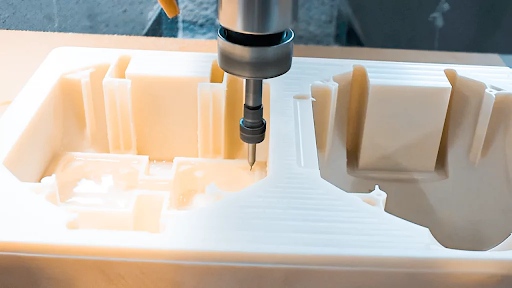
At its core, this process involves subtractive material being removed from a solid block using cutting tools until the final shape is achieved. This makes it particularly valuable for producing parts that closely resemble finished production components.
Why Prototyping is Important in Manufacturing
Prototyping is a critical step in product development. It allows engineers to identify design flaws, improve performance, reduce manufacturing risks, and validate functionality before committing to full-scale production.
Without prototyping, design errors often go unnoticed until tooling is complete or production has started, at which point changes become expensive and time-consuming. CNC prototyping helps prevent this by enabling fast iterations and real-world testing early in the development cycle.
Prototypes are commonly used for:
- Functional testing
- Fit and assembly verification
- Mechanical and stress testing
- Design validation
- Pre-production approval
How CNC Prototyping Works
The CNC prototyping workflow follows a structured and repeatable process designed to deliver high-precision, functional prototype parts. Each stage plays a critical role in ensuring the final component accurately reflects the intended design and performance requirements.
1. CAD Design
The process begins with the creation of a detailed 3D CAD (Computer-Aided Design) model using professional engineering software. This digital model defines every aspect of the component, including its geometry, dimensions, tolerances, surface features, and assembly interfaces.
At this stage, designers consider factors such as manufacturability, material behaviour, load requirements, and potential machining constraints. A well-designed CAD model reduces machining time, improves accuracy, and minimises the need for design revisions later in the process.
2. CAM Programming
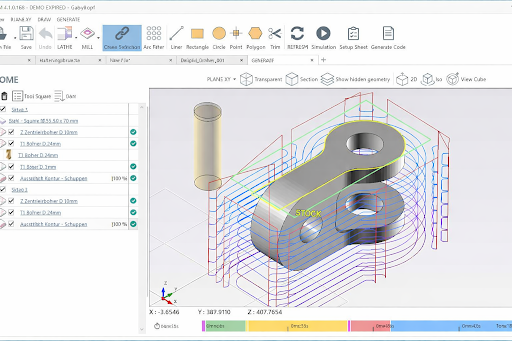
Once the CAD model is finalised, it is transferred into CAM (Computer-Aided Manufacturing) software. Here, the digital design is translated into machine-readable instructions, commonly known as G-code.
CAM programming defines critical machining parameters such as tool selection, cutting paths, spindle speeds, feed rates, step-downs, and machining sequences. This stage ensures the CNC machine can produce the part efficiently while maintaining precision, surface quality, and dimensional accuracy. Skilled programming also helps optimise cycle times and reduce tool wear.
3. Material Selection
Selecting the right material is essential for producing a meaningful prototype. The choice depends on whether the prototype is intended for visual evaluation, functional testing, or performance validation.
Materials may include aluminium alloys for lightweight strength, steel for durability, plastics for cost-effective testing, or specialist materials for high-temperature or high-stress applications. Using production-grade materials allows engineers to accurately assess how the final part will perform in real-world conditions.
4. Machining Process
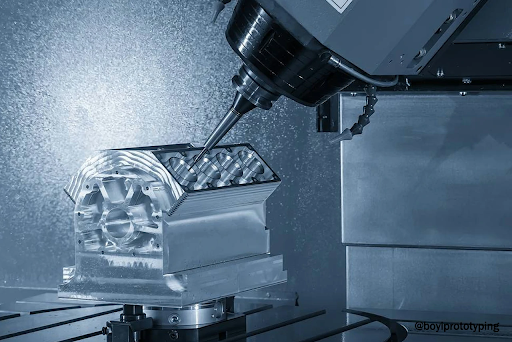
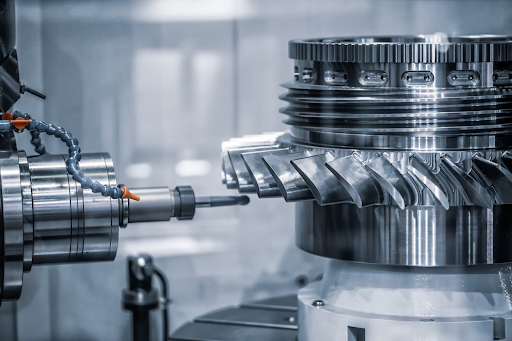
With the program and material prepared, the CNC machining process begins. The machine removes material from a solid workpiece using precision cutting tools such as milling cutters, turning tools, drills, or grinding wheels.
The cutting operations follow the programmed tool paths exactly, allowing complex geometries, tight tolerances, and fine details to be achieved consistently. Depending on the design, the part may require multiple setups or machining stages to complete all features accurately.
5. Finishing & Inspection
After machining, the prototype may undergo secondary finishing processes to improve appearance, performance, or functionality. These can include deburring to remove sharp edges, polishing for improved surface finish, anodising or coating for corrosion resistance, and surface treatments to match production requirements.
Finally, precision inspection is carried out using measuring tools such as callipers, micrometres, or coordinate measuring machines (CMM). This ensures the prototype meets all dimensional, tolerance, and quality specifications before it is approved for testing, iteration, or progression to production.
Common CNC Prototyping Processes
Common CNC Prototyping Processes Several CNC machining methods are used depending on part geometry and requirements:
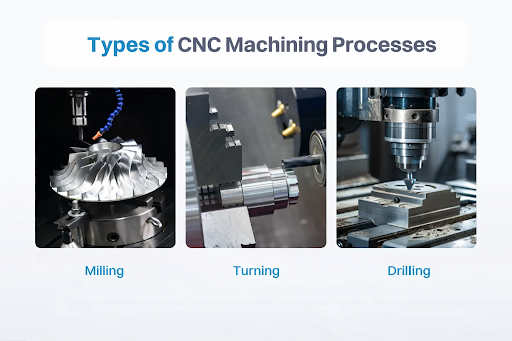
CNC Milling
CNC milling uses rotating cutting tools to remove material from a stationary workpiece. The cutting tool moves along multiple axes, allowing highly complex shapes and features to be machined with precision.
The CNC Milling process is particularly well-suited for producing components with flat surfaces, pockets, slots, contours, and intricate details.
CNC Turning
In CNC turning, the workpiece rotates at high speed while a stationary cutting tool shapes the outer or inner surfaces. This process is ideal for producing round or symmetrical components with consistent diameters.
CNC turning is commonly used to manufacture parts such as shafts, bushings, pins, threaded components, and cylindrical housings. It offers excellent dimensional accuracy, smooth surface finishes, and efficient material removal, making it a preferred choice for rotational parts and components requiring concentric features.
CNC Drilling
CNC drilling is used to create precise holes with tight positional and dimensional tolerances. The process is fully automated, ensuring consistent hole placement, depth, and diameter across multiple prototype iterations.
Drilling operations may include simple through-holes, blind holes, countersinks, and tapped holes. Accurate hole placement is essential for components that must align with other parts during assembly, making CNC drilling a critical step in many prototype machining projects.
Grinding
CNC grinding is a high-precision finishing process used to achieve extremely tight tolerances and superior surface finishes. Abrasive grinding wheels remove very small amounts of material to refine the final dimensions of a part.
This process is often applied to hardened materials or components that require exceptional accuracy and smoothness, such as bearing surfaces, precision shafts, and high-performance mechanical parts. Grinding is typically used as a secondary operation following milling or turning.
Advanced CNC Processes
For specialised or highly complex prototype requirements, additional CNC processes may be used:
- Wire EDM (Electrical Discharge Machining): Ideal for intricate shapes, sharp internal corners, and hard materials that are difficult to machine conventionally.
- Laser Cutting: Used for precise cutting of thin metals and sheet materials with minimal heat distortion.
- Waterjet Cutting: Employs high-pressure water mixed with abrasive material to cut thick or sensitive materials without heat-affected zones.
These advanced techniques expand the capabilities of CNC prototyping and allow engineers to produce components that would otherwise be challenging or impossible using traditional machining methods.
Advantages of CNC Prototyping
High Precision and Accuracy
CNC machines can achieve tight tolerances that closely match production standards, making prototypes suitable for functional and mechanical testing.
Repeatability
Once a program is created, identical parts can be produced consistently, allowing multiple prototype iterations with uniform results.
Material Versatility
A wide range of metals and plastics can be used, enabling prototypes that behave like final production parts.
Fast Turnaround
Compared to traditional tooling or moulding, CNC machining allows prototypes to be produced quickly, often within days.
Design Flexibility
Changes to a prototype can be made easily by modifying the CAD file and regenerating the machining program.
Production-Ready Results
Parts produced through CNC machining often require little to no design adjustment before entering low-volume or full-scale production.
Limitations to Consider
While CNC prototyping offers many benefits, it is not always the ideal solution:
- Material Waste: As a subtractive process, excess material is removed and cannot always be reused.
- Complex Internal Geometry: Intricate internal channels or lattice structures are difficult or impossible to machine.
- Higher Cost for Simple Models: For very basic conceptual parts, additive manufacturing may be more economical.
- Programming Expertise Required: Skilled CAM programming and machine setup are essential for optimal results.
Understanding these limitations helps determine whether CNC machining is the most suitable prototyping method for a specific application.
CAD and CAM Tools Used in CNC Prototyping
Modern CNC prototyping depends on powerful CAD and CAM software to ensure accuracy, efficiency, and repeatability. These tools bridge the gap between digital design and physical manufacturing, allowing complex components to be produced with confidence.
CAD Software Tools
SolidWorks
SolidWorks is widely used for creating detailed 3D part and assembly models. It allows engineers to define precise dimensions, tolerances, and relationships between components, making it ideal for prototype development and design validation.
Autodesk Fusion 360
Fusion 360 combines CAD, CAM, and simulation tools in a single platform. Its cloud-based workflow makes it especially useful for rapid design changes, collaborative prototyping, and quick transitions from design to machining.
Siemens NX
Siemens NX is commonly used for advanced engineering and complex component design. It supports highly detailed modelling and is often chosen for aerospace, automotive, and high-precision industrial applications.
CAM Software Tools
Mastercam
Mastercam is one of the most widely used CAM systems for CNC machining. It offers advanced toolpath strategies, multi-axis machining support, and high levels of control, making it ideal for producing accurate and efficient CNC prototypes.
SolidCAM
SolidCAM integrates directly with SolidWorks, enabling seamless transition from design to machining. It is particularly effective for complex parts that require tight tolerances and multiple machining operations.
PowerMill
PowerMill is known for high-speed machining and complex surface finishing. It is often used for intricate geometries and mould-related prototype work where surface quality is critical.
Read in detail about these CNC machining software options, their different types, and how to decide which one is best for your needs.
CNC Prototyping Compared to Other Prototyping Methods
Choosing the right prototyping method depends on design complexity, functional requirements, material needs, and budget. CNC prototyping offers distinct advantages, but understanding how it compares to other methods helps ensure the best choice is made.
CNC Prototyping vs 3D Printing
3D printing is commonly used for early-stage concept models and visual prototypes. It allows for rapid production of complex internal geometries at a relatively low cost. However, printed parts often lack the strength, surface finish, and dimensional accuracy required for functional testing.
CNC prototyping produces parts from solid blocks of production-grade materials, resulting in stronger components with tighter tolerances and better surface finishes. This makes CNC machining more suitable for functional, mechanical, and pre-production testing.
CNC Prototyping vs Injection Moulding
Injection moulding is highly efficient for mass production but requires expensive tooling and long lead times. This makes it impractical for early-stage prototyping or frequent design changes.
CNC prototyping eliminates the need for tooling, allowing designs to be tested and refined quickly. It is far more cost-effective for low-volume production and prototype validation before committing to moulds.
CNC Prototyping vs Casting
Casting is useful for producing complex shapes and large components but often involves additional finishing and lower dimensional accuracy. Tooling costs and setup time can also be significant.
CNC machining delivers higher precision and repeatability, making it better suited for prototypes where dimensional accuracy and surface quality are critical.
Practical Cost-Saving Recommendations for CNC Prototyping
While CNC prototyping delivers high-quality, production-ready parts, costs can vary depending on design decisions. Applying practical cost-saving strategies early can significantly reduce overall expenses.
Optimise Tolerances
Apply tight tolerances only where they are functionally necessary. Over-tolerancing increases machining time, tool wear, and inspection costs without adding value.
Choose Cost-Effective Materials
Standard materials such as aluminium 6061 or mild steel are easier and cheaper to machine than exotic alloys. Using readily available materials can reduce lead times and material costs.
Simplify Part Geometry
Avoid unnecessarily complex features such as deep pockets, thin walls, and sharp internal corners. Simpler geometries machine faster and reduce the risk of errors or part failure.
Limit Post-Processing
Surface treatments, polishing, and cosmetic finishes add cost. Keeping finishing operations limited to what is functionally required helps keep prototype costs under control.
Design for Machinability
Engaging with machining experts early in the design stage helps identify design changes that can reduce machining time and material waste while maintaining performance.
Industries That Rely on CNC Prototypes
Industries that demand accuracy and reliability widely use CNC prototyping, such as:
- Automotive: Engine components, brackets, housings
- Aerospace: Structural and safety-critical parts
- Medical: Surgical instruments, device housings
- Oil & Gas: High-strength components for harsh environments
- Military & Defence: Precision mechanical assemblies
- Construction & Architecture: Custom fixtures and hardware
Choosing the Right CNC Partner with Kirmell
Selecting the right CNC partner is just as important as choosing the manufacturing method itself. A dependable CNC prototype service should offer strong engineering support and practical design feedback, helping to identify potential issues early and improve manufacturability.
At Kirmell, CNC prototyping is treated as a collaborative process rather than a standalone service. With extensive experience producing CNC-machined prototypes, Kirmell ensures design intent is maintained from the initial concept through to final inspection. This approach helps minimise risk, reduce development time, and deliver high-quality prototype components that are ready for testing, validation, and progression into production.
Contact us today for more information and get a quote for your project.
Conclusion
CNC prototyping has become a cornerstone of modern manufacturing. By combining precision, speed, and material realism, it enables manufacturers to reduce risk, improve product quality, and accelerate time-to-market.
Whether you are developing a single component or preparing for large-scale production, CNC prototype machining provides the confidence that your design will perform exactly as intended in real-world conditions.
Understanding its capabilities, limitations, and applications allows you to make informed decisions and create better products from the very first prototype.
FAQs
[saswp_tiny_multiple_faq headline-0=”h4″ question-0=”What is CNC prototyping used for?” answer-0=”CNC prototyping is used to create accurate, functional prototype parts for testing, validation, and design refinement before full production. It allows manufacturers to assess fit, strength, tolerances, and real-world performance using production-grade materials. ” image-0=”” fontsize-0=”18″ fontunit-0=”px” count=”1″ html=”true”]
[saswp_tiny_multiple_faq headline-0=”h4″ question-0=”How accurate are CNC prototypes?” answer-0=”CNC prototypes can achieve very tight tolerances, often matching those of final production parts. This makes them suitable for functional testing, assembly checks, and performance evaluation where precision is critical. ” image-0=”” fontsize-0=”18″ fontunit-0=”px” count=”1″ html=”true”]
[saswp_tiny_multiple_faq headline-0=”h4″ question-0=”What materials can be used for CNC prototyping?” answer-0=”A wide range of materials can be used, including aluminium, steel, stainless steel, brass, copper, plastics such as nylon or polycarbonate, and specialist alloys. Material choice depends on the intended use of the prototype and whether it needs to replicate final production conditions. ” image-0=”” fontsize-0=”18″ fontunit-0=”px” count=”1″ html=”true”]
[saswp_tiny_multiple_faq headline-0=”h4″ question-0=”How long does CNC prototyping take?” answer-0=”Lead times vary depending on part complexity, material, and quantity. Simple components can be produced within a few days, while more complex or multi-operation parts may take longer. CNC prototyping is generally much faster than traditional tooling-based methods. ” image-0=”” fontsize-0=”18″ fontunit-0=”px” count=”1″ html=”true”]
[saswp_tiny_multiple_faq headline-0=”h4″ question-0=”Is CNC prototyping expensive?” answer-0=”Costs depend on design complexity, tolerances, material selection, and finishing requirements. While CNC prototyping may cost more than basic 3D printing for simple models, it is often more cost-effective in the long run by reducing design errors and avoiding costly production changes. ” image-0=”” fontsize-0=”18″ fontunit-0=”px” count=”1″ html=”true”]
[saswp_tiny_multiple_faq headline-0=”h4″ question-0=”Can CNC prototypes be used as final parts?” answer-0=”In many cases, yes. CNC prototypes are often produced to production-level quality and can be used for low-volume production, testing environments, or specialised applications where small quantities are required. ” image-0=”” fontsize-0=”18″ fontunit-0=”px” count=”1″ html=”true”]