
How to Specify Custom Pallet Sizes for Industrial Applications
A pallet that is the wrong size can create problems long before it reaches the warehouse. Poor fit can waste space, affect stability, slow handling and make storage more difficult.
Standard pallet sizes work well for many applications. But industrial products are not always standard. Large, heavy, irregular or specially shaped loads often require a steel pallet designed around their exact requirements.
Custom pallet sizes can also be needed to suit specific machinery, forklifts, pallet trucks, racking systems and manufacturing processes. This is particularly common in industries such as automotive, steel manufacturing and engineering.
But specifying a custom pallet is about more than simply changing its length and width. The dimensions need to work with the load, handling equipment, storage system, pallet construction and supporting components such as pallet feet.
In this guide, we’ll explain how to specify the right custom pallet size for your application and the key factors to consider before moving into production.
Why Do Industrial Applications Need Custom Pallet Sizes?
Standard pallet sizes are designed to suit common handling and storage needs. However, industrial products often come in different shapes, sizes and weights, making a standard pallet unsuitable for some applications.
A custom pallet size allows manufacturers to design the pallet around the product, handling process and available space. This can improve stability, reduce wasted space and make day-to-day handling more efficient.
Accommodating Non-Standard Loads
Some industrial products simply do not fit neatly onto standard pallets. Oversized machinery parts, long components and irregularly shaped products may need a larger or differently proportioned pallet.
A custom size can provide the right support for the load without relying on excessive overhang. This helps maintain warehouse load stability and reduces the risk of damage during handling and transport.
Improving Space Utilisation
Every extra centimetre of unused space can add up when pallets are moved and stored in large quantities. A pallet that closely matches the load can help make better use of available warehouse and transport space.
Custom pallet dimensions can also be selected to suit vehicle loading requirements. This can help reduce unused space and improve warehouse storage efficiency by making better use of available space.
In warehouses, the right pallet size can make better use of available storage areas and racking. It can also reduce wasted pallet surface area when the load is smaller or differently shaped than a standard pallet.
Meeting Production and Handling Requirements
Industrial pallets often need to work as part of a wider production and handling system. Their dimensions may need to match assembly lines, conveyors or automated handling equipment.
Forklift and pallet truck access is another important consideration. Custom dimensions can provide the required clearance and entry points without compromising the pallet’s overall design.
This becomes especially important when pallets move repeatedly between production, storage and transportation. A suitable size can help ensure smooth handling at every stage.
Supporting Industry-Specific Requirements
Different industries have different pallet requirements. Automotive manufacturers, for example, may need custom pallets to safely hold specific components while fitting into established production and transport systems, with pallet feet for automotive applications selected to suit the required pallet construction and handling conditions.
Steel and engineering manufacturers may handle heavy, oversized or irregular products that require stronger and more precisely sized pallets. A custom design can be built around these specific load requirements, including the use of heavy-duty pallet feet where higher loads or demanding industrial conditions require additional support.
Custom pallets are also widely relevant to returnable transit packaging, where pallets may be reused many times. In these applications, dimensions need to support the product while also working with stacking, nesting, handling and storage requirements.
What Dimensions Need to Be Specified?
When specifying a custom pallet, the length, width and height should match the load, handling equipment, storage system and transport requirements. 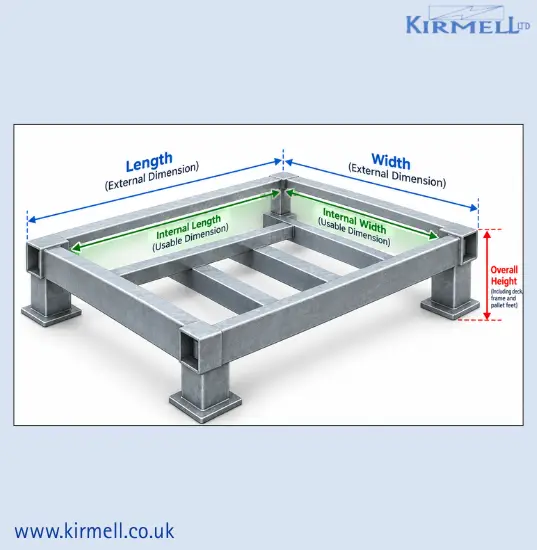
1. Overall Pallet Length
The pallet length should provide enough support for the product based on its dimensions and orientation. Consider whether any overhang is acceptable and ensure the pallet fits the intended storage and transport space.
2. Overall Pallet Width
Width should be based on the product footprint and required support. Also consider forklift or pallet truck entry, racking requirements and how efficiently the pallet will fit within transport vehicles.
3. Overall Height
For steel pallets, overall height includes the deck, frame and pallet feet. Consider product clearance, fork access, stacking limits, storage height and the required pallet feet size.
4. Internal Dimensions vs External Dimensions
Clearly specify whether you need overall external dimensions or usable internal dimensions. This is particularly important for box and cage pallets, where the frame or walls can reduce the usable space inside the pallet. Clear dimensions help prevent design and manufacturing errors.
How to Calculate the Right Custom Pallet Size
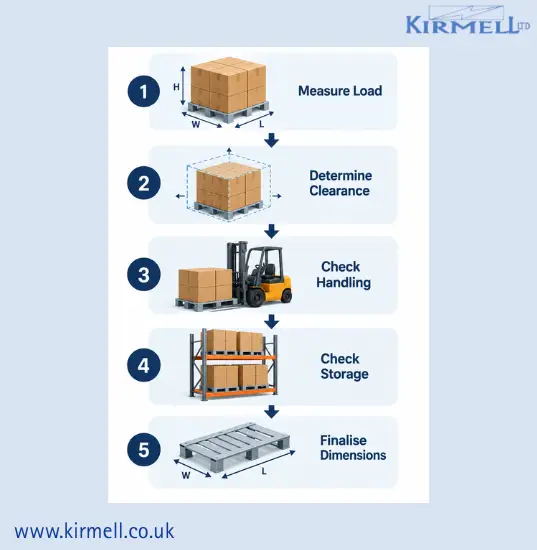 Choosing the right custom pallet size starts with understanding the load and how the pallet will be used. Follow these steps to create a practical specification.
Step 1: Measure the Load
Record the load’s length, width, height and weight. For uneven or heavy loads, also consider the centre of gravity to understand how the weight will be distributed.
Step 2: Determine Required Load Clearance
Decide whether the product needs full support within the pallet footprint or whether some overhang is acceptable. Also consider whether positioning guides, restraints or other supports are needed.
Step 3: Consider Handling Equipment
Make sure the pallet dimensions work with the equipment used to move it, including:
- Forklifts
- Pallet trucks
- Conveyors
- Automated handling systems
Step 4: Consider Storage and Stacking
Check the pallet against your racking dimensions, available storage space and maximum stacking height. For reusable pallets, also consider whether they need to nest when empty, as nesting plugs can help provide consistent positioning between compatible units.
Step 5: Finalise the External Dimensions
Once the load, handling and storage requirements are clear, finalise the pallet’s length, width and overall height. These dimensions should provide adequate support without creating unnecessary space or material.
Don’t Forget Pallet Feet When Specifying Custom Pallet Dimensions
Pallet feet are an important part of the overall pallet design, not an afterthought. Their height, base dimensions, position, number and spacing can all affect the pallet’s performance and dimensions, making pallet-feet selection for steel pallets an important part of the specification. 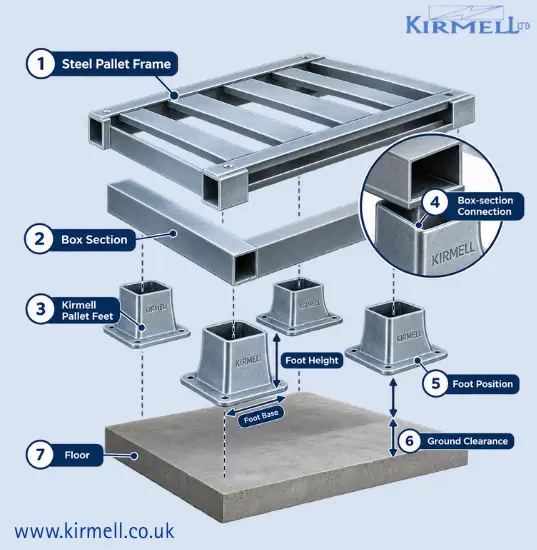
Pallet Feet Height
The height of the pallet feet determines the clearance beneath the pallet for forklifts and pallet trucks. It also contributes to the overall pallet height and can affect stacking and nesting requirements.
Pallet Feet Positioning
The position and spacing of the pallet feet should support the load and work with the pallet frame. They also need to provide suitable fork entry and maintain stability during handling, stacking and storage.
Pallet Feet and Box Section Compatibility
For steel pallets, the pallet feet need to be compatible with the box section or steel profile used in the pallet frame. The right fit helps ensure the feet can be securely incorporated into the pallet construction, with steel pallet feet designed and manufactured to suit the required dimensions and attachment method.
For manufacturers producing custom steel pallets, Kirmell supplies steel pallet feet in different dimensions and configurations to suit different pallet constructions and box-section requirements.
Custom Pallet Size Examples for Different Industrial Applications
The right custom pallet size depends on how the pallet will be used. Different industries may need different dimensions to safely support their products and work with existing handling and storage systems.
| Application | Key sizing consideration |
| Automotive components | Match the pallet footprint to the size and shape of the components. |
| Steel components | Allow for heavy or concentrated loads and provide adequate support. |
| Machinery parts | Accommodate oversized, irregular or unusually shaped products. |
| Returnable packaging | Consider nesting, stacking and repeated handling. |
| Manufacturing lines | Match pallet dimensions to conveyors, production lines and handling equipment. |
| Warehouse storage | Ensure compatibility with racking, stacking height and available storage space. |
These examples show why there is no single custom pallet size that suits every application. The dimensions should be determined by the load, handling process and environment in which the pallet will be used.
What Information Should You Give a Custom Pallet Manufacturer?
Providing clear specifications helps a pallet manufacturer understand your requirements and recommend a suitable design. Before requesting a quotation, prepare the following information: Custom Pallet Specification Checklist:
- Required length and width
- Overall pallet height
- Product dimensions
- Maximum load weight
- Load distribution
- Material and construction requirements
- Steel box-section size
- Required pallet feet dimensions
- Forklift or pallet truck entry requirements
- Racking compatibility
- Nesting requirements
- Stacking requirements
- Quantity required
- Operating environment
- Surface finish or coating requirements
The more detailed your specification, the easier it is to develop a pallet that fits your product and handling system. It can also help avoid costly design changes once manufacturing has started.
FAQs
You should provide the required dimensions, load weight, product size, material requirements, handling method, storage requirements, box-section size and pallet feet specifications.
Steel pallets can be manufactured in a wide range of sizes. The final dimensions depend on the load, construction, handling equipment and intended application.
There is no single size for automotive applications. The dimensions should match the component size, production process, handling equipment, storage system and transport requirements.
Yes. Pallet feet are available in different dimensions and configurations to suit different steel pallet designs. The required feet should be selected based on the pallet frame, box section, load and handling requirements.
Conclusion
Specifying a custom pallet size involves more than simply measuring the product. Load requirements, handling equipment, storage, transport and pallet construction all need to work together.
Pallet feet are also an important part of the design. Their size, height and positioning can affect clearance, stability, stacking and overall pallet dimensions. If you’re designing custom steel pallets and need pallet feet to match your construction, explore Kirmell’s range of steel pallet feet or contact the team to discuss your requirements.

