
How to Choose the Right Pallet Feet for Steel Pallets and Stillages
A pallet is only as reliable as the support underneath it.
The right pallet feet help maintain stability, support loads and keep steel pallets and stillages working safely during handling and storage. But choosing the right feet involves more than selecting a size. The pallet frame, load, stacking arrangement, handling equipment and working environment all need to be considered.
This guide explains the key factors to consider when choosing pallet feet for steel pallets and stillages, from load capacity and dimensions to installation and custom requirements.
How to Choose the Right Pallet Feet
Before choosing pallet feet, it is important to look at how the pallet or stillage will be used. Load, frame design, stacking, handling, material and operating conditions all play a role in finding the right fit. The following factors can help you make the right choice for your application.
1. Start With Load Requirements
The first thing to consider is the load the pallet or stillage will need to support, particularly for applications involving repeated handling or high loads where heavy-duty pallet feet may be required.
The maximum weight, how that weight is distributed, and whether the unit will be moved or stacked can all affect the required pallet foot design, as load stability in warehouse environments also depends on how loads are supported and handled. 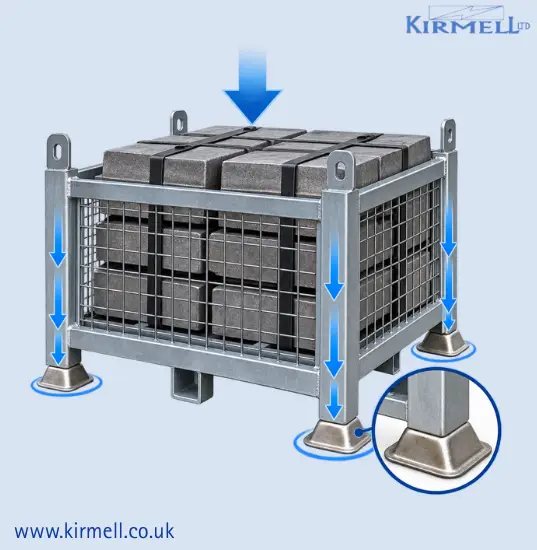 Consider:
- Maximum load: How much weight will the pallet or stillage carry?
- Load distribution: Is the weight spread evenly or concentrated in certain areas?
- Movement: Will it remain stationary or be regularly moved by forklift or pallet truck?
- Stacking: Will loaded pallets or stillages be stacked, and if so, how many units high?
For stacked stillages, the lower units may need to support the weight of the units above them as well as their own load. The pallet feet should therefore be selected as part of the overall pallet or stillage design.
2. Match the Feet to the Base Structure
Pallet feet need to work with the construction of the pallet or stillage. The frame design, box-section size and position of the structural members can all affect which feet are suitable. 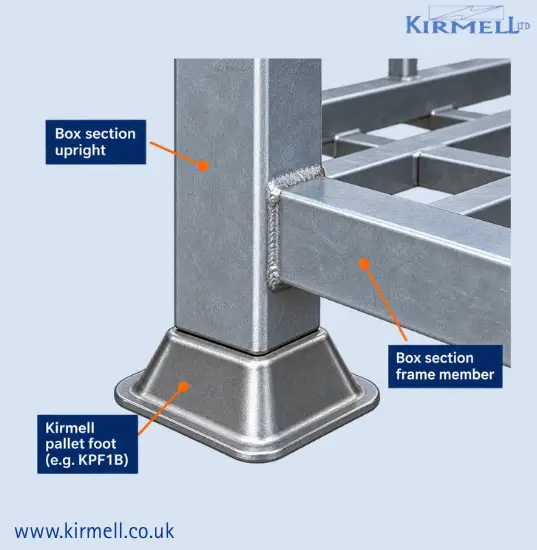 Before selecting the feet, check:
- Frame material and thickness
- Box-section or tubular dimensions
- Corner post positions
- Centre support beams
- Available mounting area
Ideally, the feet should be positioned beneath the main load-bearing points of the frame. This helps transfer the load through the stronger parts of the structure and can reduce unnecessary stress on the frame and welds. For steel stillages, foot selection should therefore be considered alongside the wider stillage design.
3. Consider Stacking Compatibility
If steel pallets or stillages will be stacked, the pallet feet need to work with the stacking arrangement, with fixed, adjustable and stackable pallet feet offering different approaches depending on the warehouse and stacking requirements.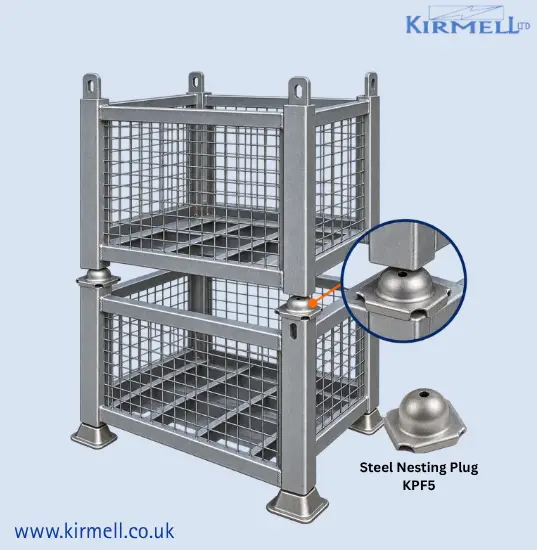 The feet should:
- Align correctly with the stacking points
- Sit securely within the frame above or below
- Help prevent sideways movement
- Maintain stable vertical load transfer
- Support the requirements of the full stack
The dimensions and shape of the feet can affect how securely units locate when stacked, while components such as pallet feet and nesting plugs can serve different roles within a stackable storage system.
For this reason, stacking requirements should be confirmed before selecting the foot size and design.
4. Evaluate the Operating Environment
The environment in which the pallet or stillage will be used can affect the material and finish required. For example, a dry indoor warehouse may have different requirements from an outdoor or humid environment. Where pallets are exposed to moisture, corrosion protection should be considered when selecting the finish. 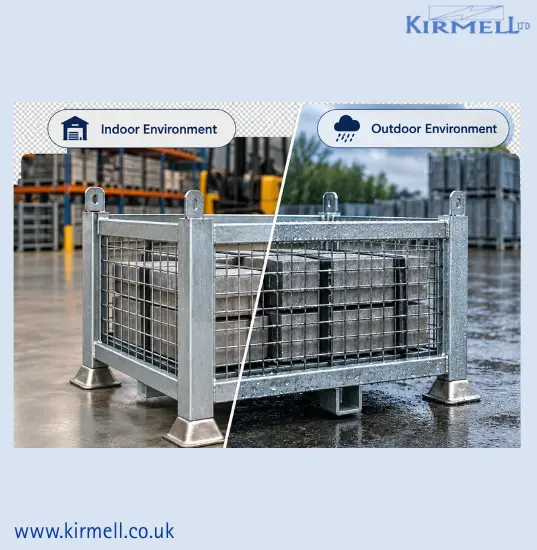 Also consider whether the pallet feet will be exposed to:
- Moisture or rain
- Humidity
- Chemicals or cleaning processes
- Frequent impact or vibration
- Heavy industrial handling
Choosing a suitable finish and construction for the operating environment can help reduce corrosion and premature wear.
5. Check Forklift and Pallet Truck Clearance
The height of the pallet feet affects the clearance available underneath the pallet or stillage, so measuring pallet feet dimensions before ordering can help confirm compatibility with the pallet frame and handling equipment.
This needs to be compatible with the handling equipment used on site. 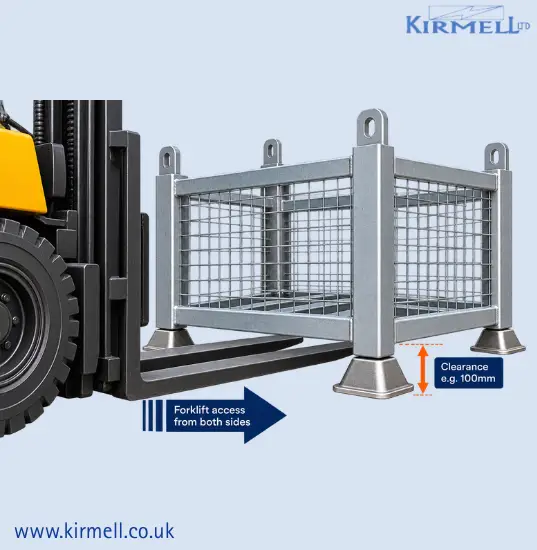 Before selecting the feet, consider:
- Forklift tine dimensions
- Pallet truck entry requirements
- Required ground clearance
- The condition of the warehouse floor
The feet should provide enough clearance for the equipment to enter safely without compromising the stability of the pallet or stillage.
6. Choose the Right Material and Thickness
The material and thickness of the pallet feet should suit the expected loads and working conditions. Heavier applications may require a more robust foot construction to withstand repeated loading, handling and impact. 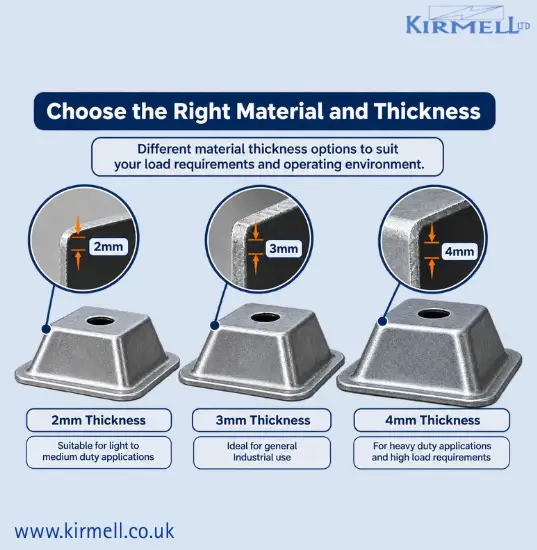 When assessing the material and thickness, consider:
- Maximum and repeated loads
- Frequency of handling
- Potential impacts
- Frame construction
- Operating environment
- Required corrosion protection
The foot should be strong enough for its intended application without selecting a specification based on thickness alone. The overall design, dimensions, mounting method and load requirements all need to be considered together.
7. Choose Between Welded and Bolt-On Feet
The way the pallet feet are attached can also affect how the pallet or stillage is used and maintained, so the correct installation of pallet feet should be considered alongside the choice between welded and bolt-on designs.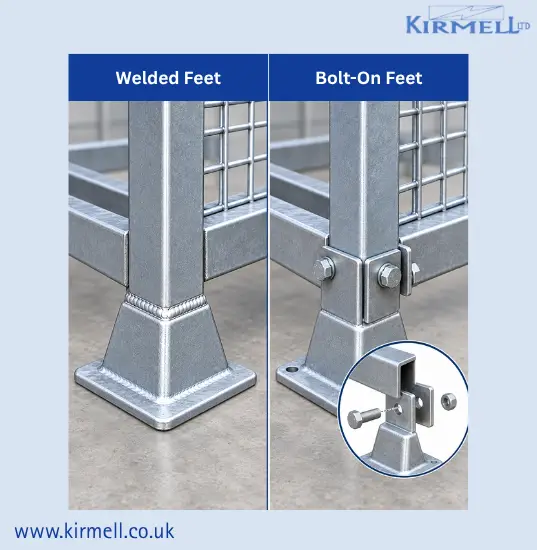
- Welded pallet feet provide a permanent connection to the frame and are suitable where the foot is intended to remain fixed.
- Bolt-on pallet feet can be removed and replaced more easily, which can be useful where maintenance or future replacement is required.
The right option depends on the pallet construction, expected loads, maintenance requirements and whether the feet may need to be replaced during the product’s working life.
8. Determine the Number and Position of Support Points
The number and position of pallet feet should be considered alongside the pallet frame and load distribution, while the shape of the pallet feet should also suit the way the frame is constructed and supported.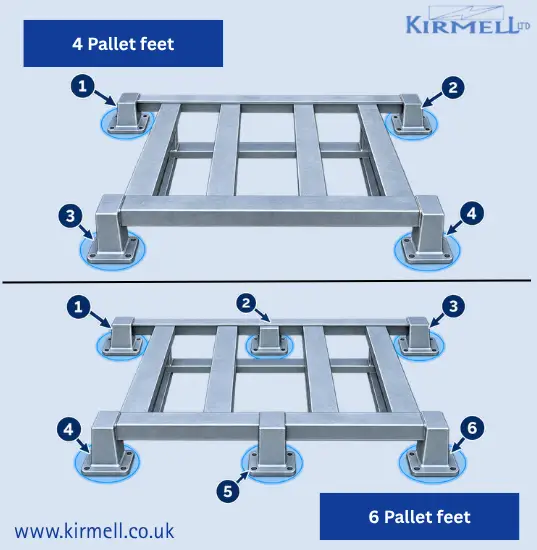 Common arrangements may include:
- Four corner feet
- Six support points with additional centre support
- More support points for larger or differently designed frames
However, there is no single configuration that suits every pallet or stillage. The correct number and position depend on the frame design, load distribution and intended use. For heavier or uneven loads, additional support may be required to distribute the load through the frame more effectively.
9. Consider Custom Requirements
Standard pallet feet are suitable for many applications, but some steel pallets and stillages require a different size, shape or mounting arrangement, particularly when custom pallets are designed around specific load, handling or stacking requirements.
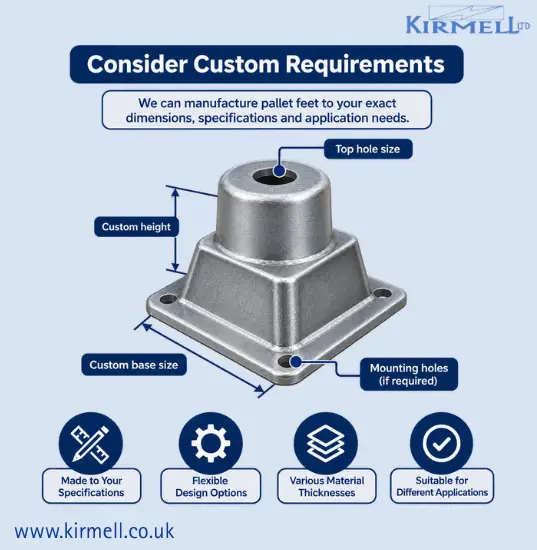 A custom solution may be appropriate when:
- The frame has non-standard dimensions
- A specific foot height is required
- The stacking arrangement is unique
- The mounting area differs from standard designs
- The pallet is used with automated handling equipment
- A replacement foot needs to match an existing design
For these applications, bespoke steel stillage feet can be designed around the specific pallet or stillage construction. Providing dimensions, photographs, technical drawings or an existing sample can help establish the required specification.
Pallet Feet Specification Checklist
Choosing the right pallet feet starts with having the right specifications, and a pallet feet buyers’ checklist can help procurement teams gather the information needed before placing an order.
Before ordering, check the key details of your pallet or stillage to make sure the feet are suitable for its construction, load requirements and handling conditions. Use this checklist to confirm the main requirements:
| What to Check | Details |
| Load | Maximum load, load distribution and whether the pallet or stillage will be stacked. |
| Frame | Box section or tubular frame size, material thickness and available mounting area. |
| Feet Dimensions | Required base size, height and overall dimensions to match the pallet construction. |
| Support Points | Number and position of feet needed to support the frame and distribute the load. |
| Stacking | How the feet need to align when pallets or stillages are stacked. |
| Handling | Forklift tine clearance, pallet truck access and required ground clearance. |
| Environment | Indoor, outdoor, humid or heavy industrial conditions, including exposure to moisture or chemicals. |
| Material & Finish | Suitable steel thickness, surface finish and corrosion protection for the operating environment. |
| Installation | Whether welded or bolt-on feet are suitable for the pallet design and maintenance requirements. |
| Custom Requirements | Any non-standard dimensions, mounting arrangements, heights or stacking requirements. |
| Quantity | Number of feet required per pallet or stillage and total quantity for the production run. |
| Drawings & Measurements | Technical drawings, dimensions, photographs or existing samples where available. |
Having these details ready can make it easier to identify the right pallet feet and avoid compatibility issues during manufacturing or assembly.
Why Choose Kirmell Pallet Feet for Your Steel Pallets and Stillages?
Kirmell manufactures a range of steel pallet feet designed for use with steel pallets, stillages and other industrial handling equipment. With different sizes and configurations available, the range can accommodate a variety of pallet designs, frame structures and mounting requirements.
For standard applications, Kirmell offers a selection of pallet feet to suit common steel pallet and stillage constructions. Where a standard option does not meet your requirements, bespoke pallet feet can also be considered based on specific dimensions, mounting arrangements or design requirements.
With manufacturing experience in the UK, Kirmell works with manufacturers across different industrial applications. If you have a specific pallet or stillage design, you can provide your dimensions, drawings, photographs or existing samples to discuss the most suitable pallet feet for your application. 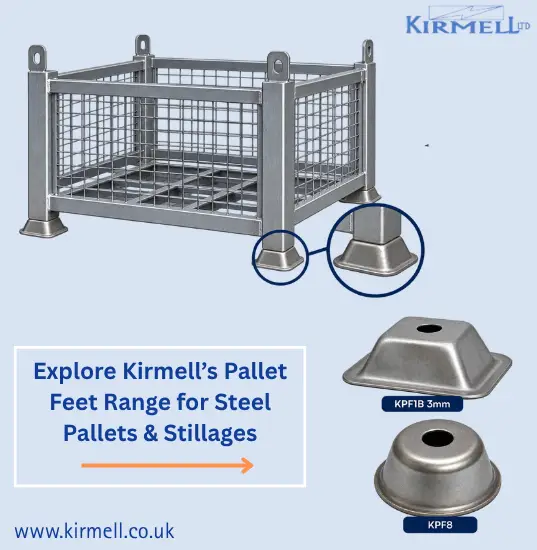 Looking for the right pallet feet for your steel pallets or stillages? Explore Kirmell’s range of steel pallet feet or contact the Kirmell team to discuss your specific requirements.
FAQs
The best pallet feet for heavy-duty steel pallets are thick-gauge steel designs with reinforced welds and high load ratings. For industrial applications, heavy duty pallet feet made from mild steel or galvanised steel provide the strength required to support both static and dynamic loads. Always choose feet rated above your maximum expected weight to ensure safety and durability.
When selecting pallet feet for stillages that are stacked, alignment is critical. Stackable pallet feet should fit securely into the upper frame or designated stacking points. Look for precision-manufactured square steel pallet feet that maintain vertical load transfer and prevent sideways movement between stacked units.
The correct size depends on your pallet base structure, load requirements, and forklift clearance. Measure your frame dimensions and confirm the height required for pallet truck or forklift entry. Most industrial steel pallets use standard square or rectangular steel pallet feet, but custom sizes may be needed for non-standard frames.
Welded pallet feet are generally stronger and more suitable for heavy-duty industrial use. Bolt-on pallet feet offer flexibility and easier replacement. The best option depends on your maintenance strategy, load demands, and operational environment.
Yes, especially if used in humid or outdoor environments. Galvanised or zinc-plated steel pallet feet provide additional protection against rust. In dry warehouse settings, powder-coated finishes may be sufficient. Choosing corrosion-resistant pallet feet extends lifespan and reduces maintenance costs.
You can explore a wide range of Kirmell pallet feet designed for industrial steel pallets and stillages directly through our website. Our range includes square steel pallet feet, two-sided options, and heavy-duty configurations suitable for warehouse and manufacturing applications.
If you require large quantities of pallet feet for steel pallets or stillage systems, contact Kirmell for pricing, lead times, and technical advice tailored to your project requirements.
Conclusion
Choosing the right pallet feet for steel pallets and stillages is a structural decision that directly impacts safety, durability, and operational efficiency. By carefully considering load capacity, structural alignment, stacking compatibility, environmental exposure, and handling requirements, you can select pallet feet that deliver dependable performance across industrial applications.
Making the correct choice supports safer operations, protects your investment, and ensures your steel pallet systems continue performing reliably for years to come.


