
Pallet Cages: Key Components, Design and Manufacturing Considerations
A well-designed pallet cage can make handling, storage, and transport much easier. But if the cage is not built with the right components, even a strong steel frame can create problems during everyday use.
Pallet cages are widely used for storing and moving goods in industrial environments. Their design combines a pallet base with a steel cage or frame to provide strength, protection, and easy handling. For manufacturers, getting the design right means looking beyond the cage itself. Components such as the frame, cage panels, stacking features, and pallet feet all need to work together.
In this guide, we’ll look at the key components of pallet cages, important design considerations, and the manufacturing factors that can affect their performance and durability.
What Are Pallet Cages?
Pallet cages are steel storage and handling units that combine a pallet base with a fixed or removable cage structure, similar to the construction principles used in steel pallets. They are designed to hold, protect, and move goods while keeping them contained during storage and transport. 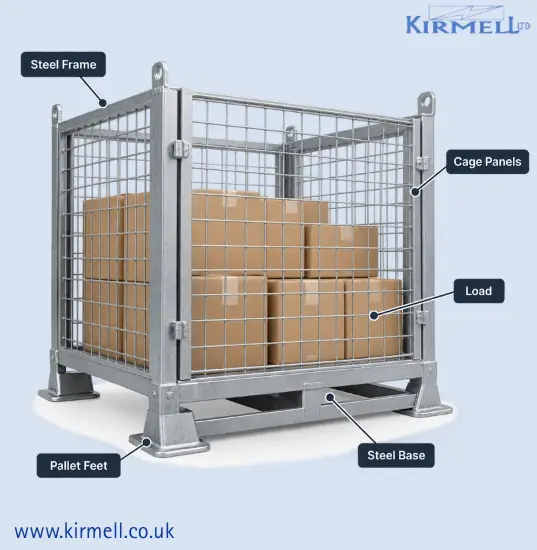 Unlike standard pallets, which mainly provide a flat platform for goods, pallet cages add vertical sides or panels around the load. This helps prevent items from shifting, falling, or becoming damaged during handling. Steel is widely used for pallet cages because it provides the strength and durability needed for repeated industrial use.
A well-designed steel cage can withstand regular handling, stacking, and demanding working conditions while providing a stable structure for the load.
Key Components of a Pallet Cage
A pallet cage is made up of several components that work together to provide strength, stability, and easy handling. Each part has a specific role, and its design should match the intended load and application.
1. Steel Base and Pallet Frame
The steel base provides the foundation of the pallet cage and supports the load. It needs to be strong enough to handle the expected weight without excessive bending or deformation.
A well-designed frame also helps distribute the load evenly across the base. This reduces excessive stress on individual components and helps maintain stability during handling and storage.
2. Cage Panels and Side Frames
Cage panels form the sides of the unit and help keep goods contained during storage and transport. They can be made from wire mesh, tubular sections, or sheet metal, depending on the application. The design of wire mesh cages, including their mesh panels, frames and base supports, influences their suitability for different industrial storage and handling needs.
Some pallet cages have fixed panels, while others use removable or folding sections. The right configuration depends on how easily operators need to load, unload, and access the stored goods.
3. Pallet Feet
Pallet feet support the base of the cage and create clearance underneath it. Kirmell’s pallet feet for cage pallets are designed to provide stable support while allowing forklifts and pallet trucks to access the unit for lifting and movement. 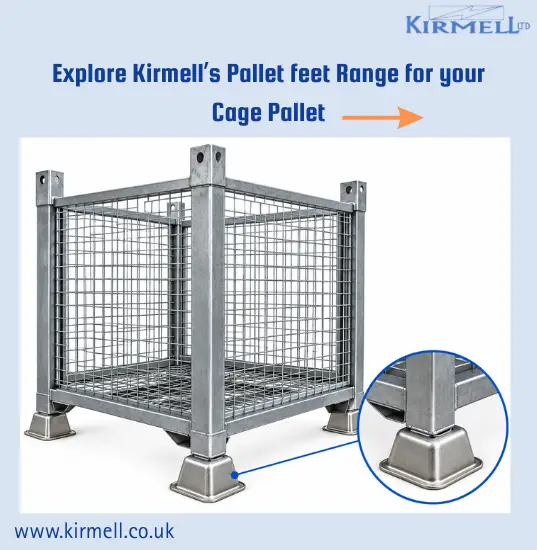 The feet also help transfer the load from the pallet frame to the floor or supporting surface. Their position, number, and design can therefore affect the overall stability of the cage, making the correct specification of Pallet Feet for Steel Cage Pallets important to the overall design.
4. Doors, Access Panels and Hinges
Some pallet cages include doors or access panels to make loading and unloading easier. These can be particularly useful when operators need to reach goods without removing the entire cage.
Drop-down or hinged sections can provide convenient access while keeping the rest of the cage structure in place. Their design should suit the type of goods being stored and the way the cage will be used. Hinges and other hardware also need to be strong enough for repeated use. Poorly selected hardware can affect the operation and durability of the access section.
5. Stacking and Locating Features
Many pallet cages are designed to be stacked when empty or loaded. Stacking features help keep each cage correctly positioned and reduce unwanted movement. Nesting plugs can be used as locating components to help align one pallet cage with another during stacking. They can provide a consistent connection point between stacked units.
Consistent dimensions are important for safe and reliable stacking. The base, pallet feet, frame, nesting plugs, and other locating features need to align correctly between units. For manufacturers producing pallet cages in batches, maintaining consistent dimensions across every unit is especially important. It helps ensure that cages stack, handle, and fit together as intended.
Key Design Considerations for Pallet Cages
Designing a pallet cage involves more than choosing a strong steel frame.
Manufacturers also need to consider the expected load, dimensions, handling method, stacking requirements, and the way each component works together, particularly when selecting mesh cages for storage for industrial applications.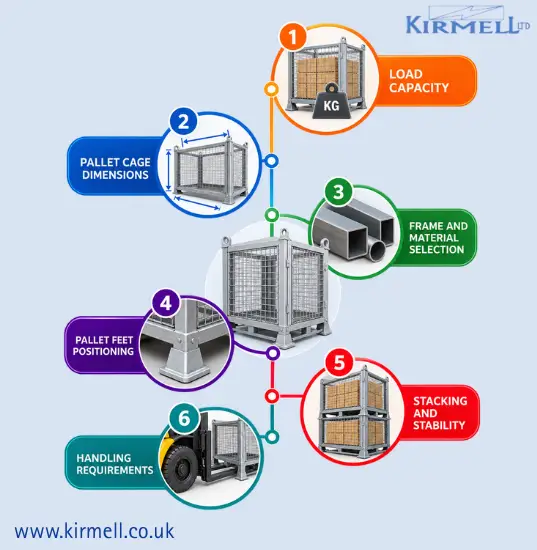
1. Load Capacity
The first consideration is the type and weight of the load the pallet cage needs to carry. The base, frame, cage panels, and pallet feet should all be designed to support the intended load.
It is also important to consider the difference between static and dynamic loading. A cage may experience additional forces when it is lifted, moved, loaded, or placed into storage. The base and pallet feet play an important role in distributing the load, particularly where heavy-duty pallet feet are required for high loads or demanding industrial environments.. Poor load distribution can place excessive stress on individual areas of the frame or feet.
2. Pallet Cage Dimensions
The overall length and width should suit the intended goods and available storage space. Manufacturers should also consider the internal dimensions so that enough usable space remains inside the cage.
Height is another important factor, particularly where pallet cages will be stacked or stored in racking systems. The finished height should also allow safe access for loading and unloading. Dimensions should be compatible with the handling equipment used at the facility. The design should provide suitable access for forklifts and pallet trucks without compromising the cage structure.
3. Frame and Material Selection
Steel provides the strength needed for many industrial pallet cage applications, but the material and frame design should match the intended use. Manufacturers may use tubular or box-section steel for the base and frame.
The size and thickness of these sections can affect the cage’s strength, weight, and overall durability. The goal is to achieve the required strength without adding unnecessary weight. A heavier structure is not always better if it makes the cage more difficult to handle or transport.
4. Pallet Feet Positioning
Pallet feet support the cage and transfer its load to the floor or supporting surface. Their number and position should therefore be considered as part of the overall cage design. The feet should align correctly with the base frame to provide consistent support with dimensions selected to match the cage design and required pallet feet size.
Incorrect positioning can create uneven loading and may affect the stability of the cage. Sufficient clearance should also be provided underneath the cage for forklifts and pallet trucks. This makes the unit easier to lift and move during normal handling operations.
5. Stacking and Stability
If pallet cages are designed to be stacked, the stacking height and method should be considered during the design stage. A well-designed stackable pallet cage should remain stable when units are placed on top of one another, with the stacking features and base designed to support safe and consistent alignment.
The connection between the pallet feet and the base of the cage above is particularly important. Proper foot-to-base engagement can help keep stacked units correctly positioned. The centre of gravity also affects stability, especially when cages are loaded. A well-balanced design can help reduce unwanted movement during lifting, transport, and storage.
6. Handling Requirements
Pallet cages should be designed around the equipment used to move them. Forklift entry points need enough clearance for the forks to engage the cage safely. Pallet truck access should also be considered where these units will be moved manually or within warehouse environments.
The position and dimensions of the pallet feet can directly affect this access. Finally, manufacturers should consider how the cages will be stored and transported. The finished design should provide the required strength and stability while remaining practical to handle throughout its working life.
Manufacturing Considerations for Pallet Cages
Good pallet cage design needs to be supported by accurate and consistent manufacturing. Small differences in component dimensions, welding, or assembly can affect the fit, stability, and performance of the finished cage. 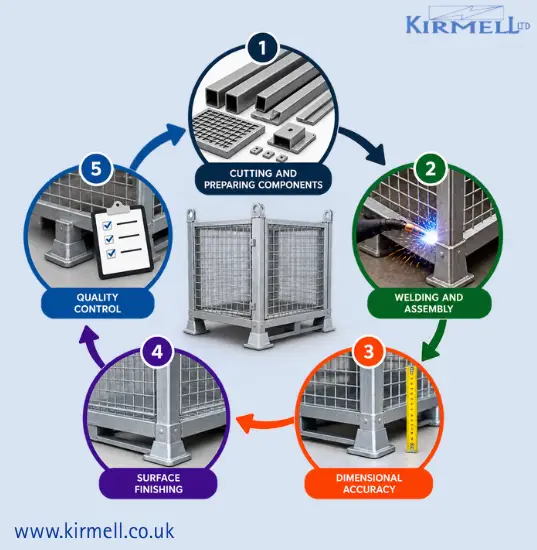
1. Cutting and Preparing Components
The manufacturing process starts with cutting the steel sections and preparing the individual components. These may include frame sections, cage panels, supports, and other structural parts.
Accurate cutting helps ensure that components fit together correctly during assembly. Consistent preparation is also important when producing multiple pallet cages to the same specification.
2. Welding and Assembly
Welding joins the main components and gives the pallet cage its structural strength, making weld quality and joint strength important parts of the manufacturing process. Components should be positioned consistently to maintain the correct shape and dimensions of the finished frame. Pallet feet also need to be correctly positioned and securely welded to the frame.
Consistent foot placement helps provide even support and ensures that the cage can be handled as intended, while the design and manufacturing of steel pallet feet should match the requirements of the finished cage.
3. Dimensional Accuracy
Dimensional accuracy is important when pallet cages need to stack, nest, or work with specific handling equipment. Even small differences between units can affect how they fit together. Pallet foot height and positioning should be checked against the required specification. The feet need to provide consistent support across the finished cage.
4. Surface Finishing
Steel pallet cages can be finished in different ways depending on their working environment and requirements, with metal finishing methods selected according to the required protection and appearance. Common options include powder coating and galvanising.
Powder coating can provide a durable surface finish and allow manufacturers to specify different colours. Galvanising can provide additional protection where the cage may be exposed to moisture or demanding conditions.
5. Quality Control
Quality control should be carried out throughout the manufacturing process rather than only after final assembly, helping manufacturers maintain consistent quality in metal fabrication. Dimensional checks can help identify variations before the cage reaches the finished stage.
Welds should also be inspected to ensure that joints are properly formed and components remain securely connected. The finished cage can then be checked for overall stability and load-related requirements.
Finally, pallet feet should be checked for correct height, position, and alignment with the frame. These checks help ensure that the completed pallet cage meets its intended specification.
Choosing the Right Manufacturer or Supplier
Choosing the right manufacturer or component supplier can affect the quality, consistency, and long-term performance of your pallet cages. Before placing an order, it is worth checking whether the supplier can meet your technical and production requirements.
What to Evaluate
Start by looking at the supplier’s experience with steel components and industrial applications. Relevant manufacturing experience can help ensure they understand the demands of pallet cage production.
Check their certifications and quality processes where these are relevant to your requirements. It is also useful to understand which manufacturing capabilities are available in-house, such as fabrication, welding, forming, or finishing.
Ask about testing and quality control procedures. A reliable supplier should be able to explain how dimensions, materials, welds, and finished components are checked.
Customization is another important consideration when standard components do not match your pallet cage design. Check whether the supplier can manufacture components to your required dimensions and specifications.
Finally, consider lead times, communication, and after-sales support. Consistent supply and clear communication can be particularly important when components are required for ongoing production.
Questions to Ask Before Ordering
Before placing an order, ask:
- Can you manufacture components to our drawings or specifications?
- What customization options are available?
- What materials and finishes can you provide?
- How do you check dimensional accuracy and quality?
- Can you supply consistent components for repeat orders?
- What are your typical production and delivery lead times?
- Can you provide samples or prototypes before a larger production run?
Taking the time to ask these questions can help manufacturers find a supplier that matches their technical, quality, and production requirements.
Maintenance, Inspection and Best Practices
Regular inspection helps keep pallet cages safe, stable, and suitable for repeated use, including checking nesting components for wear or damage where cages are regularly stacked.
Routine Inspection
- Check welds: Look for cracks, breaks, or visible damage.
- Inspect bends: Check frames and panels for bending or deformation.
- Check gates: Make sure gates open, close, and align correctly.
- Inspect latches: Ensure latches lock securely and are not damaged.
- Check pallet feet: Look for excessive wear, damage, or distortion.
- Inspect the frame: Check for loose or damaged components.
Safe Stacking and Handling
- Follow the manufacturer’s recommended stacking height.
- Keep loads evenly distributed inside the cage.
- Do not exceed the specified load capacity.
- Make sure cages are properly aligned when stacking.
- Use suitable forklifts or pallet trucks for handling.
- Avoid moving cages with damaged feet, frames, or gates.
Repair or Replace?
- Repair minor damage when the affected component can be safely restored.
- Replace damaged pallet feet, latches, or other components when repair is not reliable.
- Replace the cage if the main frame is severely bent, cracked, or structurally damaged.
- Remove damaged cages from service until they have been properly assessed.
FAQs
Conclusion
A well-designed pallet cage brings together several components, including the steel frame, cage panels, pallet feet, access features, and stacking points.
Each component needs to work together to provide the required strength, stability, and handling performance. From accurate cutting and welding to dimensional checks and surface finishing, careful manufacturing is equally important.
Consistent pallet feet positioning and frame alignment can also help ensure reliable performance across production batches. For manufacturers, investing in well-designed and well-made pallet cages can support safer handling, efficient storage, and long-term use.
If you need pallet feet designed to suit your pallet cage specifications, contact Kirmell to discuss your requirements or request a quote for a custom solution.