
Pallet Feet for Steel Cage Pallets: Design and Specification Considerations
A steel cage pallet is only as reliable as the components supporting it. Pallet feet may look like small parts, but they play an important role in keeping the structure stable, supporting loads and making handling easier.
The right pallet feet help transfer the weight of the cage and its contents to the floor. Their design also affects stacking stability, forklift access and how well the pallet withstands repeated use in busy warehouses and industrial environments.
For steel cage pallet manufacturers, choosing the right feet design involves more than matching dimensions. Material thickness, tube compatibility, mounting position and load requirements all need careful consideration.
This guide covers the key design and specification factors to consider when selecting pallet feet for steel cage pallets.
Why Pallet Feet Matter in Steel Cage Pallet Design
Pallet feet do more than raise steel pallet cages off the floor. They support the base frame, help distribute the load and affect how safely mesh cages for storage can be moved, stored and stacked. Choosing the right design helps manufacturers build pallets that perform reliably in daily use.
Load Transfer Between the Cage Frame and Floor
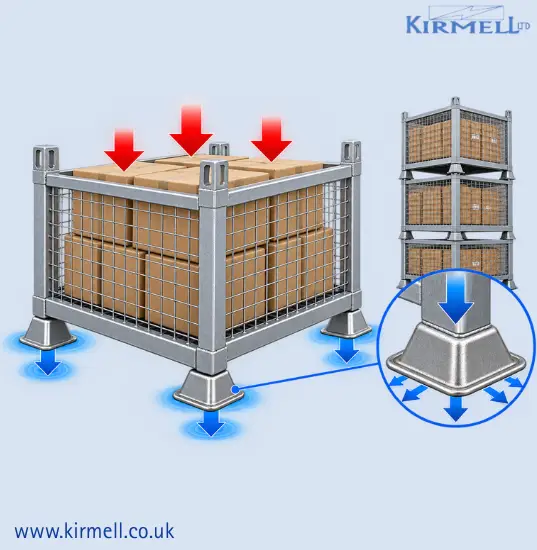
When a steel cage pallet holds goods, its feet transfer the combined weight of the load and the frame to the floor. Their size, position and construction affect how this weight is distributed across the support points.
Poorly specified feet can create uneven loading, leading to localised stress, deformation or damage over time. Matching the feet to the cage frame and intended load helps provide reliable support.
Stability During Stacking, Movement and Storage
Stackable pallet cages are often stacked to save warehouse space and moved regularly using forklifts or other handling equipment. The feet must work with the cage’s stacking design to help maintain a stable position during storage and handling.
Feet dimensions, alignment and contact surfaces all influence how the pallet sits on the floor or the cage below it. Incorrect positioning or incompatible stacking features can increase the risk of instability, particularly when pallets are loaded or placed on uneven surfaces.
Impact of Feet Design on Cage Durability and Handling
Steel pallet cages can experience repeated impacts, vibration and wear during loading, transport and unloading. Pallet feet need to withstand these conditions without excessive bending, cracking or loosening at their mounting points.
The right feet design can also provide suitable ground clearance for forklift access and reduce unnecessary contact between the cage frame and the floor. Considering material thickness, mounting method and operating conditions helps manufacturers improve service life and reduce the need for repairs.
Key Design Considerations for Steel Cage Pallet Feet
Choosing pallet feet for steel cage pallets requires careful attention to their shape, dimensions, material and overall design. Each factor affects how the feet connect to the frame, support the load and perform during regular handling. Getting these specifications right helps manufacturers produce cage pallets suited to their intended use.
Feet Shape and Base Dimensions
Pallet feet are available in different shapes, including square, round and other profiles designed for specific applications. Square feet are commonly used with square box-section frames, while round feet may suit designs that use round tube sections or require a different mounting arrangement.
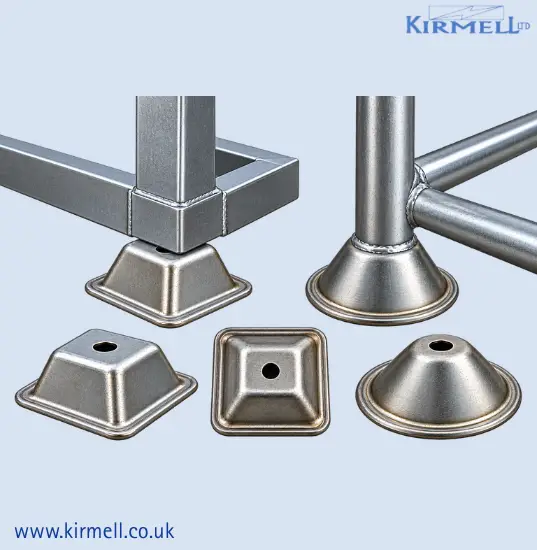
The base dimensions also affect the contact area between the feet and the floor. A suitable base helps distribute the load across the support points and reduces concentrated pressure.
For custom cage pallets, manufacturers should consider the frame layout, intended load and stacking design when choosing the feet shape and size, particularly when comparing round and square pallet feet, particularly when comparing round and square pallet feet.
Compatibility with Box Section and Tube Sizes
Pallet feet must fit the cage frame correctly to provide a secure connection. Manufacturers should check the dimensions of the box section or tube, including its width, height and wall thickness, before specifying the feet. The mounting area and feet geometry must also suit the frame design and intended welding method.
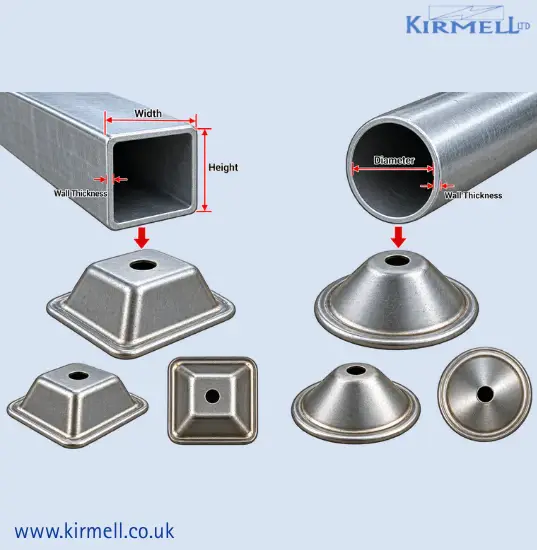
A poor fit can make alignment more difficult and affect the quality of the joint. Confirming dimensions against technical drawings before production helps avoid fitting problems and unnecessary rework, and a pallet feet size guide can help manufacturers identify the measurements to check.
Material Thickness and Structural Strength
Steel thickness is an important factor when specifying pallet feet for industrial use. Feet must withstand the expected loads and repeated handling without excessive bending or deformation. However, thicker steel alone does not guarantee better performance; the overall design, material properties and load conditions also matter.
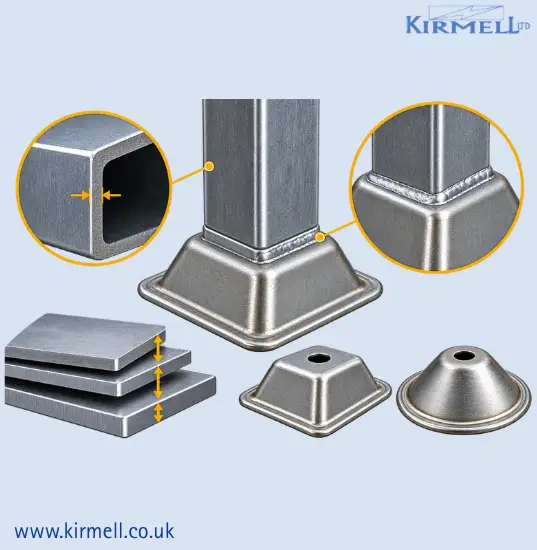
Manufacturers should consider the type of steel, feet dimensions and expected duty cycle. The connection between the feet and the frame is equally important, as weak or inconsistent welds can affect the strength of the complete assembly. Material thickness and joint requirements should therefore be confirmed as part of the overall specification.
Feet Height and Forklift Clearance
Feet height determines how far the cage frame sits above the floor. This clearance is important when forklifts or other handling equipment need to access the pallet from underneath. If the feet are too low, fork entry may become difficult, while excessive height can affect the overall design and stability.
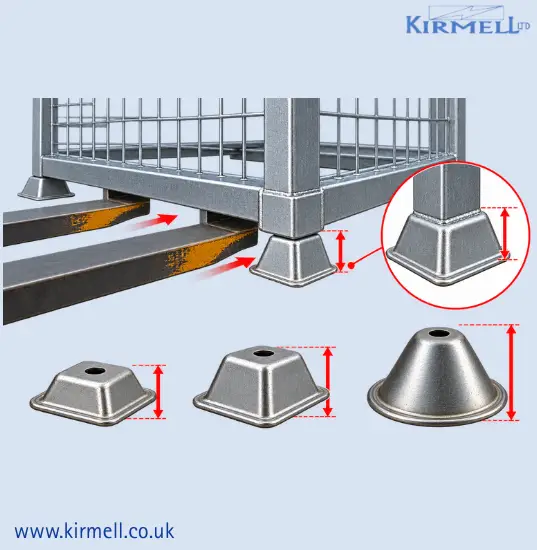
When selecting feet height, manufacturers should consider the forklift’s fork dimensions, the cage’s base construction and the required ground clearance. The feet must provide enough space for safe handling without compromising the pallet’s intended stacking arrangement or structural performance.
Load Capacity and Stacking Stability
The feet fitted to a steel pallet cage must support the structure and its contents during storage, movement and stacking. Their design and positioning should match the intended loading conditions.
Static, Dynamic and Stacked Loads
For a pallet stillage cage, static loads apply when the structure is stationary, while dynamic loads occur during handling. Stacking adds the weight of cages above, so all three conditions must be considered during design.
Load Distribution Across Support Points
Feet size and positioning affect how weight transfers to the floor. Uneven loading can place excessive stress on individual feet, increasing the risk of deformation.
Feet Positioning and Uneven Floors
Correctly positioned feet provide balanced support. Uneven floors or poor alignment can affect stability and create concentrated loads.
Cage Geometry and Stacking Interfaces
The cage’s dimensions, centre of gravity and stacking features influence stability, making warehouse load stability an important consideration when planning storage and handling arrangements..
Feet must align with the intended stacking points to help prevent unwanted movement. Important: Safe load capacity depends on the complete cage design, including its frame, welds, feet and loading conditions. Always follow validated manufacturer specifications.
Material, Finish and Operating Environment
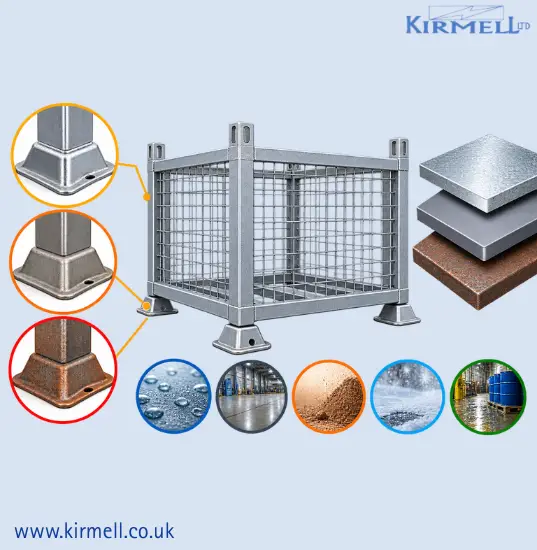
The materials and finishes used for steel pallet cages should suit the working environment, expected wear and exposure to moisture or corrosion, including at the pallet feet.
Material Options
Mild steel is commonly used for pallet feet because it offers strength, durability and suitability for fabrication. Other materials may be appropriate depending on the load requirements and working environment.
Corrosion Protection
Pallet feet used outdoors or in damp environments may require protective coatings to reduce rust. The finish should suit the expected exposure and maintenance requirements.
Abrasion, Impact and Repeated Handling
Frequent forklift movement, impacts and dragging can wear down pallet feet over time. Material selection and construction should account for these conditions to help reduce damage and extend service life.
Floor Contact and Wear
Pallet feet repeatedly contact warehouse floors during loading and movement. Their base design should provide suitable support while limiting excessive wear to both the feet and the floor.
Welding and Integration with the Cage Frame
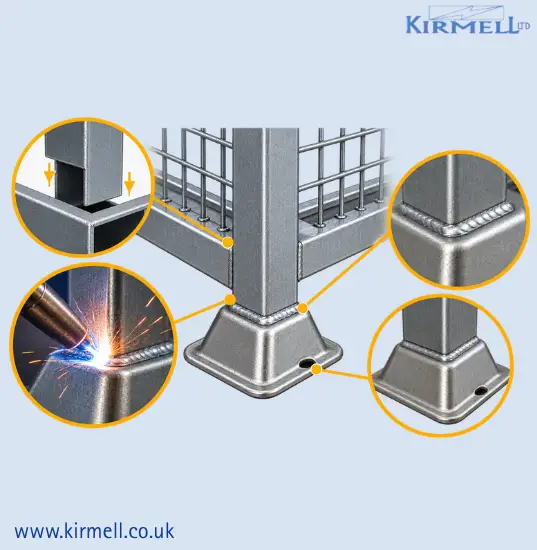
Proper positioning, alignment and weld quality help create a secure connection between pallet feet and the cage frame.
Weld-On Feet and Joint Positioning
Weld-on pallet feet must be positioned correctly to create a secure connection with the cage frame. The joint design should suit the feet dimensions, frame material and intended loading conditions.
Alignment with Vertical Posts and Base Rails
Aligning pallet feet with the cage’s vertical posts and base rails helps transfer loads through the frame. Poor alignment can create uneven loading and increase stress on individual joints.
Weld Quality and Inspection
Consistent weld quality is essential for a durable connection. Manufacturers should inspect welds for visible defects, incomplete joints and other issues that could affect structural integrity, including the common welding defects that can weaken metal joints.
Design Consistency in Repeat Manufacturing
Using approved drawings, dimensions and welding specifications helps maintain consistency across production batches. This reduces fitting errors and supports reliable quality control.
Pallet Feet Specification Checklist for Manufacturers
Before sourcing or manufacturing pallet feet for steel cage pallets, confirm the key specifications to ensure a proper fit and reliable performance.
| Specification | Information to confirm |
|---|---|
| Application | Cage type and intended use |
| Frame compatibility | Tube or box-section dimensions |
| Feet geometry | Shape, base dimensions and height |
| Material | Steel grade and thickness |
| Loading | Working loads and stacking requirements |
| Mounting | Weld position and joint requirements |
| Finish | Corrosion protection and operating environment |
| Quantity | Production volume and consistency requirements |
Providing these details upfront helps manufacturers select suitable pallet feet, avoid fitting issues and maintain consistent production quality, using a buyer’s checklist for pallet feet to confirm essential purchasing requirements.
Common Pallet Feet Specification Mistakes
Small specification errors can lead to fitting problems, poor stability and unnecessary production costs. Manufacturers should avoid these common mistakes when specifying pallet feet for steel cage pallets.
- Selecting feet based on dimensions alone: Matching the size is not enough. Material, load requirements and intended use also matter.
- Overlooking frame compatibility: Feet that do not match the tube or box-section dimensions can create fitting and welding problems.
- Assuming thicker steel guarantees safety: Overall design, material properties, weld quality and loading conditions all affect performance.
- Ignoring stacking geometry and forklift clearance: Incorrect feet positioning or insufficient clearance can make stacking and handling difficult.
- Skipping drawing and specification checks: Confirming dimensions, mounting details and material requirements before production helps prevent costly errors and rework, while understanding common pallet feet problems can help manufacturers avoid recurring issues.
Sourcing Steel Pallet Feet for Cage Manufacturing
Choosing the right supplier helps manufacturers source pallet feet that meet their design and production requirements, making bespoke steel stillage feet a relevant option for specialised requirements. Before placing an order, consider the following factors.
Standard vs Application-Specific Requirements
Standard pallet feet may suit common cage designs, while bespoke cage pallets may require specific dimensions or mounting arrangements to match their frames. Confirm that the selected feet match your pallet stillage cage’s structural requirements, including its frame dimensions, loading conditions and stacking arrangement.
Drawings, Samples and Production Consistency
For bespoke cage pallets, review dimensional drawings before ordering to verify compatibility with the frame and confirm any application-specific requirements. Samples can help confirm fit and mounting requirements, while understanding how steel pallet feet are designed and manufactured provides additional context on the production process.
Questions to Ask a UK Pallet-Feet Manufacturer
When sourcing pallet feet for custom cage pallets, confirm the available dimensions, material thicknesses, customisation options, minimum order quantities and lead times. Ask whether technical drawings and samples are available to check suitability before production.
Find the Right Pallet Feet for Your Application
Looking for pallet feet for steel cage pallets, stillages or other industrial applications? Kirmell supplies pallet feet to meet a range of manufacturing requirements.

Explore our pallet feet range to compare available options for your application, or contact our team to discuss your required dimensions, frame compatibility and specific requirements.
FAQs
Conclusion
Choosing the right pallet feet for steel cage pallets helps improve stability, load support and long-term durability. By considering dimensions, material thickness, frame compatibility and stacking requirements, manufacturers can avoid fitting issues and build more reliable pallets.
Kirmell supplies pallet feet for industrial applications. Explore our pallet feet range to find suitable options for your manufacturing requirements.