
Mesh Cages for Storage: Key Benefits of Wire Mesh Design
A cluttered warehouse can waste valuable time. When staff cannot see what is stored inside a container, even finding a small component can mean extra handling and delays.
Mesh cages for storage offer a practical way to keep goods organised and visible. Their open wire mesh design allows staff to see stored items without opening the cage, while also allowing air to circulate.
But visibility is only one benefit. The right wire mesh cage can also make stock checks easier, help separate parts and support more organised storage areas.
So, what makes wire mesh design useful, and what should you consider before choosing a storage cage? Let’s look at the key benefits and where they make the biggest difference.
What Are Mesh Cages for Storage?
Mesh cages for storage are metal enclosures made from wire mesh panels supported by a sturdy frame. Well-constructed, durable wire mesh containers provide a defined space for keeping goods, components and materials organised in warehouses, manufacturing facilities and stockrooms.
For applications that require a pallet-based storage solution, pallet cages provide another option for storing and handling goods.
Unlike solid-sided containers, wire mesh cages have open spaces between the wires. This allows staff to see stored items from the outside and lets air circulate around the contents without opening the cage.
Think about a warehouse storing hundreds of small components.
Would staff need to open every container to identify what is inside? With a mesh cage, visible contents can make locating and checking items much easier. Mesh cages come in different sizes and designs to suit different storage needs, including collapsible wire mesh containers where folding construction is appropriate for the application.
Before choosing one, consider the type of goods being stored, the required load capacity, access requirements and whether the cage needs to be moved or stacked.
5 Key Benefits of Wire Mesh Storage Cages
Wire mesh storage cages do more than keep goods in one place. Their open design can make it easier to see stock, check stored items and organise materials in busy workplaces. The real benefit depends on how your business uses them.
Here are five ways wire mesh design can support everyday storage operations. 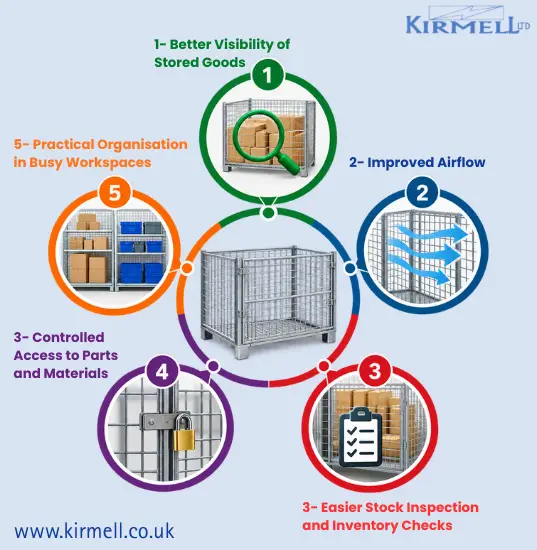
1. Better Visibility of Stored Goods
How much time does your team spend opening containers just to find a particular item? Wire mesh cages make this task easier because their open panels allow staff to see the contents from outside.
This is especially useful when different cages hold separate components, tools or products. Staff can identify the right items more quickly, helping make picking and retrieving stock more straightforward.
2. Improved Airflow Around Stored Items
Some stored goods benefit from better air circulation. Unlike solid-sided containers, wire mesh cages have gaps between the wires that allow air to move around the stored items. This can be useful in storage areas where airflow matters.
However, mesh does not protect goods from dust, moisture or other environmental conditions, and it does not guarantee that stored items will dry properly.
3. Easier Stock Inspection and Inventory Checks
Regular stock checks are important, but inspecting every container can take time. With a mesh cage, staff can often view the contents without opening it, making routine visual checks more convenient. Visible stock can also help staff spot misplaced items or notice when supplies are running low.
However, seeing what is inside does not replace formal inventory records or a stock management system.
4. Controlled Access to Parts and Materials
Keeping valuable components, tools and materials in a designated storage area helps create a more organised workplace. A mesh cage provides a defined space for these items and can be fitted with suitable doors, latches or locking arrangements.
This can help businesses manage access to stored goods, depending on the cage design and how it is used. However, wire mesh alone does not guarantee security; the lock, construction and surrounding environment also matter.
5. Practical Organisation in Busy Workspaces
When products and components are spread across a warehouse, finding the right item can become frustrating. Assigning different mesh cages to specific products, parts or work areas gives staff a clear place to store and retrieve goods. Because the contents remain visible, teams may spend less time searching through containers or moving items unnecessarily.
A well-planned layout is also an important part of improving warehouse storage efficiency, helping businesses make better use of space and organise stock more effectively.
Choosing suitable cage dimensions and positioning them around available floor space and handling equipment can make the storage layout more practical, while collapsible wire mesh containers may offer a space-saving option when empty.
In storage systems that use compatible stackable stillages or frames, nesting plugs can also help locate and align components during stacking.
Where Are Wire Mesh Storage Cages Most Useful?
Wire mesh storage cages can be useful wherever businesses need to keep goods organised and easy to identify. Their open design makes them suitable for several working environments, although the right cage depends on the items being stored and how they will be handled. 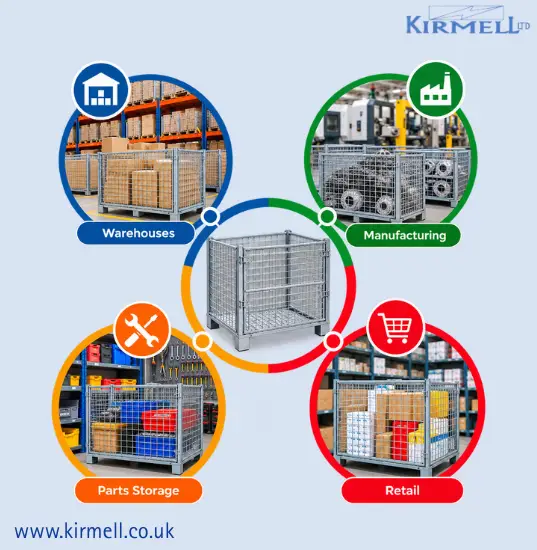
Warehouses and Distribution Centres
Warehouses handle a wide range of products, from incoming stock to orders waiting for dispatch. Wire mesh storage cages can help separate these goods into designated areas, making it easier for staff to identify items and locate the right stock during picking.
For example, a distribution centre could use wire mesh pallet cages to separate product categories or orders awaiting dispatch. Visible contents can help staff check stored goods without opening every container.
Manufacturing Facilities
Manufacturing facilities often need convenient storage for components, production materials and work-in-progress items. Wire mesh cages can keep these materials in designated locations while allowing workers to see what is available.
This can be useful when different components are required at different stages of production. However, the cage must be suitable for the weight, dimensions and handling requirements of the materials being stored.
Parts Storage and Maintenance Areas
Maintenance teams often need quick access to replacement parts, tools and small components. Keeping these items in designated mesh cages can help prevent storage areas from becoming cluttered and make commonly used supplies easier to locate.
For instance, separate cages could hold mechanical components, spare parts or maintenance supplies. The mesh openings should be small enough to retain the stored items safely, particularly when handling smaller components.
Retail Backrooms and Stockrooms
Retail businesses need to organise replenishment stock so staff can find products when shelves need refilling. Wire mesh storage cages can help separate stock by product type, department or replenishment needs while keeping the contents visible.
This can make routine stock checks more convenient and help staff identify which products need replenishing. The cage size and access arrangement should also suit the available space and the way goods move between the stockroom and sales floor.
What to Consider When Choosing Mesh Cages for Storage
Choosing the right mesh cage starts with understanding what you need to store and how the cage will be used. When comparing wire mesh cage manufacturers, check their product specifications, available dimensions and stated load capacities.
Consider the following factors to find a design that suits your workspace and daily handling requirements. 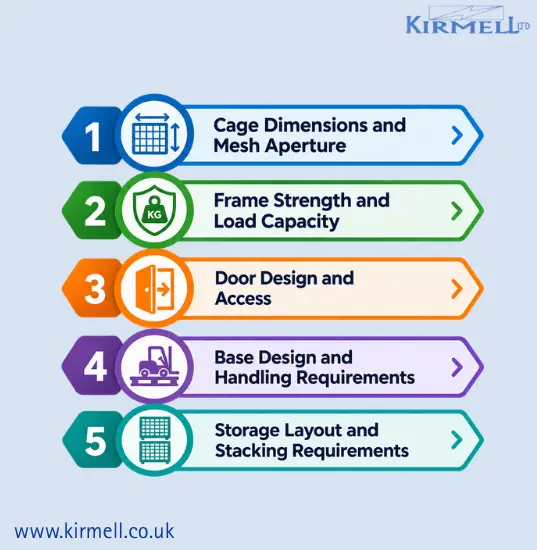
1. Cage Dimensions and Mesh Aperture
When choosing a wire mesh pallet cage, start by checking the size and quantity of the items you plan to store. The cage should provide enough internal space without taking up more floor area than necessary. Mesh aperture refers to the size of the openings between the wires.
If you store small components, choose a mesh size that prevents them from slipping through while still allowing you to see the contents.
2. Frame Strength and Load Capacity
A storage cage must safely support the weight of its contents. The performance of durable wire mesh containers depends on several factors, including the frame, wire mesh, welded joints, base design and overall construction.
Before choosing a wire mesh pallet cage, check its rated capacity and intended use to ensure it suits the intended load. Avoid assuming that a heavier-looking frame or thicker wire automatically makes a cage suitable for every load.
3. Door Design and Access
Think about how often staff will need to access the stored items, and compare the door and locking options offered by wire mesh cage manufacturers.
A cage used for frequently picked stock may need a door that allows quick, convenient access, while other applications may require a latch or compatible locking arrangement.
Also consider the space needed to open the door fully. Restricted access can make loading and unloading more difficult, particularly in narrow aisles or crowded storage areas.
4. Base Design and Handling Requirements
The base must support the stored load and suit the way the cage will be moved. If you plan to use a forklift or pallet truck, confirm that the cage is designed for the intended handling method. Pay attention to the base structure and support points, as these can affect stability during movement.
For steel cage pallets, purpose-designed pallet feet may form part of the base design, depending on the application.
5. Storage Layout and Stacking Requirements
Consider where the cages will sit and how they will fit into your existing storage layout, including whether collapsible wire mesh containers would suit operations that need to store empty units between uses. Their dimensions should allow staff and handling equipment to move around safely without creating unnecessary obstructions, while collapsible wire mesh storage containers may help reduce the space occupied by empty units.
Do you plan to stack cages to save floor space? Only stack cages specifically designed and rated for that purpose, such as purpose-built stackable pallet cages. Follow the manufacturer’s instructions and consider the load distribution, stability and condition of each cage before stacking.
Wire Mesh Cages vs Solid-Sided Storage Containers
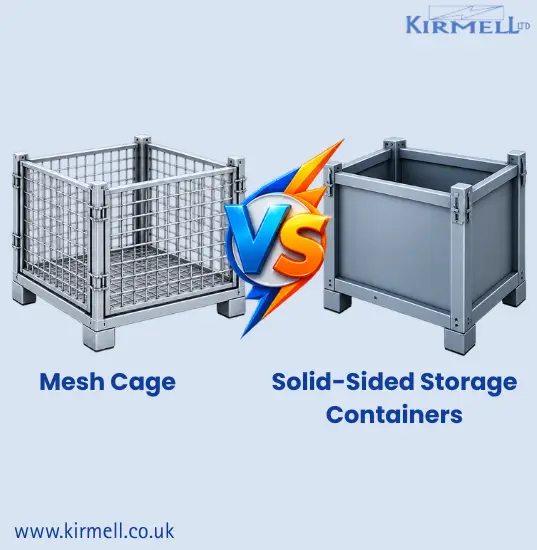 Should you choose a wire mesh cage or a solid-sided container?
The answer depends on what you store, how often you need to access it and how much protection it requires.
| Consideration | Wire mesh cages | Solid-sided containers |
|---|---|---|
| Visibility | Contents can often be seen through the mesh panels. | Contents are generally hidden from view. |
| Airflow | Openings allow air to circulate around stored items. | Airflow depends on whether the container has ventilation openings. |
| Inspection | Visual checks may be possible without opening the cage. | Staff may need to open the container to inspect its contents. |
| Protection | Offers limited protection against dust, small debris and environmental exposure. | May provide greater protection, depending on the material and construction. |
| Best suited for | Storage where visibility, airflow and easy identification are priorities. | Storage where greater enclosure or protection is needed. |
Wire mesh storage containers are a practical option when staff need to identify stored goods quickly and maintain visibility across a storage area. Solid-sided containers may be more suitable when items need greater protection from external conditions. The best choice depends on your storage requirements.
Consider the type of goods, the working environment, access frequency and level of protection needed before selecting a storage solution.
How the Cage Base Affects Storage and Handling
The base of a mesh cage does more than hold stored goods. It helps distribute the load across the structure and affects how the cage sits on the floor, remains stable and can be moved around a workplace.
The base of a wire mesh pallet cage should match its intended load and work with the frame. Poorly suited support points or an unsuitable base can affect stability, particularly when the cage is loaded or moved. For steel cage pallets, purpose-designed pallet feet may provide the clearance and support needed for specific handling and storage arrangements.
Kirmell supplies pallet feet for steel cage pallets, helping businesses find components suited to their storage and handling requirements. The right choice depends on the cage design, load requirements and intended use, so consider how the feet will work with your handling equipment and storage layout.
Understanding common pallet feet problems can also help businesses recognise why suitable support, fit and load requirements matter in storage applications.
Remember that pallet feet alone do not make a cage suitable for stacking. Any stacking arrangement must be supported by the cage’s design and rated capacity, with the manufacturer’s instructions followed.
Are Mesh Cages the Right Storage Solution for Your Business?
Mesh cages can be a practical storage solution when visibility, airflow and easy access are important. They help businesses organise goods while allowing staff to see stored items without opening every container. Before choosing a cage, check its rated capacity and intended use, and ask wire mesh cage manufacturers for the relevant specifications if these details are unclear.
You should also check that the door design, base and overall construction suit your handling equipment and everyday storage needs. If your goods need greater protection from dust or external conditions, a solid-sided container may be more suitable.
Similarly, if you plan to stack cages, make sure the design is specifically rated for stacking rather than assuming it is safe to do so.
FAQs
Conclusion
Mesh cages for storage can help businesses keep goods organised, visible and easier to access. Their open wire mesh design supports airflow and makes it simpler for staff to identify stored items and carry out routine checks.
Before choosing durable wire mesh containers, consider the size of your goods, mesh openings, load capacity and handling requirements. If you need to stack cages, always check that they are designed for safe stacking. Looking for a practical storage solution for your workplace?