
Fixed vs Adjustable vs Stackable Pallet Feet: Which Type Is Right for Your Warehouse?
Pallet feet play an important role in warehouse storage, handling and stacking. Although they are relatively small components, the type of pallet feet used can affect stability, storage flexibility, handling and how efficiently available warehouse space is used.
Three common configurations are fixed pallet feet, adjustable pallet feet and stackable pallet feet. Each is designed for different storage and handling requirements.
Fixed pallet feet provide a permanent, stable configuration, adjustable pallet feet offer greater flexibility, while stackable pallet feet are designed to support vertical storage and more efficient use of floor space.
Understanding the differences between these options can help warehouse operators choose a pallet-foot configuration that matches their load requirements, storage layout, handling equipment and stacking needs.
Fixed vs Adjustable vs Stackable Pallet Feet at a Glance
The three types serve different warehouse requirements. The table below provides an overview of their typical characteristics:
| Factor | Fixed Pallet Feet | Adjustable Pallet Feet | Stackable Pallet Feet |
| Primary purpose | Stable, permanent configuration | Flexible configuration | Vertical and space-efficient storage |
| Configuration | Fixed after installation | Can be adjusted or repositioned | Designed for stacking |
| Flexibility | Low | High | Application-dependent |
| Storage focus | Stable storage and handling | Changing storage requirements | High-density and vertical storage |
| Maintenance | Generally low | May require more regular inspection | Requires attention to stacking condition |
| Typical warehouse use | Heavy-duty and consistent loads | Mixed or changing requirements | Stacked pallets or stillages |
| Main consideration | Correct initial configuration | Suitability of adjustable mechanism | Stacking compatibility |
The right choice depends on how your warehouse stores, handles and stacks pallets or stillages.
Fixed Pallet Feet for Warehouse Storage
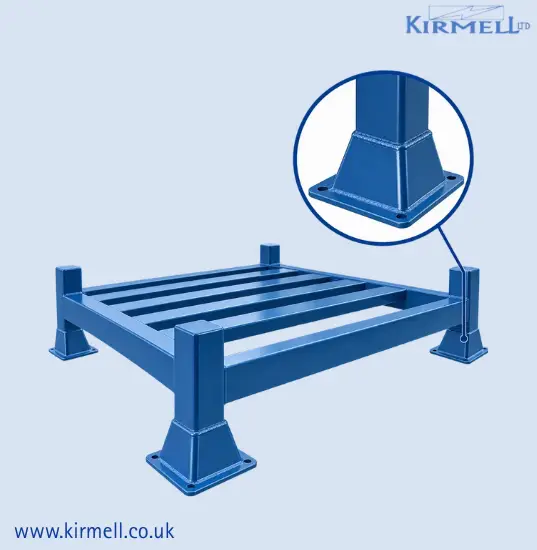
Fixed pallet feet are permanently attached to the pallet or stillage and provide a consistent support configuration. Because they have no moving parts, they are valued for their simplicity, durability and relatively low maintenance requirements.
Their performance also depends on how the steel pallet feet are formed, assembled and finished during manufacturing. For warehouses handling heavy or consistently configured loads, fixed pallet feet can provide a dependable solution where adjustability is not required.
Advantages of Fixed Pallet Feet in a Warehouse
Fixed pallet feet can be suitable for warehouse environments where pallets repeatedly handle similar loads and follow a consistent storage and handling configuration. Key advantages include:
- Consistent configuration: The position and height of the feet remain fixed after installation.
- Durability: Fixed feet can provide a robust support structure for demanding warehouse applications.
- Low maintenance: With no moving components, there are fewer parts requiring regular adjustment.
- Stable handling: A correctly specified fixed configuration can provide consistent support during storage and handling.
Warehouses handling products such as automotive components, machinery or construction materials may use fixed pallet feet where durability and consistent performance are priorities, particularly in heavy-duty pallet feet applications for high loads and demanding environments.
Limitations of Fixed Pallet Feet
The main limitation is flexibility. Once installed, fixed pallet feet cannot be adjusted to accommodate different heights or configurations. This makes them less suitable for warehouse operations where storage arrangements or pallet requirements change frequently.
The initial pallet and foot configuration therefore needs to be selected carefully according to the intended application, including the required dimensions, mounting position and operating conditions covered in this pallet feet size guide.
When Are Fixed Pallet Feet the Right Choice?
Fixed pallet feet can be considered when a warehouse:
- handles consistent pallet configurations;
- requires a permanent support arrangement;
- prioritises durability and low maintenance;
- handles demanding or heavy-duty goods; and
- does not require regular adjustment of pallet height or configuration.
For example, Kirmell’s KPF1C Square Steel Pallet Feet are made from mild steel and can be used where a robust, fixed pallet-foot configuration is required.
Adjustable Pallet Feet for Flexible Warehouse Storage
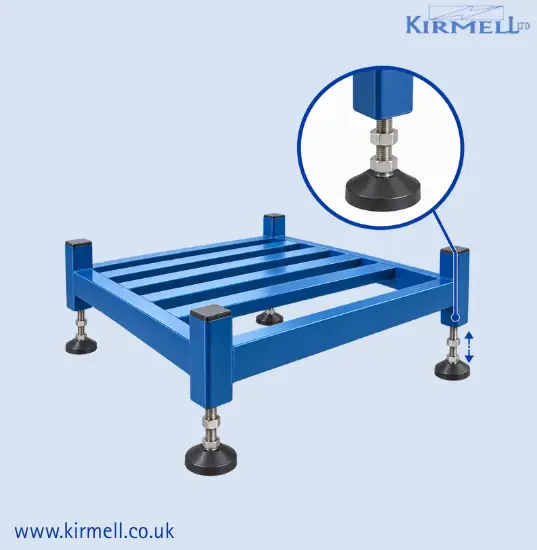
Adjustable pallet feet provide greater flexibility than permanently fixed configurations. They can be modified in height or repositioned to accommodate different storage requirements. This can be useful in warehouses handling products with different sizes, weights or storage configurations.
For example, a warehouse storing both smaller retail goods and medium-sized equipment may benefit from a configuration that can be adapted as storage requirements change.
Advantages of Adjustable Pallet Feet in a Warehouse
The main advantage of adjustable pallet feet is flexibility. They can help warehouses adapt pallet configurations to changing requirements rather than relying on one fixed arrangement. Potential benefits include:
- Configuration flexibility: The pallet-foot arrangement can be adapted to different requirements.
- Adaptability: Useful where warehouse layouts or stored products vary.
- Space optimisation: Adjustable configurations can help adapt pallets to specific storage requirements.
- Versatility: They can be considered where a single fixed configuration may not suit every application.
Limitations of Adjustable Pallet Feet
Adjustable pallet feet can involve more components or moving parts than fixed configurations. As a result, they may require more regular inspection and maintenance. They can also involve a higher initial cost. Their suitability should therefore be assessed against the actual warehouse requirements rather than assuming that greater adjustability is always better.
When Are Adjustable Pallet Feet the Right Choice?
Adjustable pallet feet may be appropriate where a warehouse:
- handles different types or sizes of products;
- regularly changes storage arrangements;
- requires greater flexibility from its pallet configuration; or
- needs to adapt storage equipment to changing operational requirements.
The load and operating conditions should still be considered before selecting an adjustable configuration.
Stackable Pallet Feet for Space-Efficient Warehouse Storage
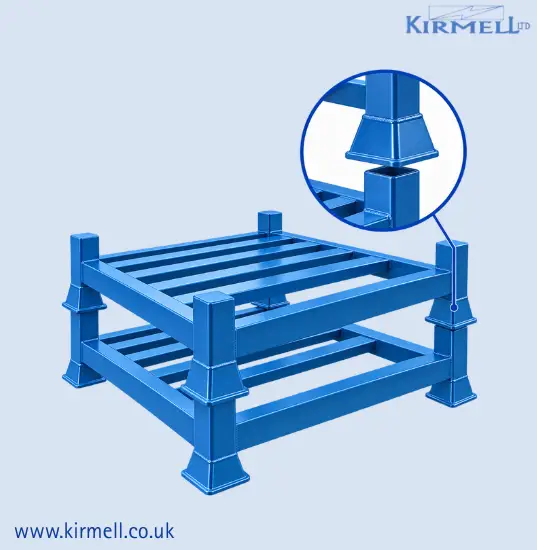 Stackable pallet feet are designed for warehouse environments where pallets or stillages need to be stored vertically. These feet allow compatible units, including wire mesh cages, to be positioned securely on top of one another when their base and stacking features are designed for the intended loads.
Their design can work with the corresponding feet or nesting plugs to help maintain stability during stacking. This makes stackable configurations particularly relevant to warehouses where available floor space is limited.
How Do Stackable Pallet Feet Support Vertical Storage?
Instead of storing every pallet or stillage on a separate area of warehouse floor space, compatible stacking configurations allow units to be positioned vertically. This can help businesses improve warehouse storage efficiency.
The stacking interface is important, however. Pallet or stillage geometry, foot positioning and compatibility between the stacked units should be considered before selecting a stacking configuration.
Advantages of Stackable Pallet Feet in a Warehouse
Stackable pallet feet can offer several benefits where vertical storage is part of the warehouse operation:
- Better use of floor space: Pallets can be stored vertically rather than occupying separate floor positions.
- Higher storage density: More units can potentially be accommodated within the same footprint.
- Organised storage: Compatible stacking configurations can help create more structured storage arrangements.
- Transport efficiency: Stacked pallets can reduce the number of trips required in some applications.
Limitations and Compatibility Considerations
Stackable pallet feet should not be selected simply because vertical storage is desirable. The pallet or stillage must be suitable for the intended stacking arrangement. Factors such as load requirements, stacking geometry, foot positioning and handling conditions need to be considered.
The compatibility between pallet feet and nesting plugs may also be important where the design uses nesting components to secure stacked units, particularly when addressing common storage problems solved by pallet feet and nesting plugs.
When Are Stackable Pallet Feet the Right Choice?
Stackable pallet feet may be appropriate for warehouses that:
- have limited floor space;
- require vertical storage;
- regularly stack pallets or stillages;
- need to improve storage density; or
- transport pallets in stacked configurations.
How to Choose Pallet Feet for Your Warehouse
Choosing between fixed, adjustable and stackable pallet feet starts with understanding how the warehouse operates. Rather than selecting a configuration based solely on price or appearance, consider the following factors.
Load Requirements
Start by considering the type and weight of the goods being stored, as load distribution and the overall configuration can influence warehouse load stability. Warehouses handling heavy products, machinery, automotive components or construction materials may require a robust fixed configuration.
Where adjustable or stackable configurations are being considered, their suitability should be assessed against the intended loads and operating conditions. The pallet-foot configuration should always match the requirements of the pallet or stillage.
Storage Flexibility
Consider how frequently your warehouse storage requirements change. If pallets are consistently used for similar products and remain in a fixed configuration, adjustable feet may provide little practical benefit. Where products, layouts or storage requirements change regularly, an adjustable configuration may provide greater flexibility.
Available Floor Space
Warehouse space is often a major consideration. If pallets or stillages need to occupy separate floor positions, the available floor area can quickly become a constraint. Where the pallet and load design permits safe vertical storage, stackable pallet feet can help make better use of the available warehouse footprint.
Handling Equipment
Pallet feet must also work with the equipment used to move pallets around the warehouse. Consider how pallets will be handled using:
- forklifts;
- pallet trucks; and
- other material-handling equipment.
Foot dimensions, spacing and positioning should provide suitable access and clearance for the equipment used in the warehouse.
Stacking Requirements
If pallets or stillages will be stacked, the stacking arrangement needs to be considered before selecting the feet. Determine:
- whether vertical stacking is required;
- how many units may be stacked;
- how the units will interface with one another; and
- whether nesting plugs or another stacking arrangement is required.
Stackable feet are particularly relevant where vertical storage is an important part of the warehouse layout, while selecting between different types of nesting plugs depends on how the pallets or stillages are designed to interface when stacked.
Pallet and Stillage Frame Compatibility
The feet need to work with the pallet or stillage frame making the relationship between the foot position, dimensions and overall stillage design an important consideration. Dimensions, positioning, attachment and the overall frame configuration should therefore be considered when selecting pallet feet.
For non-standard frames or unusual requirements, a standard pallet-foot configuration may not always be appropriate, and bespoke steel stillage feet may be considered where standard options do not meet the required specification.
Warehouse Environment
Finally, consider the environment in which the pallet feet will be used. Warehouses exposed to humidity or other conditions that can contribute to corrosion may require an appropriate protective finish.
Zinc-plated or galvanised pallet feet can be considered where corrosion resistance is required with the appropriate metal finishing process depending on the application and operating environment.
Which Pallet Feet Suit Different Warehouse Requirements?
There is no single pallet-foot configuration that suits every warehouse. The appropriate choice depends on the way pallets and stillages are used.
For Heavy-Duty Warehouse Storage
Fixed pallet feet may be suitable where the warehouse handles heavy goods and uses consistent pallet configurations. Their permanent design and lack of moving components can provide a straightforward solution where flexibility is not required.
For Warehouses With Changing Storage Requirements
Adjustable pallet feet may be considered where products, layouts or storage requirements change regularly. Their ability to be modified can provide greater flexibility than a permanently fixed configuration.
For High-Density or Vertical Storage
Stackable pallet feet are particularly relevant where warehouse floor space is limited and pallets or stillages need to be stored vertically. Their design can allow compatible units to be positioned securely on top of one another.
For Warehouses With Mixed Requirements
Some warehouses have several requirements at the same time. For example, a warehouse may need:
- strong support for heavy loads;
- efficient use of floor space;
- compatibility with forklifts; and
- flexibility for different pallet configurations.
In these situations, the pallet-foot configuration should be selected according to the specific pallet or stillage design and the way it will be used, particularly when choosing the right pallet feet for steel pallets and stillages.
Common Mistakes When Choosing Pallet Feet for a Warehouse
Choosing pallet feet without considering the wider warehouse application can create avoidable problems, which is why procurement decisions should consider dimensions, load requirements, handling and compatibility as part of a pallet feet buyers’ checklist.
- Choosing based only on price: Prioritise load, handling and lifecycle requirements.
- Choosing adjustable feet unnecessarily: Use adjustable feet when flexibility is actually required.
- Ignoring stacking compatibility: Check pallet/stillage geometry and nesting requirements.
- Ignoring handling equipment: Ensure suitable forklift and pallet-truck clearance.
- Failing to check frame dimensions: Match foot dimensions and positioning to the pallet or stillage frame.
- Ignoring the warehouse environment: Consider moisture, corrosion and the required protective finish.
Kirmell Pallet Feet for Warehouse Applications
Kirmell Ltd manufactures steel pallet feet for warehouses, logistics operations and industrial applications. 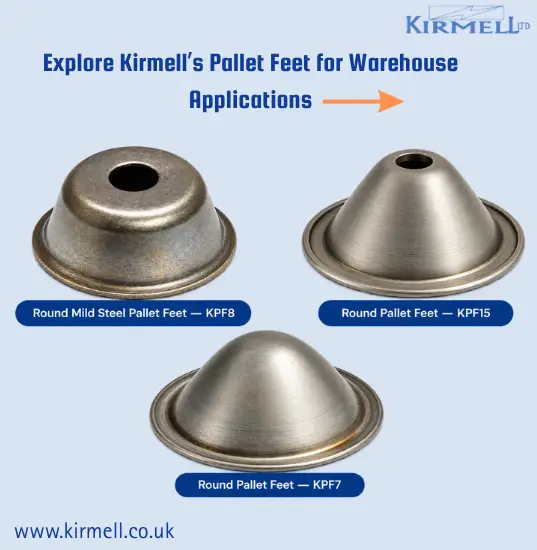 The range includes different configurations of pallet feet, including square, round, nesting, stackable and specialised options, with differences between round and square pallet feet depending on the requirements of the pallet or stillage.
Standard products are available alongside solutions for applications requiring different specifications. Kirmell has been supplying steel fittings since 1985 and offers pallet-foot options with different dimensions and finishes to suit varying applications.
FAQs
What are the different types of pallet feet?
The three configurations covered in this guide are fixed, adjustable and stackable pallet feet. Each is suited to different storage, handling and stacking requirements.
What are fixed pallet feet used for?
Fixed pallet feet provide a permanent support configuration and are suitable for applications where pallet requirements remain consistent. They can be particularly relevant for heavy-duty loads where adjustability is not required.
When should I use adjustable pallet feet?
Adjustable pallet feet may be suitable when storage layouts, products or pallet configurations change regularly and greater flexibility is required.
What are stackable pallet feet used for?
Stackable pallet feet are designed for applications where pallets or stillages need to be stored vertically. They can help make better use of available warehouse floor space when the pallet or stillage is suitable for stacking.
How do I choose between fixed, adjustable and stackable pallet feet?
Consider the load requirements, storage flexibility, available floor space, handling equipment, stacking requirements, pallet or stillage frame compatibility and warehouse environment before selecting a configuration.
Can pallet feet be customised for non-standard pallet or stillage frames?
Yes. For non-standard frames or unusual requirements, a standard pallet-foot configuration may not always be suitable. Kirmell can provide bespoke steel stillage feet where standard options do not meet the required dimensions, positioning or specification.
Conclusion
The choice between fixed, adjustable and stackable pallet feet should be based on how your warehouse stores, handles and moves pallets or stillages. Fixed pallet feet provide a consistent and durable configuration for warehouses where pallet requirements remain relatively stable.
Adjustable pallet feet provide greater flexibility where storage arrangements or pallet requirements change. Stackable pallet feet can support vertical storage where making better use of available warehouse floor space is a priority.
Before selecting a configuration, consider the load requirements, storage flexibility, available floor space, handling equipment, stacking requirements, pallet or stillage frame and warehouse environment. Choosing pallet feet as part of the overall pallet or stillage design can help create a storage system that is better suited to the way your warehouse operates.



Leave a Reply
Want to join the discussion?Feel free to contribute!