
How Stillage Design Affects Load Capacity, Stability and Stackability
A metal stillage may look simple, but its performance depends on much more than the strength of the steel. The way the frame is built, how the base supports the load and how the weight is distributed all affect how safely the stillage performs.
Stacking points and pallet feet also play an important role. If these parts are poorly designed or positioned, the Stillage pallet may become unstable, harder to handle or unsafe to stack.
In this guide, we’ll look at how steel stillage design affects load capacity, stability and stackability, and why getting the base design right is essential for safe and efficient use.
Why Stillage Design Matters
A well-designed metal stillage does more than hold a heavy load. The design of industrial stillages affects how safely loads are supported, moved, stacked and protected during storage and transport.
- Load carrying performance: The frame, base and support points must work together to carry the intended load without excessive stress or movement.
- Stability during storage and handling: A balanced design helps keep the stillage stable when it is sitting on the floor, being moved by a forklift or carrying an uneven load.
- Safe stacking: Stacking points must align correctly so the weight transfers safely from one stillage to the next. Poor alignment can make a stack unstable.
- Product protection: The right frame shape, supports and contact points help keep products securely positioned and reduce the risk of damage during handling.
- Handling efficiency: Features such as forklift access, suitable base geometry and correctly positioned pallet feet make stillages easier and safer to move around warehouses, factories and loading areas.
For this reason, load capacity, stability and stackability should be considered together when designing a steel stillage.
How Stillage Design Affects Load Capacity
A stillage must be strong enough to carry its intended load without bending, twisting or placing too much pressure on one area. Load capacity depends on how the frame, base and supporting components work together.
Frame Strength and Construction
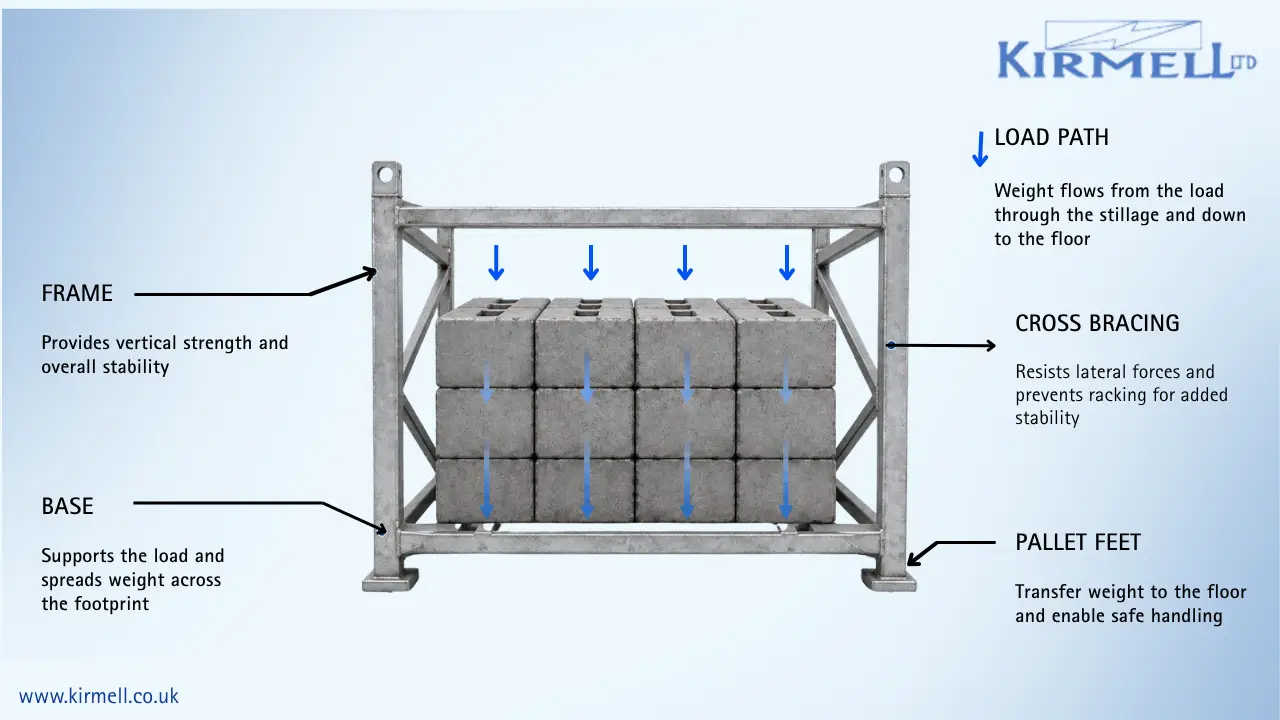
The frame forms the main structure of the stillage. The size and shape of the steel sections, the strength of welded joints, and the amount of bracing all affect how much weight the stillage can safely support.
In heavy duty stillages, cross-bracing and reinforced sections can help spread forces through the frame under demanding loads.
Base Design and Load Distribution
The base supports the load and transfers its weight through the frame to the main support points.
A well-designed base spreads the weight across several areas instead of concentrating too much force in one place. This helps reduce local stress and allows the frame to support the load more effectively.
The location of the base supports should also match the main load-bearing areas of the structure.
Concentrated vs Evenly Distributed Loads
The same total weight can place very different demands on a stillage depending on where the load is positioned.
An evenly distributed load spreads weight across the base, while a concentrated load places more force on a smaller area. A heavy component positioned in one corner, for example, can create local stress points and place greater demand on individual sections of the frame.
Stillage design should therefore consider both the total load weight and where that weight will sit.
Material Thickness and Reinforcement
Steel thickness also affects load capacity, but thicker steel is not always required throughout the entire stillage.
For heavy duty stillages, steel thickness and reinforcement should be selected around the expected load, frame dimensions and areas of highest stress. Reinforcement can then be added around areas such as the base, corners or other load-bearing points where additional strength is required.
This helps create a strong structure without adding unnecessary weight.
How Stillage Design Affects Stability
Stable design is important during stillage storage and handling, as maintaining good warehouse load stability helps keep the unit balanced when loaded and moved.
Stability depends on the shape of the stillage, the position of the load and how evenly the base is supported.
Base Width and Centre of Gravity
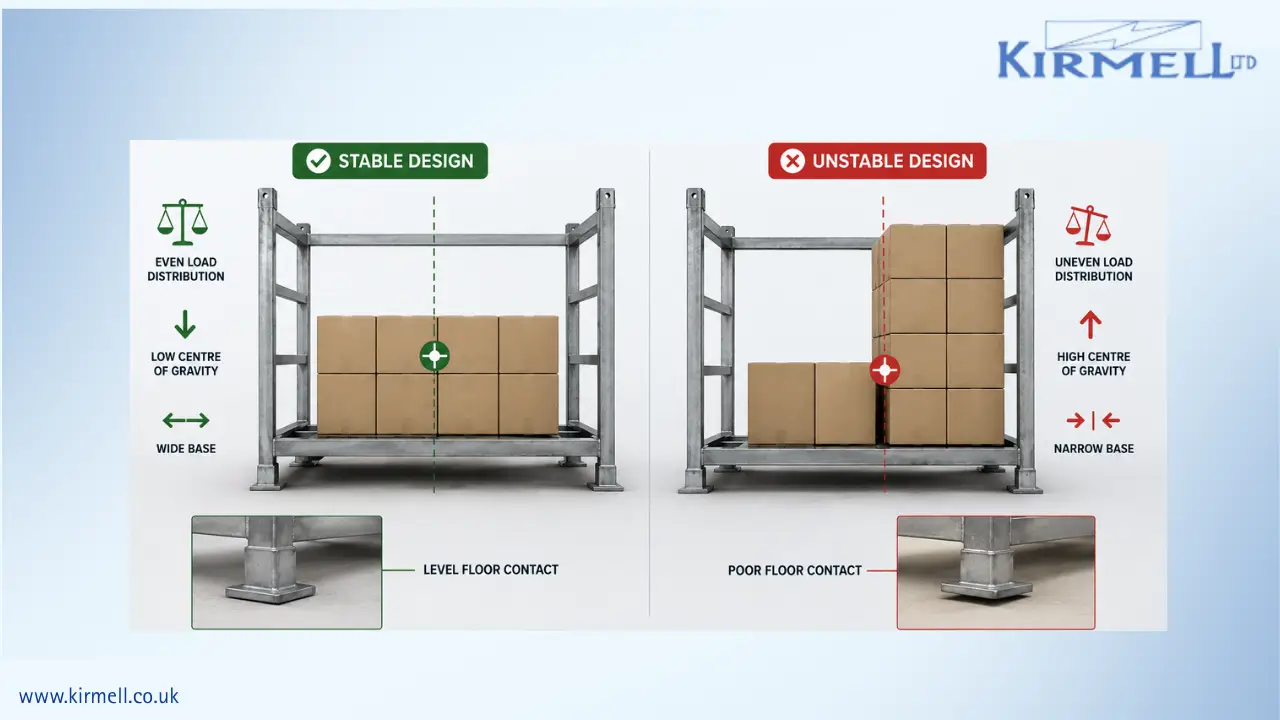
Base width has a direct effect on stability. A wider base generally provides a larger support area, while a tall or narrow stillage can be more vulnerable to tipping.
The centre of gravity is also important. If most of the weight is positioned high in the stillage, the structure can become less stable during movement or turning.
Keeping heavier items lower and closer to the centre of the base can help improve balance.
Uneven Loading and Balance
Poor product positioning can shift the centre of gravity away from the middle of the stillage.
For example, placing most of the weight on one side can cause the stillage to lean or place greater pressure on individual support points.
The internal layout should therefore help keep the load secure and distribute weight as evenly as possible.
Floor Contact and Pallet Feet
The base needs consistent contact with the floor to remain stable. If one support point is damaged, incorrectly positioned or sitting at a different height, the stillage may rock or lean.
Correctly specified pallet feet provide defined support points underneath the stillage. When they are level and positioned correctly, they help the base sit evenly and support reliable load transfer to the floor.
The correct pallet feet size, shape and position should suit the stillage design and expected load. For stillages with non-standard dimensions or leg profiles, bespoke stillage feet can be manufactured to match the required specifications.
Forklift Handling and Base Geometry
Forklift entry points should be positioned so the forks support the stillage as evenly as possible. Poor fork positioning can cause the load to tilt or place additional pressure on one side of the base.
A stillage that is stable on the floor may behave differently when it is lifted.
Industrial stillages should provide enough forklift clearance to keep loads balanced during lifting, turning and movement.
How Stillage Design Affects Stackability
Stackability depends on how accurately one stillage locates onto another and how safely the weight is transferred through the stack. Poor alignment or inconsistent stacking features can make the entire stack less secure.
Stacking Points and Vertical Alignment
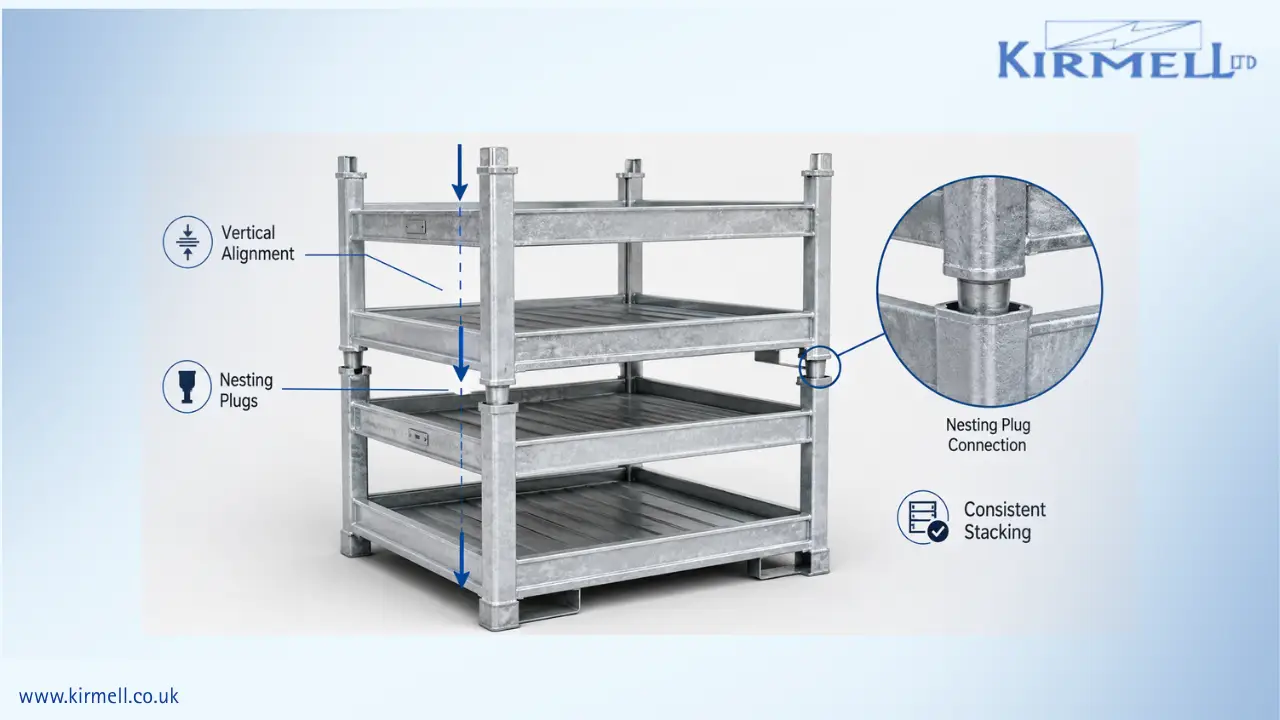
When stillages are stacked, the main structural points of each unit should align vertically.
This allows the weight of the upper stillages to pass through the intended load-bearing areas of the units below.
If the stacking points are misaligned, weight may be transferred into weaker parts of the frame, increasing the risk of bending, movement or uneven loading.
Nesting Plugs and Stacking Interfaces
Nesting plugs can help guide one stillage into the correct position on top of another.
Their shape and location create a defined stacking interface, helping maintain alignment and reducing unwanted sideways movement between units.
Consistent nesting plug positions also make it easier for stillages within the same fleet to stack in the same way each time.
Whether you are building new stillages or replacing existing components, Kirmell’s nesting plugs are available in different sizes to support secure and consistent stacking.

Depending on the stacking design, pallet feet or nesting plugs may be used as locating features, but the interface should always keep the units securely aligned.
Manufacturing Tolerances and Consistency
Even a well-designed stacking system can perform poorly if the manufactured dimensions vary between stillages.
Small differences in frame size, nesting plug position or stacking points can become more noticeable when several units are stacked together.
Consistent manufacturing tolerances help ensure that each stillage fits correctly with the others and that the load follows the intended path through the stack.
Maximum Safe Stack Height
The safe stack height depends on several factors, including load weight, frame strength, stacking interfaces, floor condition and the operating environment.
A lightly loaded automotive stillage may perform differently from one carrying a heavy or uneven load, so pallet feet for automotive stillages should be selected to suit the load and stacking requirements.
The approved stacking limit should be followed during stillage storage and handling to reduce the risk of an unstable stack.
The Role of Pallet Feet in Stillage Design
Pallet feet are an important part of the stillage base. They support the structure, help control how weight is transferred and can improve both stability and stackability.
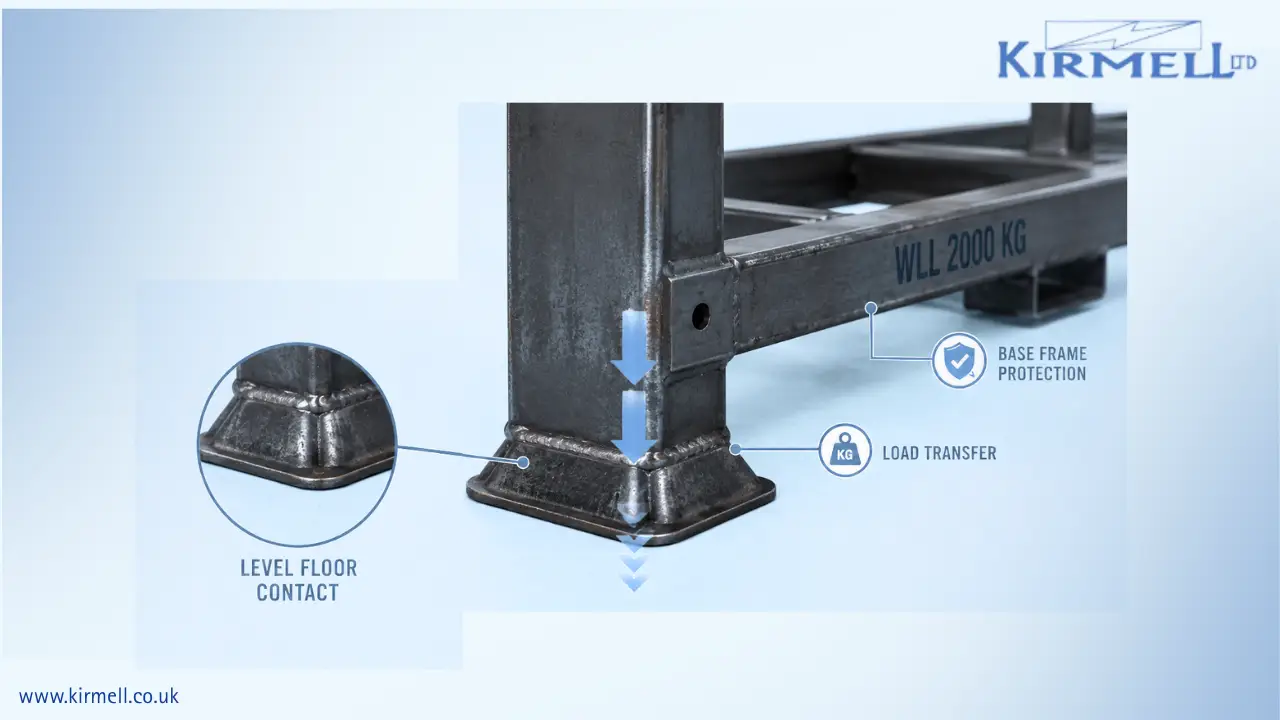
- Stable floor contact: Pallet feet create fixed support points underneath the stillage. When they are correctly positioned and level, they help the stillage sit evenly on the floor and reduce rocking.
- Load transfer: The feet help carry weight from the base frame down to the floor or into the stillage below. For higher loads or demanding environments, heavy duty pallet feet may be required, with their position matched to the main load-bearing areas of the structure.
- Consistent stacking: On stackable stillages, pallet feet can help locate one unit onto another. This improves alignment and helps each stillage sit in a consistent position within the stack.
- Protecting the base frame: Raising the frame slightly above floor level can reduce direct contact with the ground and help protect the lower structure during storage and handling.
- Replacing worn or damaged feet: Bent, cracked or badly worn pallet feet can affect balance, stacking alignment and load transfer. Regular inspection and timely replacement help maintain safe stillage performance.
For this reason, choosing the right pallet feet for steel stillages should form part of the initial design process rather than being treated as a final component decision.
Whether you are building new stillages or replacing damaged feet, Kirmell supplies steel pallet feet in different sizes and designs to suit different stillage requirements.
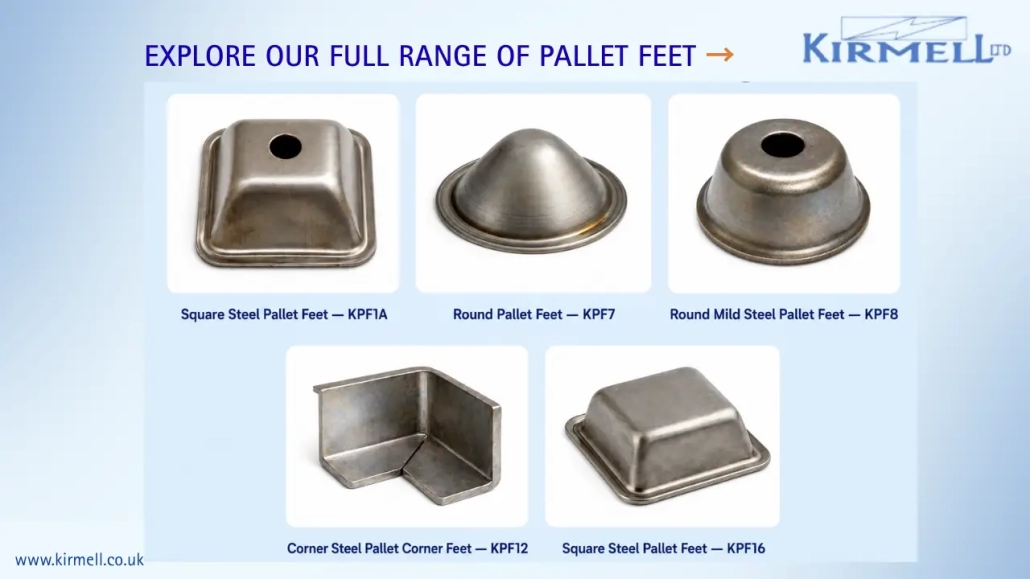
Common Stillage Design Problems
Even strong metal stillages can perform poorly if key design details are overlooked. Many storage problems involving pallet feet and nesting plugs start at the base or stacking interface, while others result from poor load positioning or handling features.
Many common stillage design problems come from the base, load position, stacking points or handling features.
Poor Base Support
If the base does not provide enough support, the stillage may flex, rock or place too much pressure on a small area. The base should spread the load effectively and provide stable contact with the floor or the stillage below.
Uneven Weight Distribution
When most of the load sits on one side or in one corner, the stillage can become unbalanced. This can increase stress on the frame, pallet feet and stacking points.
Good stillage design should keep heavy items positioned as evenly as possible and provide enough support for concentrated loads.
Misaligned Stacking Points
Stacking points need to line up correctly between units. If they are poorly positioned or inconsistent, one stillage may not sit securely on another.
This can lead to uneven load transfer, rocking and reduced stack stability.
Damaged or Worn Pallet Feet
Pallet feet are exposed to repeated loading, stacking and handling. Over time, they can bend, crack or wear.
Damaged feet may cause uneven floor contact or prevent stillages from locating correctly when stacked. Regular inspection and replacement can help maintain safe and consistent performance.
Insufficient Forklift Clearance
Poor forklift access can make a stillage difficult or unsafe to handle. If fork entry points are too narrow, too low or badly positioned, operators may struggle to lift the stillage evenly.
Adequate clearance and correctly positioned fork openings help improve lifting balance, reduce handling damage and make day-to-day movement easier.
Key Considerations When Designing a Steel Stillage
Before finalising a steel stillage design, steel stillage manufacturers should consider the load, handling process and storage environment.
The table below covers the main factors that can affect performance.
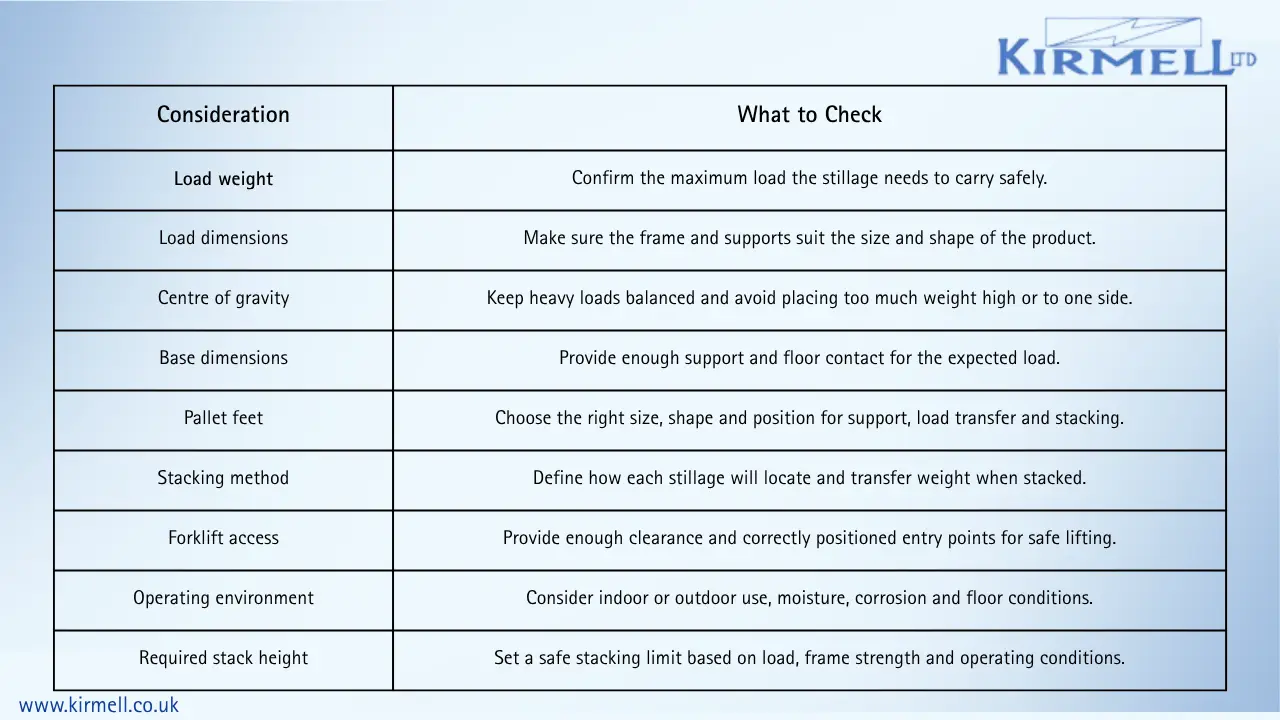
Considering these factors together helps create a stillage that is safer, easier to handle and better suited to its intended use.
FAQs
Load capacity depends on the frame strength, base design, steel thickness, reinforcement and how the load is distributed.
A wider, well-supported base, balanced load and correctly positioned support points help keep the stillage stable during storage and handling.
A stackable stillage needs properly aligned stacking points, a strong frame and consistent contact between each unit.
Pallet feet help support the load, improve floor contact and keep stillages correctly positioned. Kirmell supplies steel pallet feet in a range of sizes and designs for new stillage builds, repairs and replacement requirements.
Yes. Bent or worn pallet feet can cause poor alignment, uneven load transfer and unstable stacking.
Safe stack height depends on the stillage design, load weight, stacking system and operating conditions. Always follow the approved stacking limits for the design.
Conclusion
A strong steel stillage depends on more than just the material used. Frame design, base geometry, load distribution and stacking interfaces all need to work together to support the load safely and keep the stillage stable during storage, handling and stacking.
Small design details can make a big difference, especially at the base of the stillage. For steel stillage manufacturers designing new units or replacing worn components, correctly specified pallet feet can help maintain stable support, reliable load transfer and consistent performance.
Explore Kirmell’s steel pallet feet for new stillage production, repair and replacement requirements, or contact us to discuss the right option for your application.