
Heavy Duty Pallets: What Makes Them Strong Enough for Industrial Use?
A pallet can look strong, but in an industrial environment, looks can be misleading. Heavy loads, forklift handling, stacking and repeated use can put enormous stress on a pallet.
Heavy duty pallets are built for these demanding conditions. Steel pallets are often used for heavy-duty applications because they provide high strength, durability and resistance to demanding handling conditions, while other pallet materials can also be engineered for heavy loads.
But what actually makes a pallet “heavy duty”? It is more than simply using thicker materials or carrying a heavier load.
The pallet’s material, frame construction, reinforcement, joints, load distribution and pallet feet all play a role in its overall strength. How the pallet is loaded, moved and stored also affects its performance.
In this guide, we’ll explore what makes heavy-duty pallets strong enough for industrial use, from their construction and materials to load capacity, reinforcement, handling requirements and pallet-foot design.
What Are Heavy Duty Pallets?
Heavy duty pallets are designed to carry heavier loads and withstand more demanding conditions than standard pallets. They are built for applications where strength, stability and long-term durability are essential.
Compared with standard pallets, heavy-duty pallets typically feature stronger materials, reinforced components and more robust construction. This allows them to handle greater loads and withstand repeated forklift handling, stacking and movement.
Their load capacity depends on factors such as material, dimensions, construction and how the pallet is used.
A pallet designed for a heavy static load, for example, may have different requirements when the same load is being moved or stored in racking, which can also influence whether fixed, adjustable or stackable pallet feet are appropriate for the application.
As a result, heavy-duty pallets are commonly used in manufacturing, warehousing, logistics and other demanding storage and transport environments where standard pallets may not provide sufficient performance.
Heavy Duty vs Standard Pallets
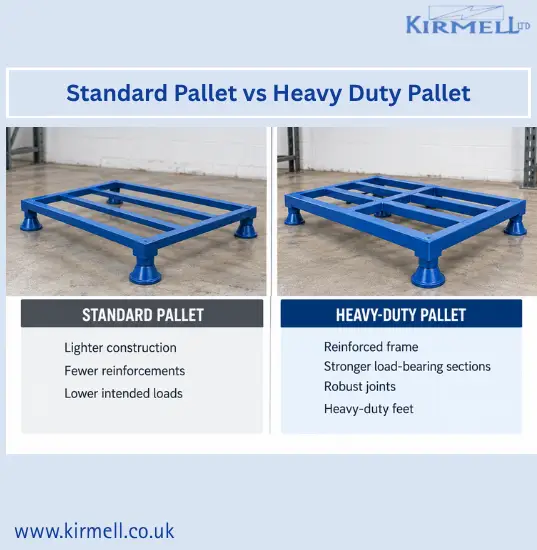
The main difference between standard and heavy duty pallets is how they are designed to handle load, stress and repeated use. Heavy-duty pallets use stronger construction and reinforced components for more demanding applications.
What Makes a Pallet Heavy Duty?
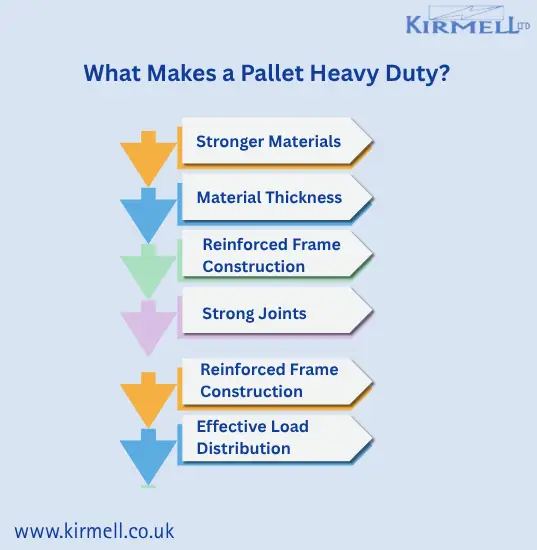
A heavy-duty pallet is not made strong by one feature alone. Its overall performance depends on the materials, dimensions, frame design, joints and how effectively the structure distributes weight.
Stronger Materials
The material used to make a pallet directly affects its strength, durability and load capacity. Steel, timber and plastic can all be used for heavy-duty pallets, depending on the application and operating environment.
Steel is often chosen for demanding industrial applications because of its strength and impact resistance. Heavy-duty timber and plastic pallets can also provide high performance when designed with suitable materials and structural features.
Material Thickness and Cross-Section
Material thickness and cross-section dimensions influence how well a pallet withstands heavy loads and repeated stresses. Thicker structural components can provide greater rigidity and help reduce bending under load.
The design of load-bearing sections is equally important. These components need to support the weight effectively without excessive deflection or loss of structural stability.
Reinforced Frame Construction
A reinforced frame gives a heavy-duty pallet additional structural support. Cross-members, bracing, reinforced corners and other load-bearing sections help distribute forces throughout the pallet.
This means strength is not determined by the material alone. How the pallet is designed, assembled and reinforced can have a major effect on its ability to handle demanding industrial use.
Strong Joints and Welds
Strong connections are essential, particularly for steel pallets. High-quality welds and properly designed joints help the pallet withstand repeated handling, impacts and stresses without compromising its structure.
Even strong materials can fail if the connection points are weak. Poor welds or inadequate joints can reduce the overall strength and durability of an otherwise robust pallet.
Effective Load Distribution
A heavy-duty pallet needs to distribute weight effectively across its deck, frame, support members and feet. Even load distribution helps reduce excessive stress on individual components.
The pallet feet also play an important role by transferring loads from the pallet structure to the supporting surface. Their design can therefore contribute to overall stability and load-bearing performance, particularly when selecting heavy-duty pallet feet for high loads and demanding environments.
How Load Capacity Works in Heavy Duty Pallets
Load capacity is one of the most important factors when selecting a heavy-duty pallet. However, there is no single weight limit that defines a pallet as “heavy duty” because capacity depends on its construction, dimensions, material and intended use.
Static Load Capacity
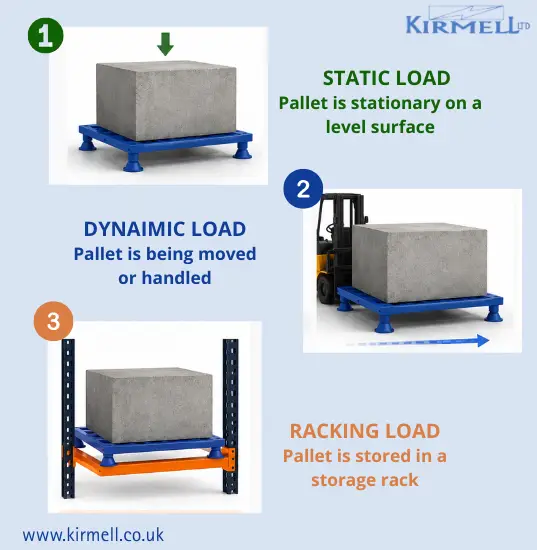
Static load capacity refers to the weight a pallet can safely support while remaining stationary on a level surface. This is particularly important when pallets are stored on the floor for extended periods.
Dynamic Load Capacity
Dynamic load capacity refers to the weight a pallet can safely support while it is being moved or handled. Lifting, forklift handling, transport and repeated movement can place greater stresses on the pallet than a stationary load.
Racking Load Capacity
Racking load capacity refers to the weight a pallet can safely support when stored in a heavy duty pallet racking system.
Because the pallet is supported at specific points rather than across its entire base, its capacity may differ from its floor or static capacity, particularly when used with heavy duty pallet racks designed for demanding storage applications.
For this reason, a pallet that safely supports a particular load on the floor may not be suitable for the same load in a heavy duty pallet racking system, where support conditions differ.
Always consider the pallet’s design and its intended application when assessing load capacity, particularly where warehouse load stability is affected by the way pallets are loaded, stored and handled.
The Role of Pallet Feet in Heavy Duty Pallet Strength
Pallet feet support the structure from below and help transfer the load safely to the floor. Their design can therefore affect the pallet’s stability, load distribution and overall performance.
They also provide ground clearance, allowing forklifts and pallet trucks to access the pallet more easily. A suitable foot design can improve stability while helping the pallet remain secure during handling and storage.
For stacked pallets, the feet can provide defined contact points between pallets, helping maintain alignment and stability.
They must be strong enough to withstand the loads and stresses created during stacking and repeated handling.
For high-load applications, choosing the right pallet feet is particularly important. For high-load applications, heavy-duty pallet feet need to be selected according to the pallet’s load requirements, handling conditions and intended use.
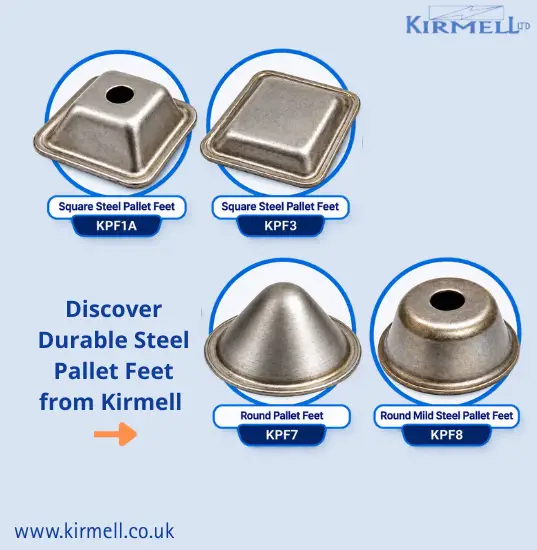
Kirmell’s pallet feet are available in designs suited to different steel pallet and stillage configurations, helping manufacturers match the component to their application.
Where Are Heavy Duty Pallets Used?
Heavy duty pallets are used wherever materials are heavy, valuable or frequently handled. Their robust construction makes them suitable for industries where standard pallets may not provide the required strength, stability or durability.
Manufacturing
Manufacturing facilities use heavy-duty pallets to store, move and transport heavy machinery, components, raw materials and finished products, with stillage design also playing an important role where loads require a more specialised industrial storage and transport structure.
They are particularly useful where pallets are loaded and unloaded repeatedly.
Automotive
The automotive industry uses heavy duty pallets and stillages to handle components such as engine parts, body panels and other heavy or specialist parts, with automotive stillages designed specifically around the handling and protection requirements of automotive components.
Strong, stable designs help protect components during storage, movement and transport.
Warehousing and Distribution
In warehouses and distribution centres, heavy-duty pallets support the storage and movement of heavier goods. Depending on the storage setup, facilities may also use heavy duty pallet shelving alongside pallet racking for organising industrial loads and materials.
Steel and Metal Industries
Steel and metal products can place significant loads on pallets, making robust construction essential. Heavy duty steel pallets are used to handle metal components, fabricated parts and other high-weight materials safely.
Engineering and Fabrication
Engineering and fabrication businesses often handle irregular, heavy or custom-made components. Heavy duty pallets provide a stable base for storing and moving these products between production, storage and delivery areas.
Construction and Heavy Components
Construction materials and heavy components can require pallets capable of handling substantial loads and demanding handling conditions. Heavy-duty designs provide the strength and stability needed for repeated movement across industrial and construction environments.
Heavy Duty Pallets vs Steel Pallets: Are They the Same?
Heavy-duty and steel pallets are not necessarily the same thing. “Heavy duty” describes a pallet’s performance and design, while “steel” describes the material used to manufacture it.
Steel pallets can be designed for heavy-duty applications because steel provides high strength, durability and resistance to demanding handling conditions, while the choice between steel and plastic pallet feet can also influence the suitability of the pallet for different environments.
However, not every steel pallet is automatically designed for heavy-duty use.
Likewise, heavy-duty pallets can be made from other materials. Timber and plastic pallets can also be engineered for higher loads and demanding applications, depending on their construction and intended use.
The right choice therefore depends on the load, handling method, storage conditions and operating environment—not simply the material the pallet is made from.
How to Improve the Strength and Lifespan of Heavy Duty Pallets
Choosing the right pallet is only the first step. Proper loading, handling, inspection and maintenance can help heavy duty pallets maintain their strength and remain reliable over repeated use.
1. Use the Correct Pallet for the Load
Select a pallet designed for the weight and type of load it will carry. Never exceed its specified static, dynamic or racking capacity, as overloading can place excessive stress on the structure.
2. Inspect the Pallet Regularly
Check the deck, frame, support members and other structural components for signs of damage or excessive wear, as part of a wider warehouse maintenance approach for inspecting pallet components. For steel pallets, pay particular attention to damaged welds, joints or connection points.
3. Check the Pallet Feet
Pallet feet can experience significant loads during stacking, storage and handling, so installing pallet feet correctly is also important for maintaining a secure and stable pallet structure. Inspect them for bending, cracks, deformation or other damage, and replace worn components where appropriate.
4. Avoid Uneven Loading
Distribute the load as evenly as possible across the pallet. Concentrating too much weight in one area can create unnecessary stress and affect the pallet’s stability.
5. Store and Handle Pallets Correctly
Use suitable stacking and storage practices and avoid unnecessary impacts during forklift handling. Damaged pallets or components should be removed from service and repaired or replaced where appropriate.
For more guidance, see our warehouse maintenance guide for inspecting and replacing worn nesting plugs and related pallet-foot resources.
FAQs
A heavy-duty pallet is designed to carry heavier loads and withstand demanding handling, storage and transport conditions. It typically has stronger materials and reinforced construction than a standard pallet.
There is no single weight limit for all heavy-duty pallets. Capacity depends on the pallet’s material, design, dimensions and whether the load is static, moving or stored in racking.
Steel pallets can offer high strength and durability, but this does not mean they are always stronger. The actual performance depends on the design, construction and intended use of the pallet.
Static capacity is the weight a pallet can support while stationary. Dynamic capacity is the weight it can safely support while being lifted, moved or handled.
Yes, some heavy-duty pallets are designed for racking. However, the pallet must have a suitable racking load capacity and be compatible with the specific racking system.
Their lifespan depends on the material, construction, load, handling frequency and operating environment. Regular inspection and proper handling can help extend their service life.
Yes. Heavy-duty pallets are specifically designed for demanding applications such as manufacturing, automotive, warehousing, engineering and metal industries.
Conclusion
The performance of heavy duty pallets is not determined by one component alone. A pallet’s strength comes from the combination of its material, thickness, structural design, reinforcement, joints and ability to distribute loads effectively.
Pallet feet also play an important role by supporting the structure, transferring loads to the floor and helping maintain stability during storage and handling. The right design should always match the pallet’s intended load and working environment.
Whether you’re handling heavy components, building industrial pallets or looking for reliable pallet feet, choosing the right components can make a significant difference to performance and service life.
Kirmell supplies a range of pallet feet and components for industrial applications, with options available for different pallet designs and requirements. Explore our pallet feet range or get in touch to discuss your specific requirements.