
Wire Mesh Cages: Design, Applications and Key Components
Every wire mesh cage must do more than hold products. Whether used as a wire cage in a factory or one of many mesh cages for storage in a warehouse, it needs to handle loads, withstand repeated use and keep goods secure.
The secret lies in its design and the components that hold it together. From mesh panels and steel frames to base supports and pallet feet, each part plays a role in its performance.
In this guide, we’ll explore how wire mesh cages are designed, where they are used and what makes their key components important.
What Are Wire Mesh Cages?
Wire mesh cages are storage and handling containers made from metal mesh panels and a supporting frame, usually steel. Also known as a mesh cage or wire cage, it helps businesses store, organise and move goods. Their open design allows airflow and makes it easy to see stored items without opening the cage.
Mesh cages and wire mesh storage containers are widely used in warehouses, factories and manufacturing facilities to store, organise and transport goods. Depending on their design, they can serve as a wire mesh storage container for components, materials and finished products.
The strength and performance of a wire mesh cage depend on its mesh size, frame construction, base design and load capacity. Choosing the right components helps ensure the cage suits its intended use and can withstand regular handling.
Types of Wire Mesh Cages
Wire mesh cages come in different designs for storage, transport and security. Each type serves a specific purpose, so choosing the right one depends on what you need to store and how you plan to use it. 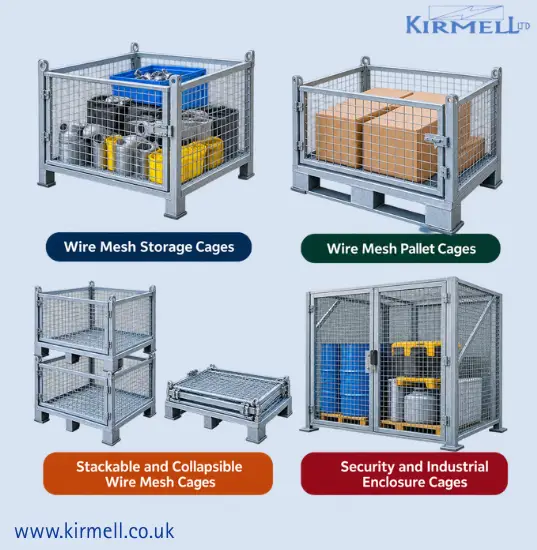
Wire Mesh Storage Cages
Wire mesh storage cages help keep tools, spare parts and industrial materials organised. These mesh storage containers provide visibility and easy access, while businesses choosing mesh cages for storage should consider the size, accessibility and type of goods being stored.
Wire Mesh Pallet Cages
Wire mesh pallet cages combine mesh sides with a strong base to hold goods during storage and transport.
For applications that require vertical storage, stackable pallet cages allow compatible units to be stacked to make better use of available space.
Depending on the application, businesses may choose a metal mesh container, a metal wire mesh container or other wire mesh containers designed for industrial handling.
Many designs include pallet feet to provide clearance for forklifts and pallet trucks, making them suitable for manufacturing and distribution.
Stackable and Collapsible Wire Mesh Cages
Stackable wire mesh storage containers help businesses save floor space by allowing compatible units to be placed on top of each other. Proper alignment and support are essential, particularly when considering warehouse load stability.
These durable wire mesh containers can support organised storage when their design and load limits are suitable.
Collapsible cages fold down when empty, making them easier to store and return when not in use.
Security and Industrial Enclosure Cages
Security and industrial enclosure cages help protect tools, equipment and valuable stock from unauthorised access. They often feature strong mesh panels, steel frames and lockable doors, allowing users to see the contents while keeping them secure.
Key Components of a Wire Mesh Cage
A wire mesh cage is only as reliable as its components. Each part plays a role in holding goods, supporting loads and making handling easier. These design principles also apply to pallet cages, where the base, frame, mesh panels and pallet feet must work together to support the intended load.
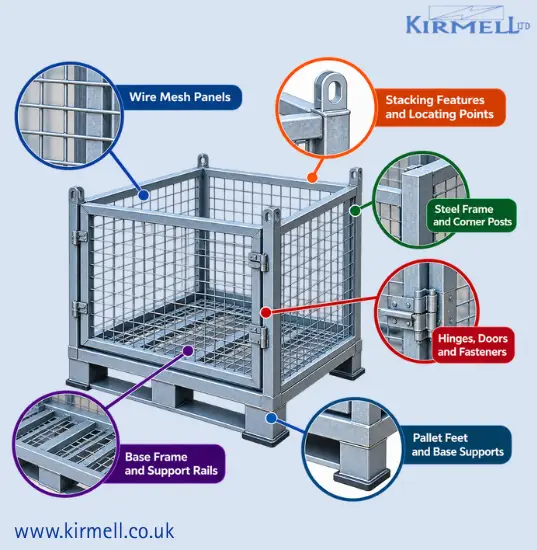
Wire Mesh Panels
Wire mesh panels form the sides of a mesh cage, keeping stored goods contained while allowing airflow and visibility. The correct cage mesh wire specifications, including wire thickness and opening size, help the cage suit its intended use.
Their open design allows airflow and makes it easier to identify items without opening the cage. Mesh size and wire thickness should match the products being stored.
Steel Frame and Corner Posts
The steel frame supports the panels and helps a wire mesh cage maintain its shape during use. The frame, welds and mesh cage wire construction should suit the intended load and working conditions.
Corner posts add support at key points, while strong joints help the structure withstand normal handling. The frame design should suit the intended load and working conditions.
Base Frame and Support Rails
The base frame supports stored goods and transfers their weight through the cage structure. The base and its supporting components should be designed to suit the intended load, as explained in Kirmell’s guide to how steel pallet feet are designed and manufactured.
In a wire mesh pallet cage, the base and pallet feet must work together to provide suitable support and handling clearance.
Support rails help spread the load across the base and reduce stress on individual areas. The design must match the expected load and handling requirements.
Hinges, Doors and Fasteners
Doors provide access to stored goods, while hinges allow them to open and close. Fasteners, catches and locking mechanisms help keep panels and doors in position during use. These components should be durable enough to handle repeated opening, closing and movement.
Stacking Features and Locating Points
Stacking features help compatible cages sit securely on top of one another. Locating points guide each cage into the correct position and reduce unwanted movement. Their design must suit the cage geometry and specified stacking limits to support safe storage.
Pallet Feet and Base Supports
Pallet feet raise the cage base to provide clearance for forklifts and pallet trucks. The right design depends on the cage structure and operating conditions, so manufacturers should understand the different types of pallet feet and their warehouse applications.
They also help transfer loads from the base to the supporting surface, so their size, shape and attachment points matter. Choosing suitable feet helps the cage perform as intended during storage and handling.
Manufacturers should consider load requirements, frame dimensions and stacking compatibility when selecting or replacing pallet feet. Measuring pallet feet correctly before buying helps ensure that replacement components fit the existing base.
For suitable components, explore Kirmell’s pallet feet range to find options for different industrial applications.
Common Applications of Wire Mesh Cages
Wire mesh cages are used across many industries to store, organise and move goods. Their open design makes it easier to identify contents, while their steel construction supports repeated use in busy working environments.
Manufacturing and Component Storage
Factories use wire mesh cages to store raw materials, small components and work-in-progress parts. They help keep production areas organised and make items easier to access when needed.
Warehousing and Distribution
In warehouses and distribution centres, wire mesh storage solutions help organise stock and move goods between storage areas. Choosing suitable storage equipment and components can also help businesses improve warehouse storage efficiency.
Mesh cages for storage make it easier to identify contents and manage inventory.
Their open panels allow workers to check contents quickly, reducing the need to open each container.
Automotive and Engineering Supply Chains
Automotive and engineering businesses use metal wire mesh containers to handle spare parts, metal components and assembled items. In automotive supply chains, automotive stillages provide purpose-built support for handling and transporting components.
A suitable metal mesh container can support organised storage and repeated movement between production areas.
Suitable cage designs help protect goods during movement between suppliers, production lines and storage facilities.
Industrial Materials Handling
Wire mesh cages help businesses move reusable materials between workstations, factories and storage areas. When designed for the intended load and handling equipment, they can make internal transport more organised and efficient.
Returnable Transport Packaging
Manufacturers and suppliers use reusable wire mesh cages to transport goods through repeated delivery cycles. These cages can reduce the need for disposable packaging, while stackable or collapsible designs can help save space during storage and return journeys.
How to Choose the Right Wire Mesh Cage Design
Choosing the right wire mesh cage or wire mesh storage container helps keep goods secure, makes handling easier and supports long-term use. Consider load capacity, mesh openings, frame strength and base compatibility before selecting a design.
Before selecting a design, consider the following factors to make sure the cage suits your storage and handling needs.
- Load Capacity: Consider the total weight of the goods and how the load is distributed across the cage. Choose a design that meets the required load limits.
- Mesh Specifications: Select suitable mesh openings and wire thickness based on the size, weight and type of goods being stored. Smaller openings may be needed to prevent smaller items from falling out.
- Frame Strength: Choose a strong frame that can withstand the expected loads and regular handling. The steel sections, joints and bracing should suit the working conditions.
- Stacking Requirements: If cages need to be stacked, check that their stacking features align correctly. Follow the specified load limits to maintain stability during storage.
- Handling Compatibility: Make sure the cage provides enough clearance for forklifts or pallet trucks. The base design and access points should suit the equipment used at your facility.
- Environmental Conditions: Consider exposure to moisture, chemicals and outdoor conditions. Suitable materials and surface coatings can help reduce corrosion and extend service life.
- Component Compatibility: Check that the mesh panels, frame, base, pallet feet and attachments work together. Correct dimensions and secure connections help the cage perform as intended.
- Maintenance Requirements: Consider how easily the cage can be inspected, repaired and maintained. Replace damaged components where appropriate to keep the cage safe and functional.
Common Wire Mesh Cage Design Problems
Poor design, unsuitable components and improper handling can damage wire mesh cages and other wire mesh storage containers. Choosing suitable materials and inspecting components regularly can help reduce damage and extend service life.
Understanding these issues helps manufacturers improve safety and extend service life.
- Bent Mesh Panels or Frames: Excessive loads and impacts can distort the cage structure.
- Damaged Welds and Loose Connections: Weak joints and loose fasteners can reduce cage strength.
- Unstable Stacking: Incompatible stacking features can cause cages to shift or become unstable.
- Damaged Pallet Feet: Heavy loads and poor handling can bend or damage the feet.
- Restricted Forklift Access: Incorrect base dimensions can make lifting difficult.
- Corrosion and Wear: Moisture and harsh conditions can damage unprotected steel components.
Understanding common pallet feet problems can help manufacturers identify potential issues and choose suitable replacement components. Correct specifications, regular inspections and suitable replacement parts help keep wire mesh cages safe and functional.
When replacing damaged feet or specifying components for a new cage, manufacturers should consider load requirements, dimensions and frame compatibility, as explained in this guide to choosing pallet feet for steel pallets and stillages.
FAQs