
Bespoke Steel Stillage Feet: When Standard Sizing Doesn’t Fit Your Setup
Standard stillage feet are a good fit for most common setups, but what happens when your metal stillages have a frame size, stacking design or existing equipment that does not match standard dimensions?
This is where bespoke stillage feet can make the difference. Instead of forcing an off-the-shelf component to fit, custom feet can be made around the exact dimensions and requirements of your stillage. For applications where standard sizes are not suitable, Kirmell can manufacture custom pallet feet and stillage feet to match specific dimensions and profiles.
Poorly matched feet can also affect stability, alignment and overall stillage performance, which is why the base design of a stillage plays such an important role in load capacity and stability.
In this guide, we explain when bespoke feet are worth considering, what goes into the manufacturing process, and how Kirmell can support custom stillage feet requirements.
Why Standard Stillage Feet Don’t Always Work
Standard stillage feet are designed to suit common frame sizes and typical stillage setups. For many applications, they are the quickest and most practical option. However, some stillages have dimensions or design features that standard feet simply cannot match.
This is usually where bespoke stillage feet becomes necessary.
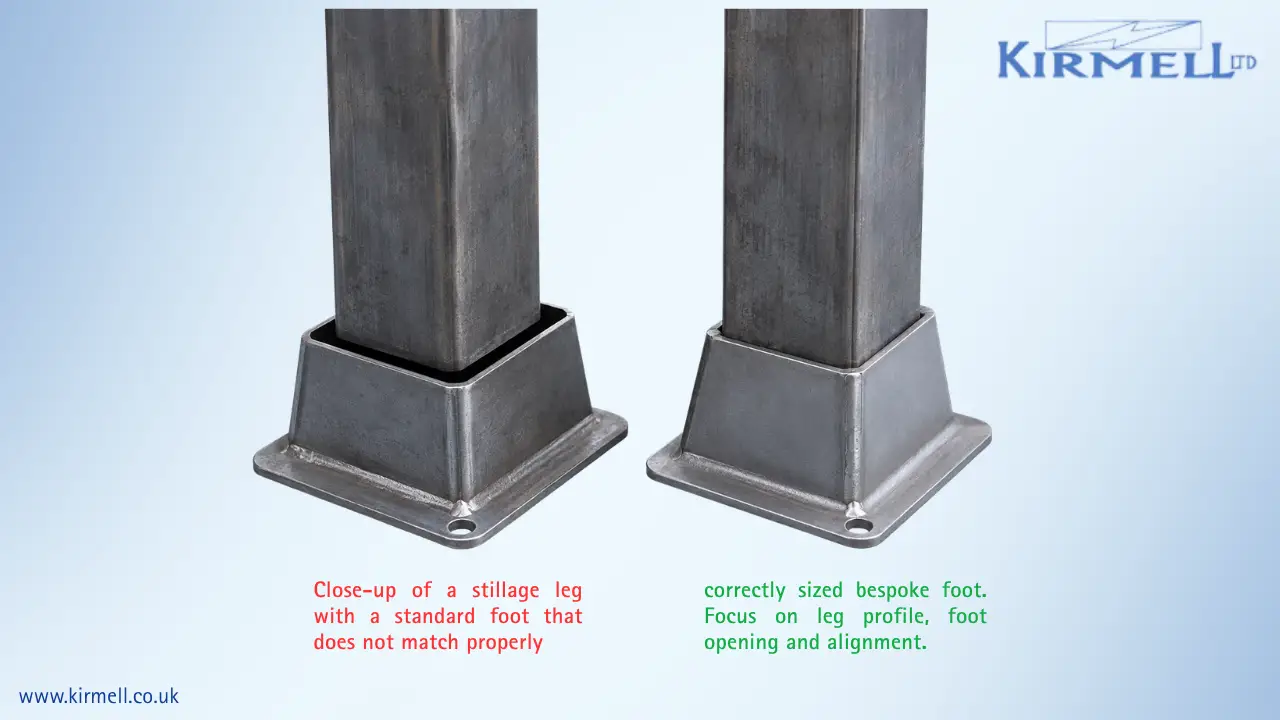
Non-Standard Frame Dimensions or Leg Profiles
Not all industrial stillages are built using the same tube size or leg profile. If the frame dimensions fall outside common sizes, standard feet may not fit correctly or provide the required connection with the stillage leg.
Bespoke feet can be manufactured to match the exact dimensions of the existing frame.
Specific Stacking Geometry
Stackable stillages rely on the feet and stacking points lining up correctly. If the existing design uses an unusual stacking arrangement, standard feet may not locate properly into the stillage below.
In these cases, custom feet size or profile can help maintain compatibility with the existing stacking system. The choice between fixed, adjustable and stackable pallet feet can also affect how the stillage is supported and stacked.
Legacy Stillages with Obsolete Components
Older stillage fleets can create another problem. During stillage repair, the original feet may be found damaged or worn, while the exact replacement part may no longer be available.
Replacing them with standard modern feet is not always possible if the dimensions or shape have changed. Bespoke manufacturing allows replacement feet to be produced around the original design, helping businesses keep older stillages in use.
Non-Standard Base or Clearance Requirements
The dimensions of the feet also influence the space below the stillage and how the base fits into the overall design. Some stillages may require a particular feet height, width or profile that is not available as a standard component.
A bespoke design allows these dimensions to be matched more closely to the required setup.
New Stillage Designs
Bespoke feet are not only used for repairs or older equipment. They can also be specified as part of a new stillage design when bespoke stillages are being manufactured from scratch.
If the frame, base or stacking arrangement uses non-standard dimensions, having the feet manufactured to the required specification from the beginning can help ensure better compatibility across the complete design.
If your stillage uses common frame dimensions, choosing the right pallet feet for steel pallets and stillages comes down to matching the feet size, profile and application requirements.
Signs You Need Bespoke Stillage Feet
You may need bespoke steel stillage feet if standard options cannot match the dimensions or design of your setup. Common signs include:
- Off-the-shelf feet do not align with your frame: If standard feet do not match the leg size, fixing points or base dimensions, a custom option may provide a better fit.
- Standard feet keep wearing out or causing instability: Repeated wear can sometimes indicate that the existing feet is not well matched to the stillage design. Because the base also contributes to warehouse load stability, it may be worth reviewing the dimensions and compatibility before replacing the same part again.
- You need a non-standard height, profile or fixing method: Some stillages require dimensions or attachment methods that are not available in standard ranges.
- You are designing a new stillage with specific requirements: Bespoke feet can be useful when a new stillage needs to match a particular frame size, stacking arrangement or dimensional requirement from the start.
If one or more of these issues apply, bespoke feet may be more suitable than trying to adapt a standard component.
What Goes Into Manufacturing Bespoke Steel Stillage Feet
Bespoke steel stillage feet start with a clear understanding of the dimensions, application and design requirements. Unlike standard parts, they are produced to match a specific stillage setup rather than an existing stock size, using a controlled metal presswork process from design through to production.
The process may include:
- Reviewing the required dimensions: Key measurements such as feet height, width, profile and the dimensions of the stillage leg are considered before production begins.
- Working from drawings, CAD files or existing components: A technical drawing, CAD file or existing sample can help define the shape and dimensions needed for the new feet.
- Selecting the material and thickness: The steel grade and material thickness are chosen according to the required design and manufacturing specification.
- Developing the required tooling: If the feet uses a profile that cannot be produced with existing tooling, new tooling may be required. Selecting the right press tooling for metal parts is an important part of producing the required profile accurately.
- Producing an initial sample where required: For some bespoke projects, an initial component can be checked against the agreed dimensions before moving into larger production quantities.
- Moving into repeat production: Once the specification is confirmed, the component can be manufactured in the required quantities, whether for a smaller custom order or ongoing repeat production.
Because bespoke stillage feet are made to a specific requirement, lead times can be longer than for standard stocked components. However, the result is a part designed around the dimensions and geometry of the actual stillage rather than forcing a standard feet to fit.
Bespoke vs. Standard Stillage Feet: Quick Comparison
Standard and bespoke stillage feet can both be suitable for metal and heavy duty stillages, depending on the frame and overall design. The main difference is whether an existing size already fits your setup or a custom component is required.
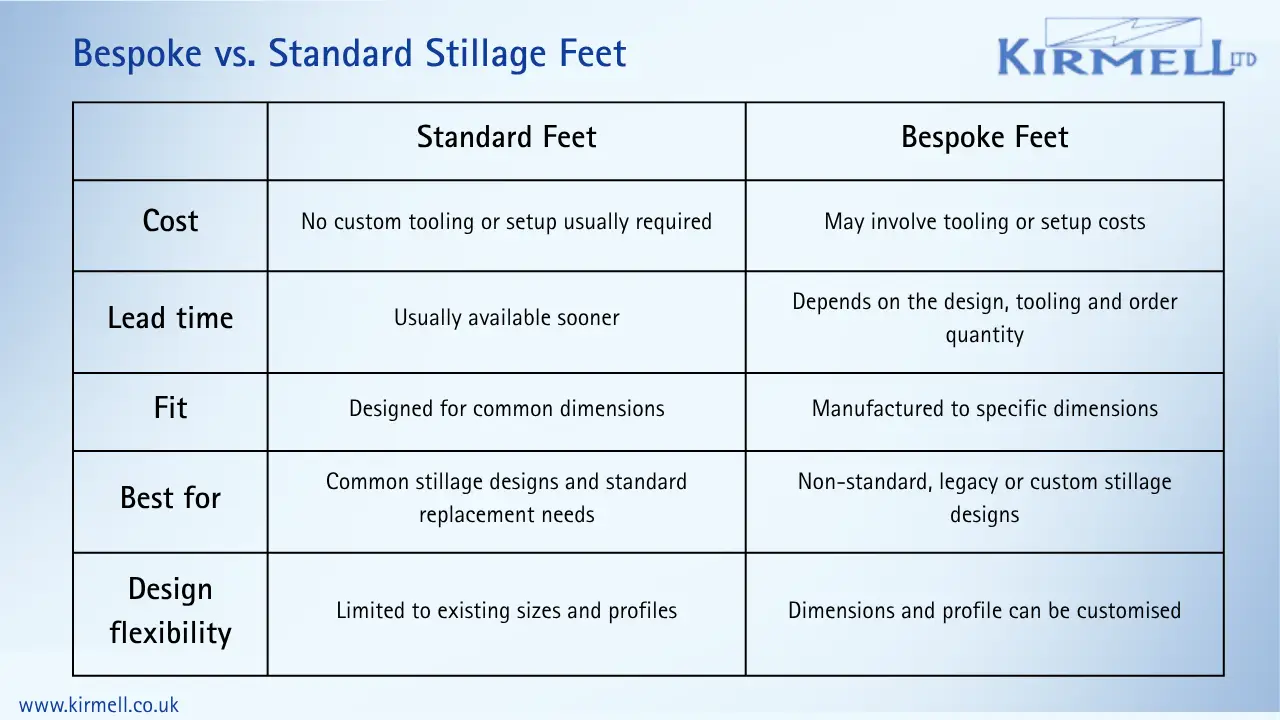
If standard feet already matches your frame and stacking arrangement, it is usually the simpler option. For standard purchasing requirements, a pallet feet buyer’s checklist can help confirm the key specifications before ordering. Bespoke feet become more useful when the required dimensions, profile or geometry are not available off the shelf.
Industries That Commonly Need Bespoke Stillage Feet
Bespoke stillage feet are most useful in industries where standard dimensions do not match the frame, stacking system or existing equipment.
Automotive Stillage Manufacturers
Automotive stillages are often designed around specific parts, production lines and returnable transport systems. Bespoke feet can help match non-standard frame sizes or stacking arrangements used across a dedicated stillage fleet.
Steel Stillage and Pallet Manufacturers
Steel stillage manufacturers producing custom stillages or pallets may need feet made to suit a particular leg profile, base design or overall geometry. This is especially relevant when standard feet sizes do not fit the required specification.
Stillage Repair and Refurbishment Companies
Stillage repair and refurbishment can become difficult when the original feet are worn, damaged or no longer available. Bespoke replacements can help match the dimensions of legacy components and keep existing stillages in service.
Steel Fabrication Businesses
Steel fabricators working on custom storage frames, transport systems or handling equipment may require feet with specific dimensions or profiles. These projects often involve several metal fabrication methods, depending on the component and required design. Custom manufacturing gives them more flexibility when standard components are not suitable.
Why Choose Kirmell for Custom Stillage Feet
Kirmell has been manufacturing industrial metal components in the UK since 1985, bringing more than 40 years of experience to custom and repeat production requirements.
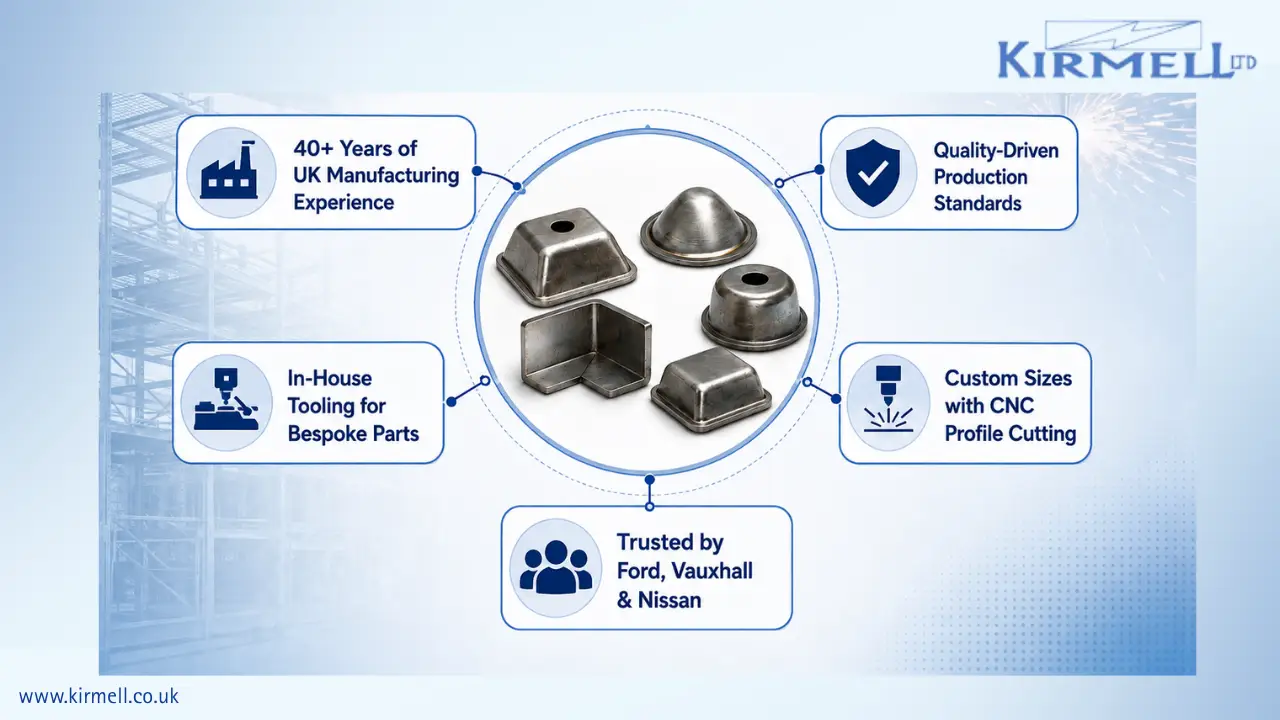
For businesses that need non-standard stillage feet, Kirmell offers:
- UK manufacturing since 1985, with decades of experience in pressed metal components.
- Quality systems aligned with ISO 9002 / EN 29002 standards, supporting consistent manufacturing processes.
- An in-house toolroom for developing and maintaining tooling for bespoke pressed components.
- CNC profile cutting capabilities to support custom dimensions and more specialised requirements.
- Experience working with major organisations across different industries, including well-known blue-chip companies such as Ford, Vauxhall, Nissan, the Post Office and the Bank of England.
Whether you need replacement feet for an existing stillage or a custom profile for a new design, Kirmell can work with your specifications to deliver a solution that fits. Get in touch with our team to discuss your custom stillage feet requirements — we’ll help you find the right solution for your application.
What Information Do You Need for a Bespoke Stillage Feet Quote?
The more information you can provide at the start, the easier it is to assess whether bespoke stillage feet can be manufactured to suit your setup. You do not always need a complete technical drawing, but accurate dimensions and clear details about the application are helpful.
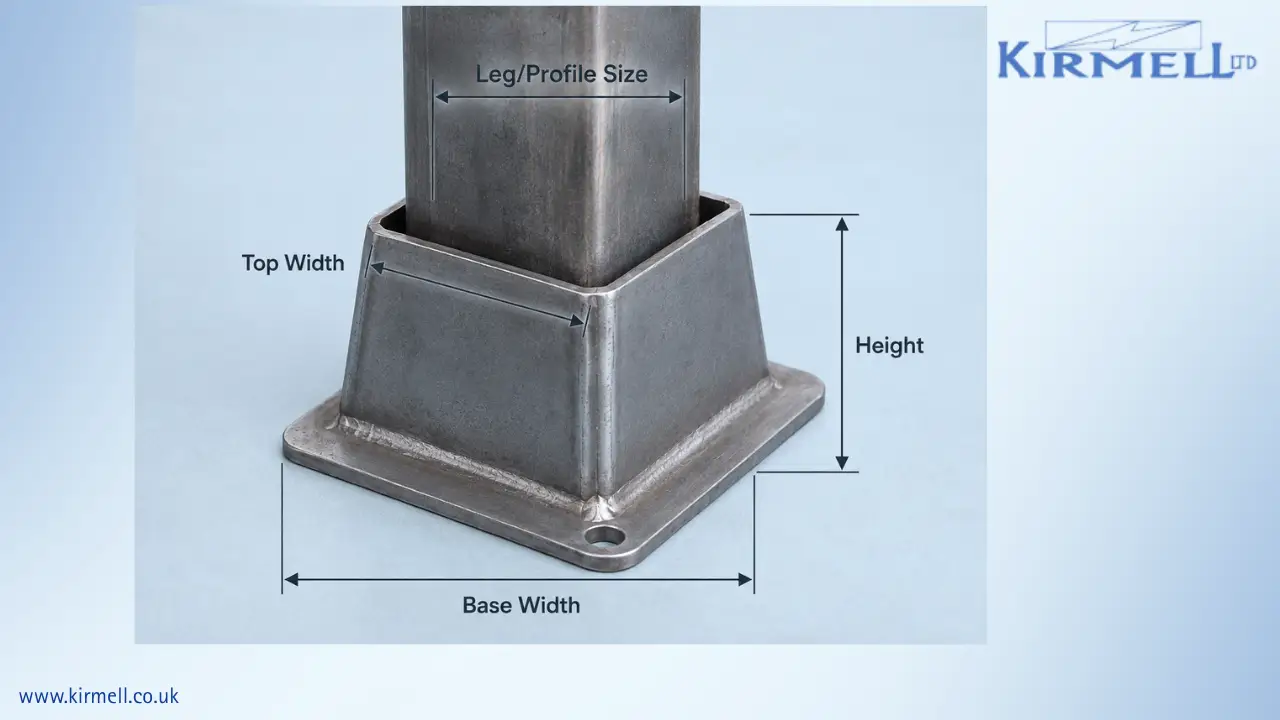
Useful information includes:
- Stillage leg or tube dimensions: Provide the width, length and profile of the section that the feet needs to fit.
- Required feet dimensions: Include the overall height, base width, top dimensions and any other important measurements. These are also the main measurements covered in our pallet feet size guide.
- Drawing or CAD file: If available, a technical drawing or CAD file provides a clear reference for the required shape and dimensions.
- Photos or an existing sample: For replacement or legacy parts, clear photographs or an existing stillage feet can help identify the original design.
- Material thickness: If you know the required steel thickness, include it with your enquiry. If not, provide as much information as possible about the existing component or specification.
- Stacking requirements: If the feet form part of a stacking system, explain how they locate with the stillage below and provide the relevant dimensions.
- Required quantity: Order volume can affect the most suitable manufacturing and tooling approach, so include an estimated quantity and whether you expect repeat orders.
Providing these details gives Kirmell a clearer understanding of your requirements and helps determine the most suitable approach for producing your bespoke steel stillage feet. Contact Kirmell with your dimensions, drawings, CAD files or existing sample to discuss your requirements.
FAQ
Standard stillage feet come in fixed sizes for common applications. Bespoke feet are made to specific dimensions, profiles or design requirements.
Lead times depend on the design, tooling and order quantity. Bespoke parts usually take longer than standard stocked feet.
Minimum quantities can vary depending on the part and manufacturing requirements. Kirmell can advise based on your design and required volume.
Yes, in many cases Kirmell can work from drawings, CAD files, dimensions or an existing sample to assess a suitable replacement.
Not always. Bespoke feet may involve tooling or setup costs, but the final cost depends on the design, quantity and production requirements.
Conclusion
Standard stillage feet are suitable for many common setups, but they are not always the right fit. Non-standard frames, legacy stillages, unusual stacking arrangements or specific dimensional requirements may call for a bespoke solution.
Bespoke steel stillage feet can be manufactured around the exact size, profile and geometry of your application, helping improve compatibility with the wider stillage design.