
How Stackable Pallet Cages Improve Warehouse Storage and Transport
Running out of warehouse space? Look up. When floor space is limited, making better use of vertical space can help you store more without expanding your facility. Stackable pallet cages provide a practical way to store, organise and move goods while making better use of available space.
Their strong steel construction allows multiple cages to be stacked safely when designed for the job. But better storage is only part of the story. The right pallet cage can also make handling and transport faster, safer and more efficient.
In this guide, we’ll explore how stackable pallet cages can improve warehouse storage and transport, and why the base and pallet feet matter to their performance.
What Are Stackable Pallet Cages?
Stackable pallet cages are strong steel containers designed to hold, store and move goods safely.
Unlike open pallets, they have steel frames and mesh sides that help keep materials contained while allowing easy visibility and access. The design of these wire mesh cages also influences their strength, visibility and suitability for different storage applications.
Most pallet cages include a steel frame, mesh panels, a strong base and access gates.
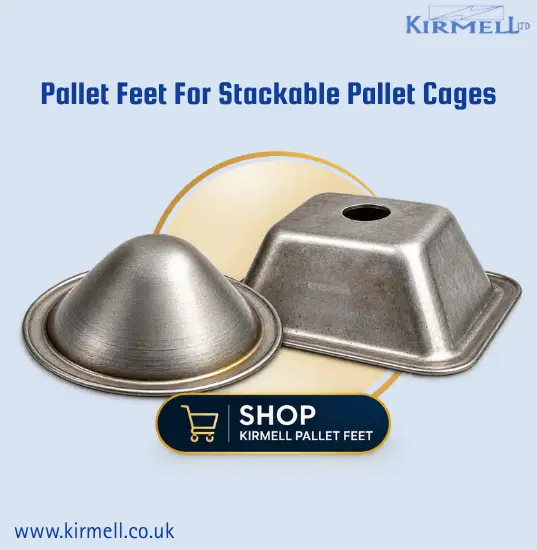
Pallet feet are also an important part of the base, providing clearance for forklifts and helping support the cage when it is stacked.
The cages are designed with stacking points or locating features that allow one cage to sit securely on another. This makes it possible to use vertical warehouse space without simply placing loads on top of each other. They are widely used in manufacturing, automotive, engineering, warehousing and logistics.
They are especially useful for storing and transporting parts, components and other materials that need protection and easy handling.
How Stackable Pallet Cages Improve Warehouse Storage
Stackable pallet cages can make a big difference when warehouse space is limited. They help businesses use available space more efficiently while keeping goods organised, accessible and protected.
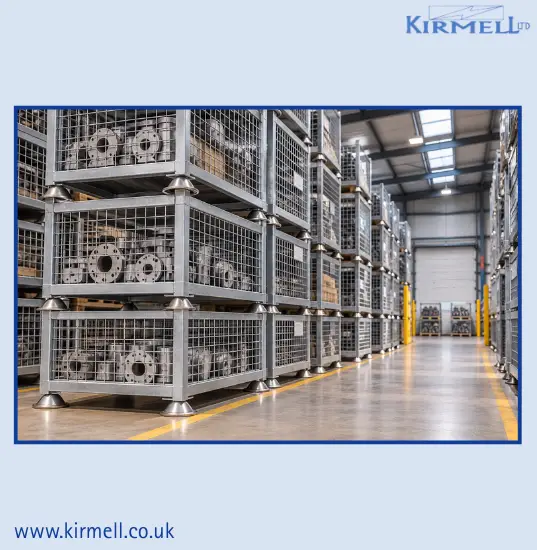
Alongside vertical storage, improving warehouse storage efficiency also involves making better use of existing storage layouts and organising stock for easier access.
Here are three key ways they can improve warehouse storage:
Make Better Use of Vertical Space
When floor space is limited, stacking helps you make every metre count. Stackable pallet cages allow goods to be stored vertically instead of spreading them across the warehouse floor.
By safely stacking multiple cages, warehouses can increase storage density without needing more floor space, provided that the loads remain stable and the stacking arrangement follows the manufacturer’s specifications. Understanding warehouse load stability can help businesses assess the factors that affect safe storage.
Keep Materials Organised and Accessible
A pallet cage gives each type of material its own clearly defined storage space. Components, finished products and other materials can be separated into individual cages.
This makes goods easier to identify and access when needed. It can also make picking, stock checks and inventory management more efficient.
Protect Goods During Storage
Keeping goods contained is just as important as finding space for them. Mesh sides help prevent materials from falling out while still allowing staff to see what is stored inside.
Compared with open pallets, pallet cages can provide better protection against movement, damage and misplaced items. This makes them a practical choice for storing loose or smaller components, while mesh cages for storage can help businesses understand the benefits of mesh designs for containing and organising goods.
How Pallet Cages Improve Transport and Material Handling
Pallet cages are not only useful for storage. They can also make moving materials around a warehouse or manufacturing site easier, safer and more efficient.
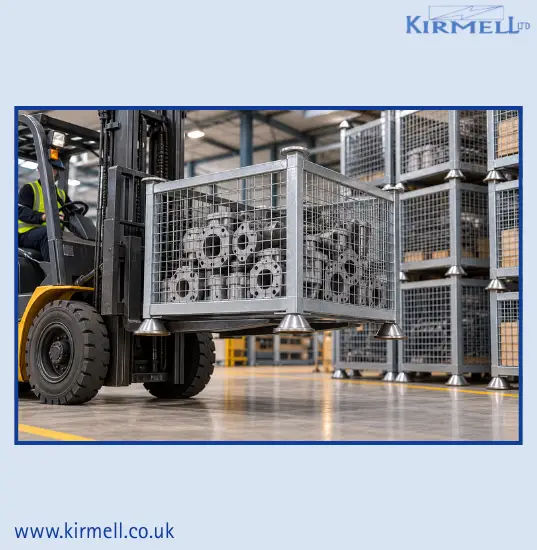
Easier Forklift Handling
Most pallet cages are designed with forklift-compatible bases or entry points, making them easy to lift and move. This allows operators to transport larger quantities in a single handling operation.
Instead of moving loose items individually, a full cage can be picked up and relocated as one unit, helping reduce handling time and manual effort.
Safer Movement of Goods
Moving loose materials can create a risk of items shifting, falling or becoming damaged. The enclosed sides of pallet cages help keep loads contained while they are being moved.
This is particularly useful when transporting components between different areas of a warehouse or manufacturing facility, where goods may need to be moved frequently.
More Efficient Returnable Transport
Steel pallet cages can be used repeatedly, making them a practical option for returnable transport. They can help reduce the need for disposable packaging when goods move between suppliers, warehouses and production sites.
For operations that need to return empty cages, folding or collapsible designs can save valuable space. Multiple empty cages can be folded down and transported together, making return trips more efficient.
Why the Base and Pallet Feet Matter
A pallet cage is only as reliable as the base supporting it. The base carries the load and transfers its weight through the pallet feet to the floor or the cage below when stacked.
Strong, correctly positioned pallet feet help the cage stay stable during storage, stacking and movement, making it important to choose the right pallet feet for steel pallets and stillages according to the base design, load requirements and application.
They also provide the clearance needed for forklift handling and help protect the main cage frame from direct contact with the floor. Good pallet feet can help with:
- Stacking stability: Keep cages securely positioned when stacked.
- Load distribution: Spread the load through the base and supporting points.
- Forklift clearance: Provide enough space for forklift forks to enter safely.
- Frame protection: Help reduce direct impact and wear on the cage frame.
- Consistent stacking: Keep cages at the correct height and position when stacked.
Poorly designed, incorrectly positioned or damaged pallet feet can affect stacking stability and load distribution, particularly in demanding applications where heavy-duty pallet feet for high loads may be needed to meet the relevant load and operating requirement
Over time, this can also place extra stress on the cage frame and reduce its service life, particularly when common pallet feet problems such as damage, wear or incorrect positioning are left unaddressed.
For custom steel pallet cages, choosing the right Pallet Feet for Steel Cage Pallets is therefore an important part of the overall design, helping manufacturers account for frame compatibility, load distribution and stacking requirements.
Kirmell supplies a range of steel pallet feet designed for different box-section sizes and applications.
Common Applications for Stackable Pallet Cages
Stackable pallet cages are used across many industries where goods need to be stored, protected and moved efficiently. Their durable construction and flexible designs make them suitable for both storage and transport.
Automotive Components
Used to store and transport vehicle parts, components and assemblies between production areas, suppliers and warehouses. Automotive stillages provide a purpose-designed solution for handling components throughout automotive manufacturing and supply chains.
Manufacturing Parts
Ideal for keeping machined parts, components and work-in-progress materials organised and easy to access.
Steel and Metal Products
Heavy-duty cages can handle steel components, fabricated parts and other metal products that require strong storage containers.
Returnable Transport Packaging
Reusable cages can move goods between suppliers, manufacturers and distribution centres, reducing the need for disposable packaging.
Warehousing and Distribution
They help warehouses organise inventory, maximise vertical space and move larger quantities using forklifts.
Engineering Components
Suitable for storing and transporting precision components, tools and engineering parts that need secure containment.
Recycling and Waste Handling
Heavy-duty cages can be used to collect, store and transport recyclable materials and industrial waste while keeping loads contained.
Stackable Pallet Cages vs Standard Pallets
Standard pallets are useful for moving and storing many types of goods, but they offer limited protection and load containment.
Stackable pallet cages provide an enclosed structure that can offer greater storage efficiency and protection.
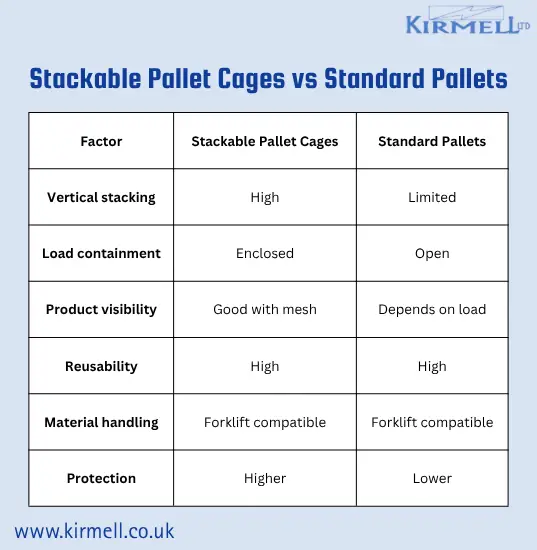
For warehouses handling loose, valuable or easily damaged components, pallet cages can provide better organisation, containment and protection while making better use of vertical storage space.
Frequently Asked Questions
Conclusion
Stackable pallet cages offer a practical way to use warehouse space more efficiently, keep goods organised and make handling and transport safer. Their reusable design can also help improve efficiency across storage and supply chain operations. However, good performance depends on the complete cage design.
A strong base and correctly positioned pallet feet are essential for stability, load support, forklift access and safe stacking. Need pallet feet for a bespoke steel pallet or cage? Contact Kirmell to discuss your requirements and find the right solution for your application.