
Common Pallet Feet Problems in Custom Steel Pallet Manufacturing
A pallet can look perfect on paper and still fail where it matters most: on the factory floor. A small error in the position, alignment or attachment of its feet can affect the finished pallet’s stability and performance. For manufacturers producing custom pallets, these problems can be costly.
Bespoke designs often have different frame dimensions, load requirements and feet configurations, creating more opportunities for fabrication errors.
In this guide, we’ll look at the most common pallet feet problems that can occur during custom steel pallet manufacturing, why they happen and how manufacturers can prevent them before the finished pallets leave the production line.
Common Pallet Feet Problems During Manufacturing
Custom steel pallets are built to meet specific requirements, but the manufacturing process has to be just as precise as the design. Small errors during fabrication or assembly can affect how the pallet sits, handles loads and connects with other pallets.
The problems below can occur at different stages of production, from positioning and welding the feet to checking the finished pallet. Identifying these issues early can help manufacturers avoid rework, delays and inconsistent finished products.
1. Weld Failures at the Pallet Feet-to-Base Joint
The joint between the pallet feet and the steel base needs to withstand the loads transferred through the pallet during handling and use. A weak or inconsistent weld can create a failure point even when the rest of the pallet is correctly fabricated.
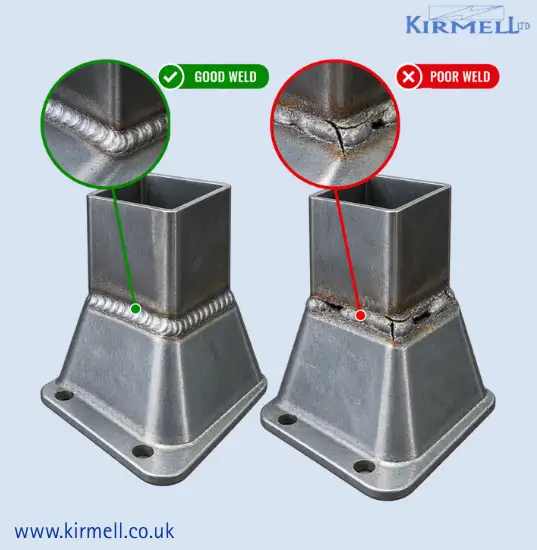
What causes weld failures?
Common causes include:
- Incorrect weld penetration, leaving the joint without enough strength.
- Poor joint preparation, which can prevent proper fusion between the components.
- Inconsistent heat control, which can affect weld quality and create weaknesses in the joint.
What can happen?
A poor-quality weld may develop cracks when the pallet is placed under load. Over time, repeated loading and handling can cause the joint to weaken further, potentially leading to premature failure of the pallet foot.
How can manufacturers prevent it?
Manufacturers can reduce the risk by following clear weld inspection standards and using certified welders for production. The joint design should also provide suitable contact and welding areas for a strong, consistent connection.
2. Dimensional Inaccuracy / Misalignment in Pallet Feet
Even a small dimensional error can affect how a custom steel pallet sits on the floor. If the pallet feet are not positioned or fabricated consistently, the finished pallet may stand unevenly or fail to align correctly when stacked.
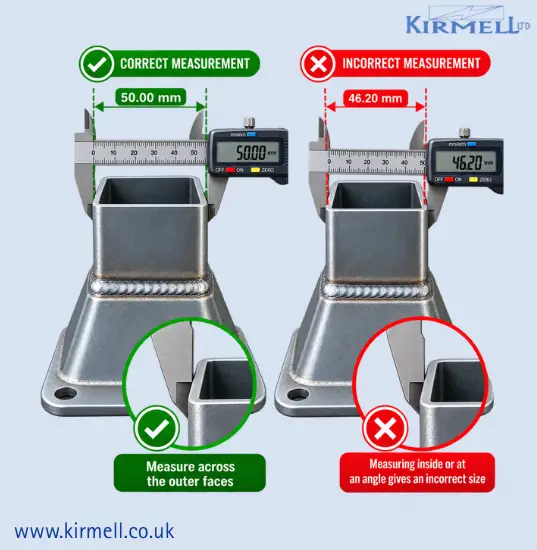
What causes dimensional inaccuracies?
Common causes include:
- Tooling wear, which can gradually change the dimensions of fabricated components.
- Poor fixturing, allowing pallet feet to move out of position during fabrication or welding.
- Inconsistent CNC or press setup, resulting in variations between components or production batches.
What can happen?
Misaligned pallet feet can cause an uneven pallet stance, with some feet carrying more load than others. In stacked pallets, even small differences in height or position can also create instability and make proper alignment more difficult.
These considerations are equally important when manufacturing a stackable pallet cage, where consistent foot positioning and compatible stacking features help maintain stability during storage and handling.
The design of mesh cages for storage also needs to account for the base structure and intended use.
Selecting Pallet Feet for Steel Cage Pallets with suitable dimensions and frame compatibility helps manufacturers maintain accurate alignment and reliable stacking performance.
How can manufacturers prevent it?
Manufacturers should carry out regular fixturing checks and verify component dimensions against the required sheet metal tolerances. In-process quality control can also identify dimensional variations before they become problems in the finished pallet.
3. Material Fatigue and Cracking in Pallet Feet Under Load
Pallet feet are exposed to repeated loading and handling, so the material needs to match the demands of the finished pallet. If the steel grade or thickness is not suitable for the specified load, the feet may become vulnerable to cracking or failure over time, particularly in heavy-duty pallet applications.
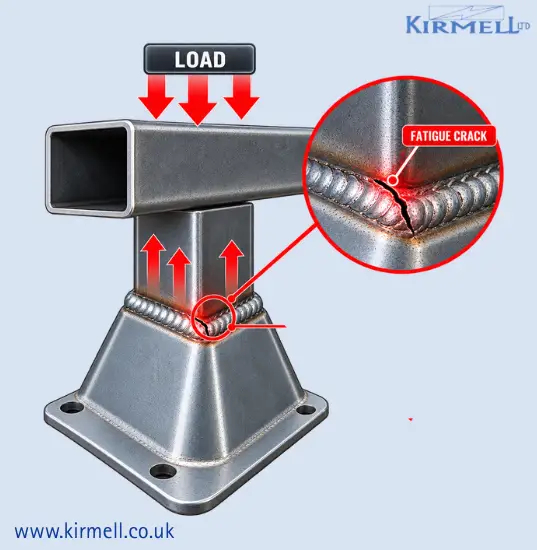
What causes material fatigue?
Common causes include:
- Incorrect steel grade or thickness, which may not provide enough strength for the bespoke load specification.
- Poor heat treatment, which can affect the material’s properties and long-term performance.
- Repeated loading and unloading can place additional stress on feet that are already operating beyond their suitable capacity.
What can happen?
Repeated loading can lead to fatigue cracks in the pallet feet. If the problem continues, a foot may eventually deform or collapse under repeated loads, affecting the stability of the entire pallet.
How can manufacturers prevent it?
Manufacturers should use material certification to verify that the steel meets the required specification. For bespoke pallet designs, load testing during production can also help identify weaknesses before the pallets enter regular use.
4. Surface & Coating Defects in Pallet Feet (Corrosion Vulnerability)
The pallet feet can be exposed to moisture, dirt and other harsh conditions during regular use. If the surface or protective coating is inconsistent, exposed areas can become vulnerable to corrosion and reduce the working life of the feet.
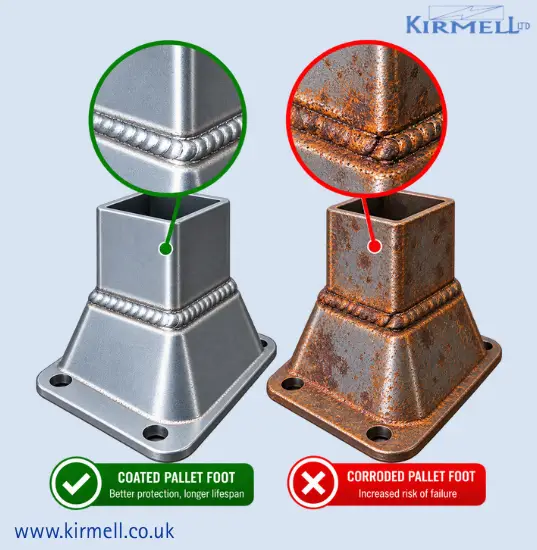
What causes surface and coating defects?
Common causes include:
- Inconsistent galvanizing or coating application, resulting in areas with insufficient protection.
- Poor surface preparation before welding or coating, which can prevent the protective layer from bonding properly.
- Damage to the coating during fabrication or handling can also leave exposed areas vulnerable to corrosion.
What can happen?
Poor coating protection can lead to premature rust and corrosion, particularly when pallets are used in damp, outdoor or demanding industrial environments. Over time, corrosion can reduce the service life of the pallet feet.
How can manufacturers prevent it?
Manufacturers should carry out coating thickness checks to confirm consistent protection across the pallet feet. Clear post-weld treatment protocols should also be followed to properly protect areas affected during fabrication.
5. Inconsistent Pallet Feet Height Across a Batch
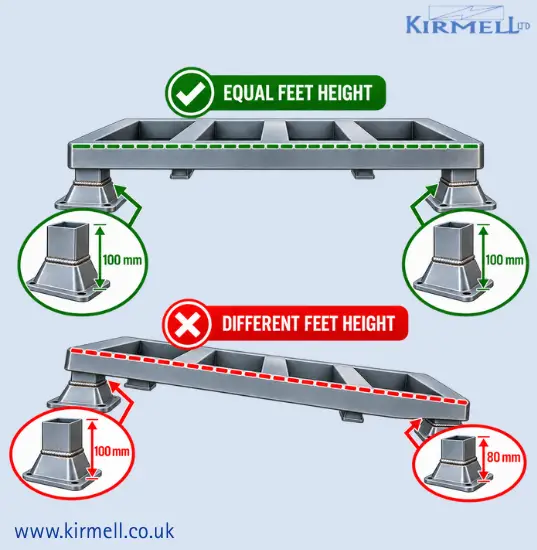
When pallet feet are produced in different batches, even small variations in height can affect the finished pallet. If some feet are slightly taller or shorter than others, the pallet may not sit flat or level on the floor, making accurate feet dimensions important during specification and production.
What causes height inconsistencies?
A common cause is tooling calibration drift across production runs. As tooling settings change over time, the dimensions of newly produced feet can gradually move outside the required tolerance.
What can happen?
Inconsistent foot height can cause pallets to sit unevenly or fail to remain level. When pallets are stacked, these differences can also create alignment problems and increase the risk of an unstable stack.
How can manufacturers prevent it?
Manufacturers can use batch sampling to check foot dimensions throughout production. Regular tooling calibration schedules can also help maintain consistent dimensions across different production runs.
6. Poor Fit Between Pallet Feet and Custom Base Design
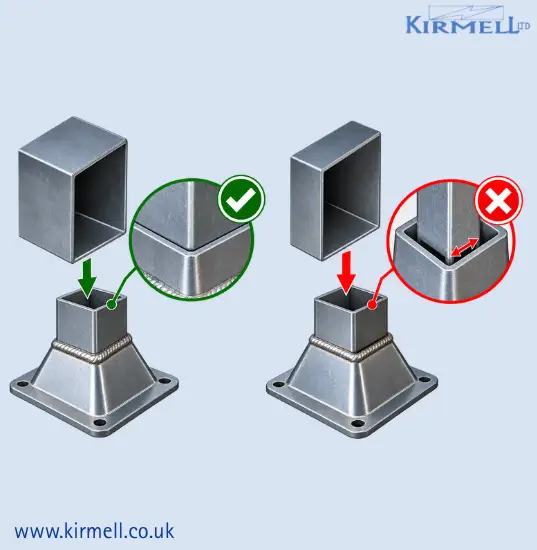
Custom steel pallets often have bespoke base designs, which means the pallet feet need to work precisely with the finished frame.
This is also an important consideration for wire mesh cages, where the base structure and supporting frame must suit the intended storage and handling requirements.
Problems can arise when the original design does not fully account for how the components will be manufactured and assembled.
What causes poor fit?
A common cause is a gap between the bespoke specification and production reality. A design may work in theory but create problems when manufacturing tolerances, fabrication methods or actual component dimensions are taken into account. This is why defining the frame dimensions, foot positions and other key requirements accurately when specifying custom pallet sizes can help prevent fit and tolerance issues during production.
What can happen?
Poor fit between the feet and the base can result in rework, production delays and mismatched tolerances. Manufacturers may need to modify components or adjust the assembly process before the finished pallet meets the required specification.
How can manufacturers prevent it?
A Design for Manufacture (DFM) review before production can identify potential fit and tolerance issues early.
For custom orders, a prototype or sample run can also confirm that the pallet feet and base design work together before full production begins, particularly when bespoke steel stillage feet are required.
How Kirmell Controls Quality in Custom Pallet Feet Manufacturing
Manufacturing pallet feet for custom steel pallets requires more than producing components to a drawing. The feet need to be formed, welded and finished consistently so they match the required dimensions and work correctly with the finished pallet design.
Kirmell has been supplying pallet feet and metal presswork since the mid-1980s, with practical experience across presswork, welding, machining and toolmaking. Its in-house facilities include a wide range of presses, CNC machining equipment, welding facilities and an in-house toolroom, allowing different stages of production to be managed within the manufacturing process.
For custom requirements, Kirmell also undertakes development and prototype work, including support with design and material selection and rapid tool production or adaptation. This allows component designs to be assessed and refined before moving into full production, helping manufacturers address dimensional, fit and fabrication issues earlier in the process.
Kirmell’s quality procedures are based on the requirements of ISO 9002 (EN29002), supporting its focus on consistent production and quality presswork.
FAQs
Conclusion
Pallet-foot problems often start before the pallet reaches the customer. Small issues during fabrication can affect the strength, stability and performance of the finished pallet. Incorrect dimensions, foot positioning, load requirements, handling clearance and stacking geometry can all create problems during manufacturing and later use.
Manufacturers can reduce these risks by specifying foot requirements alongside the pallet frame, rather than treating the feet as a final component of the build. When standard pallet feet do not meet the requirements of a bespoke design, a custom solution may provide a better fit for the finished pallet.