
How Steel Pallet Feet Are Designed and Manufactured
A steel pallet is only as strong as the components supporting it.
Steel pallet feet may look simple, but they play an important role in supporting the pallet structure, maintaining stability and handling repeated use.
Getting their design right involves more than choosing a shape or thickness. The feet must work with the pallet structure, load requirements, fixing method and intended application.
But how does a sheet of steel become a reliable pallet feet?
The process starts with careful design and material selection. From there, the component can be cut, formed, welded and finished to meet the required specifications.
In this guide, we’ll explore how steel pallet feet are designed and manufactured, from the initial design stage through to production and quality control.
What Are Steel Pallet Feet?
Steel pallet feet are metal components fitted to the bottom of steel pallets and stillages. They support the structure above the floor while providing clearance for handling, storage and stacking, all of which need to be considered as part of the overall stillage design.
They are commonly used on industrial pallets, stillages and returnable transport equipment where strength and durability are important.
The feet form the connection between the pallet structure and the floor. They transfer the weight of the pallet and its contents through the supporting frame and into the ground.
Because of this, a pallet feet cannot be designed in isolation. Its shape, position, dimensions and method of attachment need to work with the overall pallet structure and its intended use.
For standard and application-specific requirements, Kirmell manufactures steel pallet feet for pallets, stillages and industrial storage applications, with a range of sizes and profiles available.
What Goes Into Designing Steel Pallet Feet?
A steel pallet feet needs to do more than support weight. Its design must work with the pallet structure, handling requirements and the way the finished pallet will be stored and used.
Small changes to the feet’s shape, position or connection can affect how forces move through the pallet. That is why these details need to be considered during the design stage.
1. Understanding the Pallet Structure
The first step is to understand the pallet or stillage or pallet cage that the feet will support. This includes the frame, supporting members and the points where the feet will be attached.
This is particularly important when custom pallet sizes are being developed, as the frame dimensions and support points need to accommodate the intended load and overall pallet configuration.
The position of each feet is important because it affects how the pallet’s weight is transferred to the floor. The feet must also fit securely with the surrounding frame without interfering with other components.
2. Feet Geometry and Profile
The geometry of a steel pallet feet determines how it interacts with both the pallet and the floor. Designers consider its shape, profile, dimensions and overall structural form.
The contact surface is also important. A suitable contact area helps the feet sit securely on the floor, while its height needs to provide the required clearance underneath the pallet. These dimensions should be established carefully when measuring pallet feet before buying.
3. Load Requirements
Expected loads are an important input when designing steel pallet feet. The feet needs to transfer the forces from the pallet structure to the floor without compromising its shape or connection, particularly for heavy-duty pallet feet designed for high loads and demanding environments.
Designers may also consider repeated handling, movement and impact. Pallets used regularly in industrial environments can experience forces beyond those present when they are simply standing on the floor.
4. Attachment and Fixing Requirements
A steel pallet feet must connect securely to the pallet frame. The design therefore needs to allow enough space and suitable surfaces for welding or other fixing methods.
In wire mesh cage designs, the connection between the supporting base and the surrounding frame is also important for creating a reliable storage unit.
The position and strength of the joint are important because forces passing through the pallet are transferred through this connection. Poor positioning or inconsistent attachment can affect the overall performance of the component.
5. Stacking and Nesting Requirements
Steel pallets and stillages are often stacked or nested to save space. The feet design must therefore provide the necessary clearance between units when they are stored together, with the required configuration depending on whether fixed, adjustable or stackable pallet feet are being used.
The shape and position of the feet can affect how one pallet sits on another. When designing steel cage pallets, selecting suitable Pallet Feet for Steel Cage Pallets requires careful consideration of foot positioning, frame compatibility and stacking geometry to support stable and practical stacking.
Selecting Materials for Steel Pallet Feet
The material used for a steel pallet feet affects how it performs and how easily it can be manufactured. The right choice needs to balance strength, formability and the requirements of the finished component, particularly when comparing steel and plastic pallet feet.
Steel Grade
Steel grade should be selected according to the strength required for the component and the way it will be manufactured. The material needs to withstand the expected forces without compromising its structural integrity.
Formability is also important, particularly when the feet is produced through pressing or forming. A suitable grade should allow the required shape to be produced consistently without unnecessary cracking or deformation.
Material Thickness
Material thickness needs to work alongside the feet’s geometry and structural requirements. A thicker material is not automatically the best option, as the overall design and manufacturing process also influence performance.
Consistent thickness is equally important during production. Variations in the material can affect forming, dimensions and the consistency of finished steel pallet feet.
Corrosion Protection
The required level of corrosion protection depends on where the pallet or stillage will be used. Indoor applications may have different requirements from equipment exposed to moisture, outdoor conditions or harsh industrial environments.
Surface treatment or coating should therefore be considered during the design stage. The chosen finish needs to suit the material, manufacturing process and intended operating environment while providing the required level of protection.
How Are Steel Pallet Feet Manufactured?
Once the design and material have been established, the steel pallet feet moves into production. The manufacturing process needs to produce components that match the required shape, dimensions and specifications consistently, following a controlled sequence similar to the complete metal presswork process from design to delivery.
Depending on the design, several processes may be involved, including cutting, forming, welding and finishing. Each stage contributes to the accuracy and quality of the finished component.
At Kirmell, these manufacturing processes form part of a wider engineering and production capability, allowing steel components to move from design and material selection through cutting, presswork, welding and finishing.
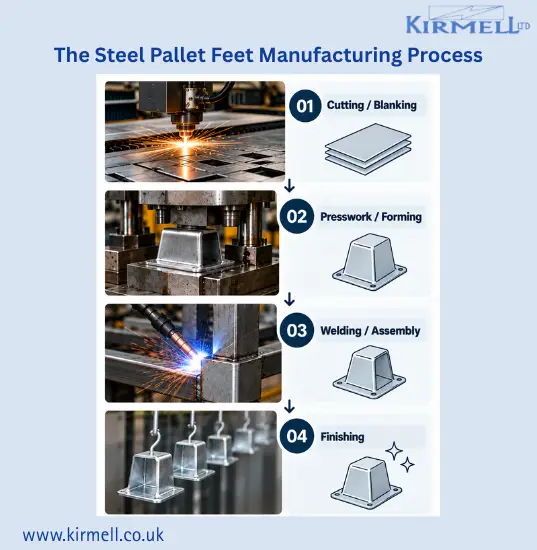
1. Cutting and Blanking
The process begins by preparing the steel and cutting it into the required blanks. The blank provides the starting shape that will later be formed into the pallet feet.
Accurate cutting is important because the blank needs to match the design specifications. Consistent cutting also helps ensure that each component can move through the following manufacturing stages in the same way.
2. Presswork and Forming
The prepared steel blank can then be formed into the required pallet-feet profile. Presswork uses tooling to apply controlled force and shape the flat material into the desired form.
The tooling must be suitable for the component’s geometry and material. Accurate forming helps maintain consistent dimensions and ensures that steel pallet feet have the correct profile throughout a production run, which is one of the key advantages of metal presswork.
3. Welding and Assembly
Some steel pallet feet designs require welding or additional assembly. Formed components can be joined together, or the finished feet can be attached to another part of the pallet structure.
Consistent welding is important for maintaining reliable connections between components because welding strengthens metal structures by joining the individual parts into a single assembly. The manufacturing process must also control heat and positioning to minimise distortion and keep the finished assembly within the required dimensions.
4. Finishing
After forming and assembly, the steel pallet feet may require surface preparation or a protective finish. The appropriate treatment depends on the material, manufacturing process and environment in which the component will be used.
Protective coatings can help reduce the effects of corrosion and extend component life. The finish should therefore be considered as part of the overall manufacturing specification, with the appropriate metal finishing process selected for the component rather than treated as an afterthought.
Quality Control in Steel Pallet Feet Manufacturing
Quality control helps ensure that steel pallet feet consistently meet the required design and manufacturing specifications. Checks can be carried out at different stages, reflecting the wider role of quality control in metal fabrication, from the incoming material through to the finished component.
Dimensional Inspection
Finished components can be checked against the required dimensions, including their overall size, profile and formed shape. This helps identify variations that could affect how the feet fits into the pallet structure, making sheet metal tolerances an important consideration during inspection
Hole positions and other features may also need to be checked for accuracy. Consistent positioning is particularly important where the feet needs to align with other components during assembly.
Material Checks
The material should match the required specification before it enters production. This can include checking the specified steel grade and material thickness.
Consistent material helps maintain predictable forming and manufacturing results. Variations in thickness or material properties can affect the final dimensions and shape of the component.
Forming and Weld Quality
Formed steel pallet feet should maintain a consistent geometry throughout production. Checks can identify unwanted deformation, dimensional variation or other issues with the formed profile.
Where welding is involved, the joints should be checked for integrity and consistency, helping to identify common metal welding defects that could affect the finished component.
Batch Consistency
For repeat orders, maintaining consistency from one production run to another is important. The finished steel pallet feet should continue to match the agreed dimensions, material specification and manufacturing requirements.
This is particularly valuable when customers require replacement or repeat components. Consistent production makes it easier to maintain compatibility with existing pallets and stillages over time.
From Design to Finished Steel Pallet Feet
Manufacturing steel pallet feet involves several connected stages. Each step needs to follow the agreed specifications so the finished component performs consistently.
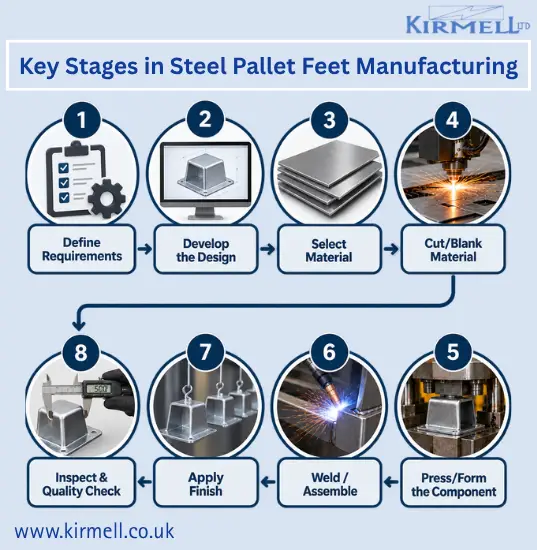
1. Define Requirements
The process starts by understanding the pallet structure, intended application, load requirements and how the feet will connect to the frame.
2. Develop the Design
The requirements are translated into a practical component design. Geometry, dimensions, attachment points, clearances and design for manufacturability considerations are defined at this stage.
3. Select Material
The appropriate steel grade and thickness are selected based on the component’s structural and manufacturing requirements. Surface protection requirements can also be considered at this stage.
4. Cut or Blank the Material
Steel is cut into blanks according to the required dimensions and profile. Accurate blanks provide a consistent starting point for the forming process.
5. Press or Form the Component
The blanks are shaped into the required pallet-feet profile using suitable forming methods and tooling. Consistent forming helps maintain the required geometry across production.
6. Weld or Assemble
Where required, formed components are welded or assembled to create the finished feet or connect it with other pallet components. Positioning and weld consistency are important at this stage.
7. Apply the Finish
The component can undergo surface preparation and protective treatment according to its intended application. The selected finish helps protect the steel and achieve the required surface specification.
8. Inspect and Quality Check
The finished steel pallet feet are checked against the agreed specifications. Dimensions, geometry, material requirements, weld quality and other relevant features can be inspected before the components are approved for use.
Steel Pallet Feet from Kirmell
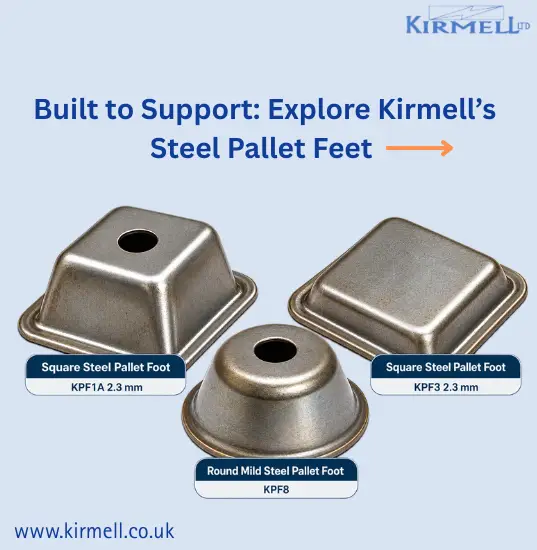
Kirmell manufactures steel pallet feet for industrial pallets, stillages and returnable transport equipment. Different profiles, dimensions and attachment options can be produced to suit the requirements of the finished pallet or stillage.
Where a standard component is not suitable, Kirmell can also manufacture bespoke steel pallet feet to specific dimensions, profiles or fixing requirements.
Components can be developed from technical drawings, samples or existing specifications to help achieve the required fit and compatibility.
Looking for a specific steel pallet foot? Get in touch with Kirmell to discuss your requirements, drawings or samples and find a suitable manufacturing solution.
FAQs
Steel pallet feet are typically made by cutting steel into blanks and forming them into the required shape. Depending on the design, welding, assembly and surface finishing may also be required.
The steel grade depends on the required strength, thickness, forming process and application. The material should be suitable for both the design and manufacturing process.
Yes. Steel pallet feet can be manufactured to custom dimensions, profiles and attachment requirements. Kirmell can also work with drawings, samples or existing component specifications where a standard pallet foot is not suitable.
Yes. A manufacturer can use an existing technical drawing to produce steel pallet feet to the specified dimensions and requirements.
Common processes include cutting or blanking, presswork and forming, welding and surface finishing. The exact process depends on the component’s design and production requirements.
Yes. An existing pallet foot can often be reproduced from a drawing, sample or existing component. The manufacturer can assess its dimensions, material and manufacturing requirements before producing a replacement.
Conclusion
Good steel pallet feet start with clear engineering requirements. Their material, geometry and attachment method all need to work together with the overall pallet design.
Manufacturing processes such as cutting, forming and welding then help determine the consistency, accuracy and quality of the finished component.
When standard components are not suitable, bespoke steel pallet feet can be designed and manufactured to meet specific pallet or stillage requirements.
If you need steel pallet feet manufactured to a drawing, sample or bespoke specification, Kirmell can help. Get in touch with your requirements to discuss the right manufacturing approach for your application.